THE ADVENTURE COLLECTIVE® · Independent discovery and booking for outdoor travel

Travel from Marrakech over the High Atlas to Ait Benhaddou, Todra and Dades gorges, ending with a sunset camel trek and a night in the Erg Chebbi dunes. This private six-day route pairs kasbah architecture, cinematic landscapes and Sahara solitude with practical logistics for first-time desert travelers.
Travel from Marrakech over the High Atlas to Ait Benhaddou, Todra and Dades gorges, ending with a sunset camel trek and a night in the Erg Chebbi dunes. This private six-day route pairs kasbah architecture, cinematic landscapes and Sahara solitude with practical logistics for first-time desert travelers.
You step out of the riad into the hot, spice-scented air of Marrakech and the city murmurs around you—muezzin calls, motorbikes, vendors selling mint tea. Within hours you'll be punching through the High Atlas, the road climbing and the pass opening like a gate; the mountains push you toward red ochre kasbahs and the wind-sculpted spine of the Sahara.
Verified experiences and guided adventures in the surrounding area.
Operated by carresa.com · Marrakech, Marrakesh-Safi
You step out of the riad into the hot, spice-scented air of Marrakech and the city murmurs around you—muezzin calls, motorbikes, vendors selling mint tea. Within hours you'll be punching through the High Atlas, the road climbing and the pass opening like a gate; the mountains push you toward red ochre kasbahs and the wind-sculpted spine of the Sahara.
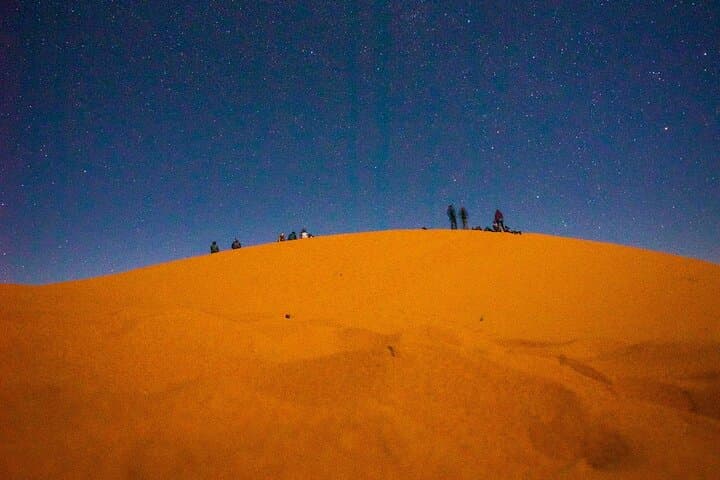
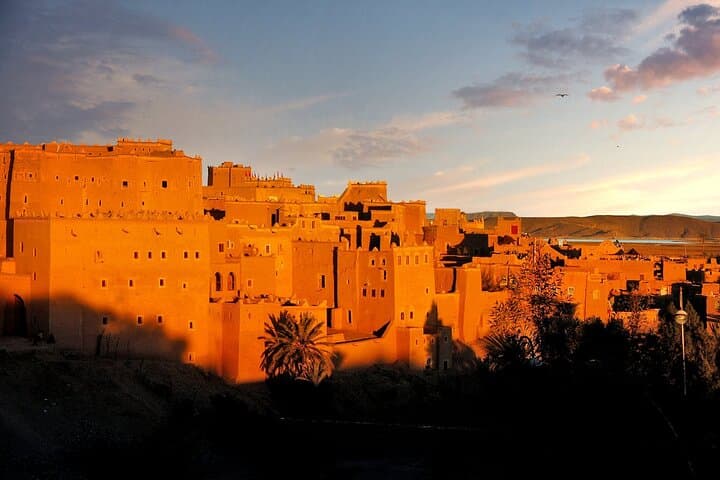
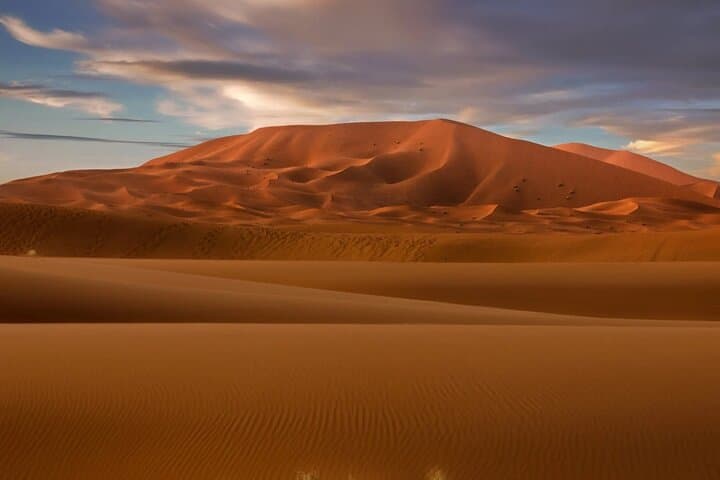
This six-day route threads historic Marrakech (Koutoubia minaret, Saadian tombs) with UNESCO-listed Ait Benhaddou, the cinematic kasbahs around Ouarzazate, the carved cliffs of Dades and Todra gorges, and finally Erg Chebbi’s towering dunes at Merzouga. Geologically the Atlas are young fold mountains raised by African-Eurasian collision; south of them are sedimentary basins where wind has piled sand for millennia into migrating dunes. Culturally the trip crosses Amazigh (Berber) villages, caravan-era oases and modern film-studio towns—each stop a note in Morocco’s layered history.
Expect long drives (Marrakech to Ouarzazate ≈4–5 hours via Tizi n’Tichka at ~2,260 m), short hikes into gorge narrows, a 1.5‑hour camel trek at sunset and an overnight in a luxury nomad tent under an enormous sky. Nights on the dunes are cold—layers are essential. Carry plenty of water, cash for small souks, and respect local customs: modest dress and ask before photographing people. Timed right, the days brim with light for photos and the desert dawns will insist you wake early—rewarding patience with a sunlit sea of sand.
easy.
6 days.
Suitable for travelers in general good health who can handle several hours of driving, short hikes through gorges, and a camel trek; minimal endurance required.
The camel trek to the desert camp is gentle—about 1–1.5 hours at a steady pace; the camp is comfortable and staff handle luggage so minimal fitness is required.
This is a private guided tour; key admissions into sites like palaces and certain attractions may be included per itinerary—confirm specifics with the operator before booking.
Spring and fall offer mild days and cool nights; summer can be very hot (35–45°C); winters are mild by day but cold at night and the Atlas pass can see snow.
Operators use experienced drivers and local guides; stay with the group, follow staff instructions around fires and camels, and carry basic meds—cell coverage can be intermittent in remote stretches.
The route traces ancient caravan corridors and Almohad to Saadian-era architecture—kasbahs were fortified family homes controlling oasis agriculture and trade routes.
The Sahara’s dune systems and oasis water tables are fragile; minimize water use, avoid disturbing vegetation, and support community-run lodgings and cooperatives.
carresa.com operates guided outdoor trips and adventures with an emphasis on safety, stewardship, and memorable experiences.

You step out of the riad into the hot, spice-scented air of Marrakech and the city murmurs around you—muezzin calls, motorbikes, vendors selling mint tea. Within hours you'll be punching through the High Atlas, the road climbing and the pass opening like a gate; the mountains push you toward red ochre kasbahs and the wind-sculpted spine of the Sahara.
You step out of the riad into the hot, spice-scented air of Marrakech and the city murmurs around you—muezzin calls, motorbikes, vendors selling mint tea. Within hours you'll be punching through the High Atlas, the road climbing and the pass opening like a gate; the mountains push you toward red ochre kasbahs and the wind-sculpted spine of the Sahara.
This six-day route threads historic Marrakech (Koutoubia minaret, Saadian tombs) with UNESCO-listed Ait Benhaddou, the cinematic kasbahs around Ouarzazate, the carved cliffs of Dades and Todra gorges, and finally Erg Chebbi’s towering dunes at Merzouga. Geologically the Atlas are young fold mountains raised by African-Eurasian collision; south of them are sedimentary basins where wind has piled sand for millennia into migrating dunes. Culturally the trip crosses Amazigh (Berber) villages, caravan-era oases and modern film-studio towns—each stop a note in Morocco’s layered history.
Expect long drives (Marrakech to Ouarzazate ≈4–5 hours via Tizi n’Tichka at ~2,260 m), short hikes into gorge narrows, a 1.5‑hour camel trek at sunset and an overnight in a luxury nomad tent under an enormous sky. Nights on the dunes are cold—layers are essential. Carry plenty of water, cash for small souks, and respect local customs: modest dress and ask before photographing people. Timed right, the days brim with light for photos and the desert dawns will insist you wake early—rewarding patience with a sunlit sea of sand.