THE ADVENTURE COLLECTIVE® · Independent discovery and booking for outdoor travel

A private six‑day loop that pairs a challenging day ascent of Fansipan with a luxury overnight cruise through Ha Long and Lan Ha bays. Expect steep mountain trails, ethnic village treks, and calm afternoons kayaking among limestone karsts.
A private six‑day loop that pairs a challenging day ascent of Fansipan with a luxury overnight cruise through Ha Long and Lan Ha bays. Expect steep mountain trails, ethnic village treks, and calm afternoons kayaking among limestone karsts.
You stand at Tram Ton at dawn, the valley fog still clinging to terraces while porters and guides knot their packs. The air smells of pine and damp earth; the trail ahead climbs relentlessly toward Fansipan’s rocky crown, then, days later, the same hands that steady you on the ridge will lift a glass on the sunlit deck of a five‑star junk slicing through limestone towers in Ha Long Bay.
Verified experiences and guided adventures in the surrounding area.
Operated by Green Trip Viet Nam · Sapa, Lao Cai
You stand at Tram Ton at dawn, the valley fog still clinging to terraces while porters and guides knot their packs. The air smells of pine and damp earth; the trail ahead climbs relentlessly toward Fansipan’s rocky crown, then, days later, the same hands that steady you on the ridge will lift a glass on the sunlit deck of a five‑star junk slicing through limestone towers in Ha Long Bay.
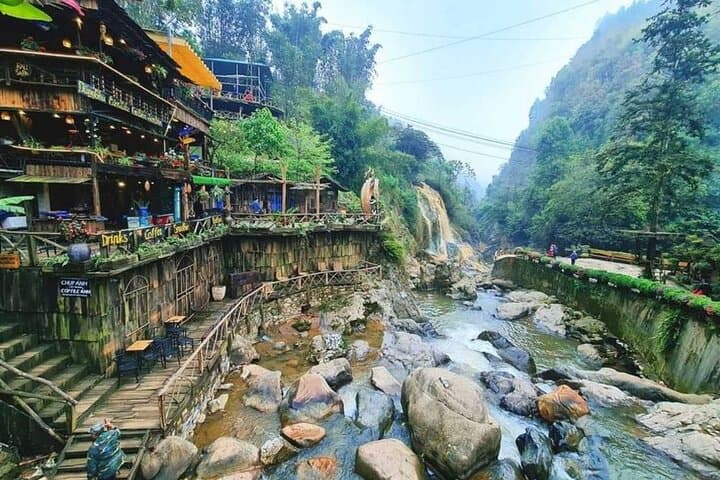
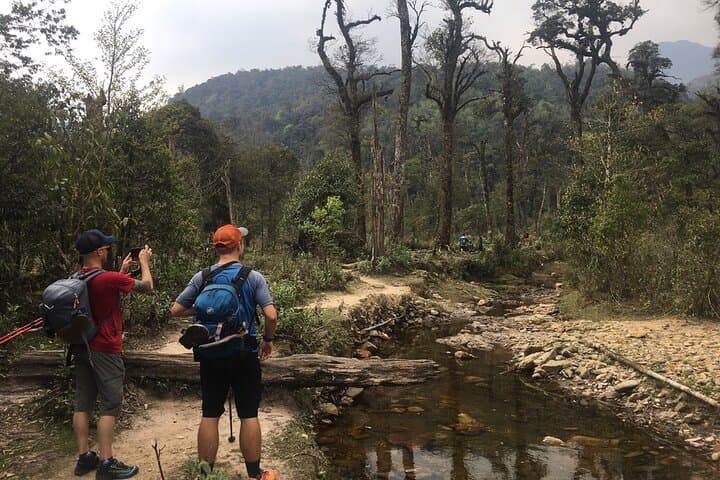
Fansipan is the highest peak of the Hoang Lien Son range (3,143 m). Geologically the massif is ancient metamorphic rock carved by monsoons and cold fronts; culturally it’s a meeting place for Hmong and Dao communities whose villages and costumes mark valleys below. The switchback from Tram Ton (approx. 1,900 m) to summit gains about 1,243 m of elevation over steep, often rocky trail that demands steady pacing. Expect forested sections, exposed ridgelines, and loose scree near the top.
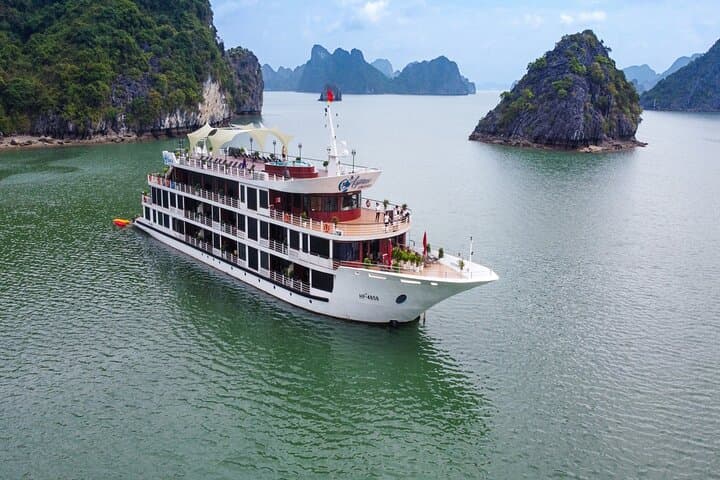
Afterward the trip pivots to karst country: Ha Long and Lan Ha bays are catalogues of weathered limestone islands, mangrove fringes, and floating fishing villages where karst caves and hidden coves invite kayaking and swims.
Practical guidance: train with sustained uphill hikes and carry layers for rapid weather shifts; plan arrival in Sapa the night before heavy trekking; start the Fansipan push early to avoid afternoon storms; hydrate and eat frequent small meals to keep energy up. Footwear with firm ankle support, a 25–35 L daypack, waterproof shell, and a headlamp are practical essentials. Time your travel between March–May or September–November for the most stable conditions.
challenging.
6 days.
Expect sustained uphill hiking and multi‑hour trekking days; good cardiovascular fitness and leg strength recommended.
The Tram Ton to summit route gains roughly 1,243 m and takes most groups 5–7 hours one‑way; it’s strenuous with steep, rocky sections—recommended for fit hikers.
No formal kayaking skill is required; excursions use stable sit‑on kayaks or bamboo boats with a short briefing from crew.
Mountain weather is changeable—cool mornings, possible afternoon rain and wind; Ha Long Bay is milder but can be foggy or rainy in monsoon months.
Yes, the itinerary is private and includes English‑speaking tour guides and local guides for mountain trekking, plus cruise crew on Ha Long Bay.
The Hoang Lien Son range has long been a crossroads for ethnic minorities; Sapa developed under French colonial hill station planning in the early 20th century.
Both Hoang Lien Son and Ha Long/Lan Ha bay face pressures from tourism; follow leave‑no‑trace principles and prefer operators that limit single‑use plastics and respect local fishing communities.
Green Trip Viet Nam operates guided outdoor trips and adventures with an emphasis on safety, stewardship, and memorable experiences.
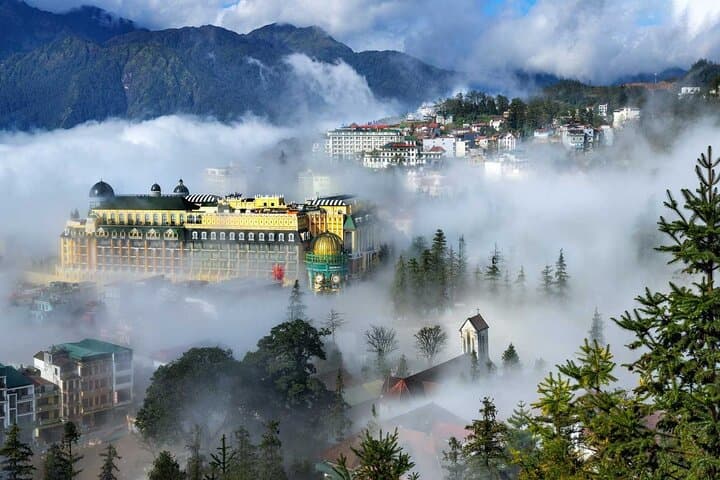
You stand at Tram Ton at dawn, the valley fog still clinging to terraces while porters and guides knot their packs. The air smells of pine and damp earth; the trail ahead climbs relentlessly toward Fansipan’s rocky crown, then, days later, the same hands that steady you on the ridge will lift a glass on the sunlit deck of a five‑star junk slicing through limestone towers in Ha Long Bay.
You stand at Tram Ton at dawn, the valley fog still clinging to terraces while porters and guides knot their packs. The air smells of pine and damp earth; the trail ahead climbs relentlessly toward Fansipan’s rocky crown, then, days later, the same hands that steady you on the ridge will lift a glass on the sunlit deck of a five‑star junk slicing through limestone towers in Ha Long Bay.
Fansipan is the highest peak of the Hoang Lien Son range (3,143 m). Geologically the massif is ancient metamorphic rock carved by monsoons and cold fronts; culturally it’s a meeting place for Hmong and Dao communities whose villages and costumes mark valleys below. The switchback from Tram Ton (approx. 1,900 m) to summit gains about 1,243 m of elevation over steep, often rocky trail that demands steady pacing. Expect forested sections, exposed ridgelines, and loose scree near the top.
Afterward the trip pivots to karst country: Ha Long and Lan Ha bays are catalogues of weathered limestone islands, mangrove fringes, and floating fishing villages where karst caves and hidden coves invite kayaking and swims.
Practical guidance: train with sustained uphill hikes and carry layers for rapid weather shifts; plan arrival in Sapa the night before heavy trekking; start the Fansipan push early to avoid afternoon storms; hydrate and eat frequent small meals to keep energy up. Footwear with firm ankle support, a 25–35 L daypack, waterproof shell, and a headlamp are practical essentials. Time your travel between March–May or September–November for the most stable conditions.