THE ADVENTURE COLLECTIVE® · Independent discovery and booking for outdoor travel

Six days of private touring from Chongqing to Guilin, blending dramatic karst geology, Tang‑era rock carvings, rice terraces and a Li River cruise with private transport, guide and most entrance fees included.
Six days of private touring from Chongqing to Guilin, blending dramatic karst geology, Tang‑era rock carvings, rice terraces and a Li River cruise with private transport, guide and most entrance fees included.
Morning fog peels off the Li River as your private van slips out of Chongqing’s layered skyline and toward karst country — cliffs that seem to grow vertically from rice paddies, caves that breathe cold air, and terraces cut like stacked steps into the hills.
Verified experiences and guided adventures in the surrounding area.
Operated by happychinatours · Guilin, Guangxi
Morning fog peels off the Li River as your private van slips out of Chongqing’s layered skyline and toward karst country — cliffs that seem to grow vertically from rice paddies, caves that breathe cold air, and terraces cut like stacked steps into the hills.
Over six days the route alternates engineered cities and slow countryside: Chongqing’s People’s Hall and Stilwell Museum give context to twentieth-century China; Wulong’s Three Natural Bridges expose the raw work of limestone and time as part of the South China Karst UNESCO landscape; Dazu’s cliff carvings date from the late Tang to early Song dynasties and offer some of China’s best-preserved grotto sculpture.
Guilin and Yangshuo supply the region’s iconic imagery — Reed Flute Cave’s multicolored stalactites, the Dragon’s Backbone terraces carved for 650+ years around Ping’an (about 527 m elevation at Baodingshan), and a four‑hour Li River cruise to Yangshuo that lets the river shape the day.
Expect moderate walking: stone steps up to viewing platforms, short treks at Longji, and a 50‑minute bamboo raft on the Yulong River. Logistics are straightforward — private guide, air‑conditioned vehicle, entrance fees and second‑class bullet train from Chongqing to Guilin are included — but plan for variable weather, shaded trails, and narrow village streets.
Practical tips: carry a compact rain jacket, comfortable grippy shoes for wet stone, a daypack with water and passport copy, and local cash for small villages. Traveling early and late in the day yields softer light for photos and cooler hiking conditions, while mid‑day is best for sheltered cave visits and meals.
moderate.
6 days.
Good general fitness for walking 30–90 minutes at a stretch, climbing stone steps and short treks; not technical.
Yes — the tour includes private air‑conditioned vehicle transfers and a second‑class bullet train ticket from Chongqing to Guilin.
The Ping’an section involves a moderate trek up stone steps (about 30–40 minutes to the village) and short walks to viewing platforms; take your time and use rests.
Entrance tickets and six lunches are included as noted in the itinerary; some optional activities (night show, souvenirs) are extra.
Yes — this private tour can add extra days or swap activities, but confirm adjustments with the operator when booking.
The Dazu cliff carvings were produced between the late Tang and early Song dynasties; the Three Natural Bridges form part of the South China Karst UNESCO landscape recognized for dramatic karst landforms.
High visitor numbers stress fragile terraces and cave formations—stay on marked paths, avoid touching stalactites, and minimize single‑use plastics when visiting rural communities.
happychinatours operates guided outdoor trips and adventures with an emphasis on safety, stewardship, and memorable experiences.

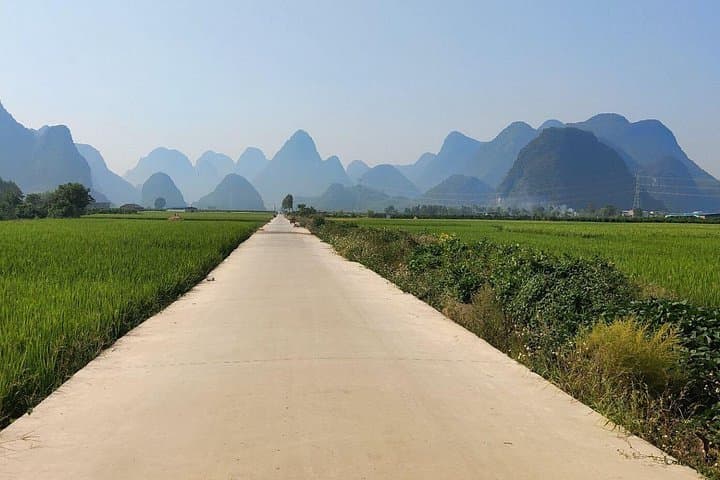


Morning fog peels off the Li River as your private van slips out of Chongqing’s layered skyline and toward karst country — cliffs that seem to grow vertically from rice paddies, caves that breathe cold air, and terraces cut like stacked steps into the hills.
Morning fog peels off the Li River as your private van slips out of Chongqing’s layered skyline and toward karst country — cliffs that seem to grow vertically from rice paddies, caves that breathe cold air, and terraces cut like stacked steps into the hills.
Over six days the route alternates engineered cities and slow countryside: Chongqing’s People’s Hall and Stilwell Museum give context to twentieth-century China; Wulong’s Three Natural Bridges expose the raw work of limestone and time as part of the South China Karst UNESCO landscape; Dazu’s cliff carvings date from the late Tang to early Song dynasties and offer some of China’s best-preserved grotto sculpture.
Guilin and Yangshuo supply the region’s iconic imagery — Reed Flute Cave’s multicolored stalactites, the Dragon’s Backbone terraces carved for 650+ years around Ping’an (about 527 m elevation at Baodingshan), and a four‑hour Li River cruise to Yangshuo that lets the river shape the day.
Expect moderate walking: stone steps up to viewing platforms, short treks at Longji, and a 50‑minute bamboo raft on the Yulong River. Logistics are straightforward — private guide, air‑conditioned vehicle, entrance fees and second‑class bullet train from Chongqing to Guilin are included — but plan for variable weather, shaded trails, and narrow village streets.
Practical tips: carry a compact rain jacket, comfortable grippy shoes for wet stone, a daypack with water and passport copy, and local cash for small villages. Traveling early and late in the day yields softer light for photos and cooler hiking conditions, while mid‑day is best for sheltered cave visits and meals.