THE ADVENTURE COLLECTIVE® · Independent discovery and booking for outdoor travel

Trace the high road from Cusco’s Incan stones to Machu Picchu’s terraces and the reed islands of Lake Titicaca in six days. This itinerary balances archaeological highlights with cultural encounters and practical travel logistics for high-altitude terrain.
Trace the high road from Cusco’s Incan stones to Machu Picchu’s terraces and the reed islands of Lake Titicaca in six days. This itinerary balances archaeological highlights with cultural encounters and practical travel logistics for high-altitude terrain.
The bus rounds a high puna ridge and the Andes open like pages in a field notebook—steep terraces, crumbling stone walls, and sunlight skimming the ridgelines. On this six-day loop from Cusco you move through altitudes and eras: colonial plazas give way to Inca terraces, then to the rivers and reed islands of Lake Titicaca.
Verified experiences and guided adventures in the surrounding area.
Operated by Conde Travel · Cusco, Cusco Region
The bus rounds a high puna ridge and the Andes open like pages in a field notebook—steep terraces, crumbling stone walls, and sunlight skimming the ridgelines. On this six-day loop from Cusco you move through altitudes and eras: colonial plazas give way to Inca terraces, then to the rivers and reed islands of Lake Titicaca.
Cusco sits at roughly 3,400 m, a living archive of Inca masonry and Spanish baroque. The Sacred Valley drops to 2,800–3,000 m where Moray’s concentric agricultural bowls and the salt pans of Maras reveal pre-Columbian laboratory thinking. Machu Picchu, at about 2,430 m, is a compact citadel of temples, terraces and sightlines carved into a steep granite spine. The journey eastward climbs the La Raya pass (4,335 m) before descending to the Altiplano and Puno at about 3,800 m, where the Uros reed islands and Taquile showcase living textile traditions.
Geology here is all uplifted volcanic and metamorphic rock shaped by glaciation; soils and microclimates change rapidly with elevation, which is why Inca engineers built test terraces. Cultural threads are visible everywhere—textile workshops in Chinchero, the ritual geometry of Qorikancha, and reed-craft on Titicaca.
Practical guidance: allow 24–48 hours in Cusco to acclimatize, carry sun protection and layers for 3,000–4,300 m swings, and choose sturdy shoes for uneven stone and short hikes. Trains to Aguas Calientes are scheduled and best booked in advance; Machu Picchu visits include a guided circuit but free time for self-exploration. Hydrate, move deliberately at altitude, and keep cash for market purchases—Peruvian mountain weather changes quickly, but the route is well-serviced with hotels and transport.
moderate.
6 days.
Moderate fitness; able to walk on uneven stone paths and tolerate altitude up to 4,335 m
Yes—many legs reach above 3,000 m. Take 24–48 hours in Cusco to acclimatize, stay hydrated, avoid heavy exertion on day one, and consult a doctor about acetazolamide if you have previous issues.
Entry is managed with time slots and trains; book tickets and train seats in advance and expect a guided two-hour circuit plus personal time for photos and short walks.
Most days involve short transfers, but the Cusco–Puno bus includes multiple stops and a longer daytime transfer that can total 6–8 hours with guided visits en route.
Card acceptance is limited on the Uros and Taquile islands; bring cash for crafts, food, and small boat fares.
The itinerary threads Inca centers of ritual agriculture and imperial administration with colonial-era towns; many sites were adapted rather than rebuilt by Spanish authorities.
Visitors should stick to marked paths at Machu Picchu and minimize single-use plastics; local communities depend on sustainable tourism and responsible waste practices.
Conde Travel operates guided outdoor trips and adventures with an emphasis on safety, stewardship, and memorable experiences.


The bus rounds a high puna ridge and the Andes open like pages in a field notebook—steep terraces, crumbling stone walls, and sunlight skimming the ridgelines. On this six-day loop from Cusco you move through altitudes and eras: colonial plazas give way to Inca terraces, then to the rivers and reed islands of Lake Titicaca.
The bus rounds a high puna ridge and the Andes open like pages in a field notebook—steep terraces, crumbling stone walls, and sunlight skimming the ridgelines. On this six-day loop from Cusco you move through altitudes and eras: colonial plazas give way to Inca terraces, then to the rivers and reed islands of Lake Titicaca.
Cusco sits at roughly 3,400 m, a living archive of Inca masonry and Spanish baroque. The Sacred Valley drops to 2,800–3,000 m where Moray’s concentric agricultural bowls and the salt pans of Maras reveal pre-Columbian laboratory thinking. Machu Picchu, at about 2,430 m, is a compact citadel of temples, terraces and sightlines carved into a steep granite spine. The journey eastward climbs the La Raya pass (4,335 m) before descending to the Altiplano and Puno at about 3,800 m, where the Uros reed islands and Taquile showcase living textile traditions.
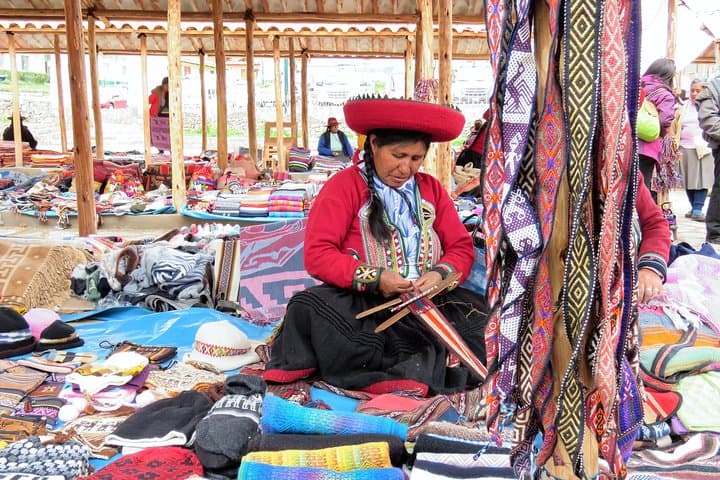
Geology here is all uplifted volcanic and metamorphic rock shaped by glaciation; soils and microclimates change rapidly with elevation, which is why Inca engineers built test terraces. Cultural threads are visible everywhere—textile workshops in Chinchero, the ritual geometry of Qorikancha, and reed-craft on Titicaca.
Practical guidance: allow 24–48 hours in Cusco to acclimatize, carry sun protection and layers for 3,000–4,300 m swings, and choose sturdy shoes for uneven stone and short hikes. Trains to Aguas Calientes are scheduled and best booked in advance; Machu Picchu visits include a guided circuit but free time for self-exploration. Hydrate, move deliberately at altitude, and keep cash for market purchases—Peruvian mountain weather changes quickly, but the route is well-serviced with hotels and transport.