THE ADVENTURE COLLECTIVE® · Independent discovery and booking for outdoor travel

Sail between Aswan and Luxor on a classic Nile cruise that pairs ancient temples with relaxed rivertime. This six-day itinerary includes train travel from Cairo and a sunrise visit to Abu Simbel.
Sail between Aswan and Luxor on a classic Nile cruise that pairs ancient temples with relaxed rivertime. This six-day itinerary includes train travel from Cairo and a sunrise visit to Abu Simbel.
At dawn the Nile slides past in a slow, bronze current and the cruise’s sun deck becomes a vantage point for two civilizations — Nubian riverfront hamlets on one bank and sun-baked temple façades on the other. Guests board an overnight train in Cairo, wake in Aswan to the Philae Temple, and then settle into three nights on a comfortable Nile vessel where the water seems to carry both history and heat.
Verified experiences and guided adventures in the surrounding area.
Operated by Here Egypt Tours · Aswan, Aswan Governorate
At dawn the Nile slides past in a slow, bronze current and the cruise’s sun deck becomes a vantage point for two civilizations — Nubian riverfront hamlets on one bank and sun-baked temple façades on the other. Guests board an overnight train in Cairo, wake in Aswan to the Philae Temple, and then settle into three nights on a comfortable Nile vessel where the water seems to carry both history and heat.
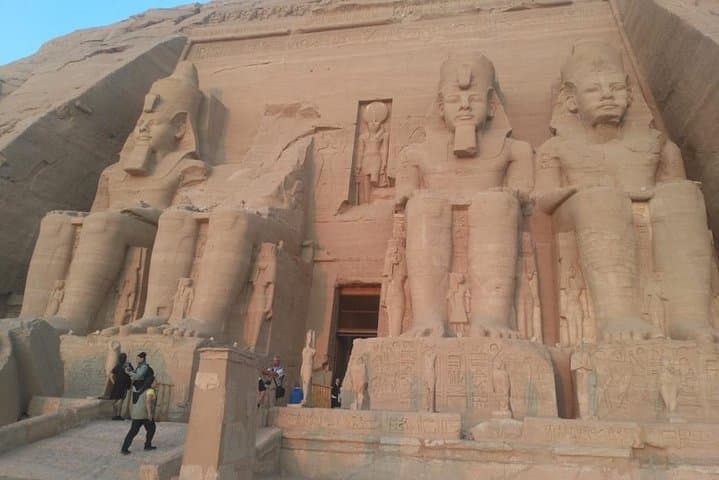
The itinerary threads Egypt’s layered past: Philae and the High Dam speak to modern engineering and ancient devotion, Abu Simbel carries the story of Ramesses II and the 1960s UNESCO relocation, and Luxor’s east and west banks reveal New Kingdom power in Karnak and the Valley of the Kings. Geologically the Nile carved its floodplain through silt and sandstone, creating cliffs where tombs were cut and ports grew.
Culturally the cruise exposes travelers to Nubian villages, temple priests, and the choreography of market life on the river. Expect guided walks on uneven stone, temple steps, and short coach transfers between sites. Practical planning matters: bring sun protection, a refillable bottle, sturdy walking shoes, and train-ride comforts for the overnight legs.
Timing is tactical — Abu Simbel is best at first light to avoid crowds and heat; Esna lock passage can be slow and photogenic. Guides often manage tickets and transfers, but travelers should carry passport copies and local currency for tips and small purchases. The trip balances low-impact river travel with active temple exploration, delivering big historical payoffs with manageable daily effort.
easy.
6 days.
Suitable for travelers with basic mobility; involves moderate walking on uneven stone, steps, and short coach transfers.
Abu Simbel is included on the itinerary but visits can be adjusted for weather or operational reasons; if canceled due to weather a partial refund policy may apply.
First-class A/C seated and sleeping-train options are available; trains are commonly used by tourists and the tour provides ticketing and transfers.
Many nationalities require a tourist visa for Egypt and standard travel vaccines are recommended; check current embassy guidance before travel.
The cruise is family-friendly but temple sites include steps and uneven paths; travelers with limited mobility should request accessibility details before booking.
The Nile has been Egypt’s lifeline for millennia; major sites like Abu Simbel were physically relocated in the 1960s to protect them from the rising waters of the High Dam.
Visitor flow is managed at sensitive temples and UNESCO-led efforts protect sites; minimize impact by staying on paths, avoiding flash photography in tombs, and using water sparingly on board.
Here Egypt Tours operates guided outdoor trips and adventures with an emphasis on safety, stewardship, and memorable experiences.
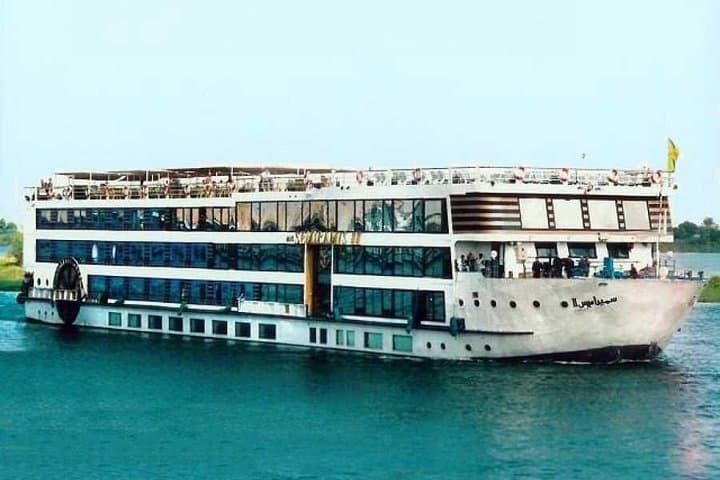
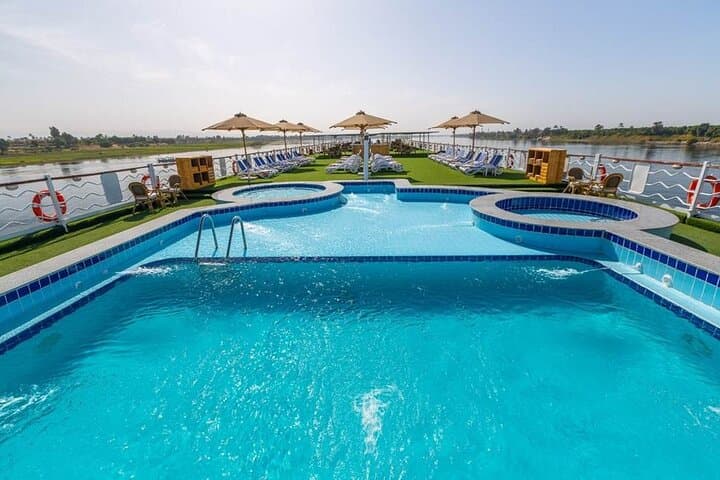
At dawn the Nile slides past in a slow, bronze current and the cruise’s sun deck becomes a vantage point for two civilizations — Nubian riverfront hamlets on one bank and sun-baked temple façades on the other. Guests board an overnight train in Cairo, wake in Aswan to the Philae Temple, and then settle into three nights on a comfortable Nile vessel where the water seems to carry both history and heat.
At dawn the Nile slides past in a slow, bronze current and the cruise’s sun deck becomes a vantage point for two civilizations — Nubian riverfront hamlets on one bank and sun-baked temple façades on the other. Guests board an overnight train in Cairo, wake in Aswan to the Philae Temple, and then settle into three nights on a comfortable Nile vessel where the water seems to carry both history and heat.
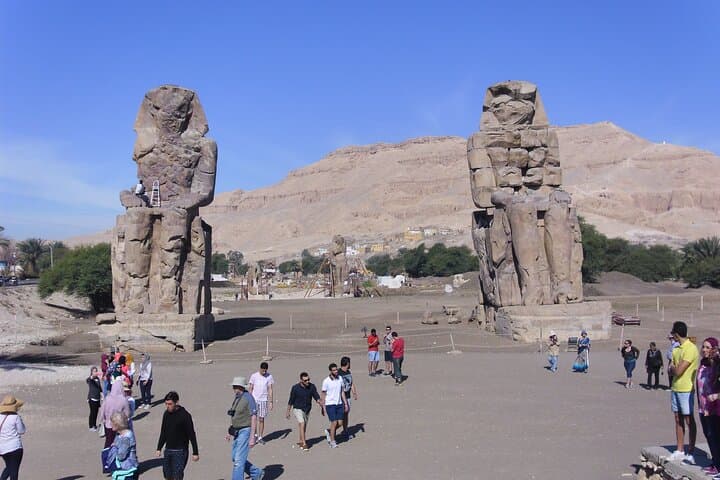
The itinerary threads Egypt’s layered past: Philae and the High Dam speak to modern engineering and ancient devotion, Abu Simbel carries the story of Ramesses II and the 1960s UNESCO relocation, and Luxor’s east and west banks reveal New Kingdom power in Karnak and the Valley of the Kings. Geologically the Nile carved its floodplain through silt and sandstone, creating cliffs where tombs were cut and ports grew.
Culturally the cruise exposes travelers to Nubian villages, temple priests, and the choreography of market life on the river. Expect guided walks on uneven stone, temple steps, and short coach transfers between sites. Practical planning matters: bring sun protection, a refillable bottle, sturdy walking shoes, and train-ride comforts for the overnight legs.
Timing is tactical — Abu Simbel is best at first light to avoid crowds and heat; Esna lock passage can be slow and photogenic. Guides often manage tickets and transfers, but travelers should carry passport copies and local currency for tips and small purchases. The trip balances low-impact river travel with active temple exploration, delivering big historical payoffs with manageable daily effort.