THE ADVENTURE COLLECTIVE® · Independent discovery and booking for outdoor travel

A steady six-day approach from Naro Moru or Sirimon to Point Lenana that trades technical climbing for sustained high-altitude trekking. Expect forest, alpine moorland, pre-dawn summit pushes and glacier-scarred ridgelines.
A steady six-day approach from Naro Moru or Sirimon to Point Lenana that trades technical climbing for sustained high-altitude trekking. Expect forest, alpine moorland, pre-dawn summit pushes and glacier-scarred ridgelines.
Dawn on the lower slopes of Mount Kenya feels like an engine warming—mist lifts from the forest and the trail tightens into a hard, purposeful line toward the alpine.
Verified experiences and guided adventures in the surrounding area.
Operated by Shagami Kenya Tours and Safaris · Nanyuki, Laikipia County
Dawn on the lower slopes of Mount Kenya feels like an engine warming—mist lifts from the forest and the trail tightens into a hard, purposeful line toward the alpine.
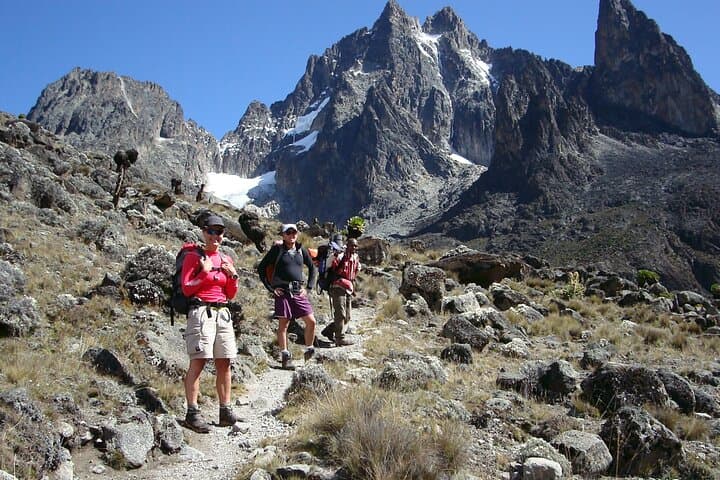
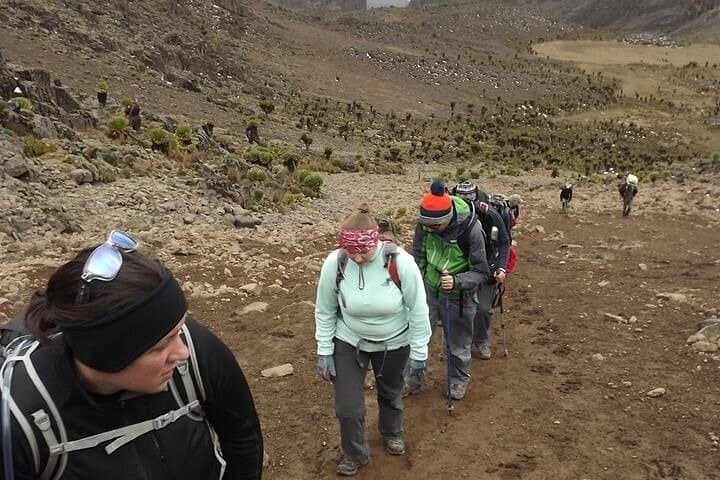
This six-day Naro Moru/Sirimon-style itinerary moves steadily from montane forest into heath and alpine moorland, then onto the high ridges that lead to Point Lenana (about 4,985 m). Along the way hikers cross heath, tussock grasslands and the upper Hausberg valley with views toward the Lewis and Tyndall glaciers and the sheer north faces of Batian and Nelion.
Mount Kenya is both geological monument and cultural landmark: carved by ancient volcanism and glaciation and long held sacred by the Kikuyu people. Early European explorers mapped the peaks at the turn of the 20th century; trails today still follow those historic approaches. Wildlife shifts with elevation—elephants and colobus monkeys in the forest, rock hyrax and specialized alpine plants higher up.
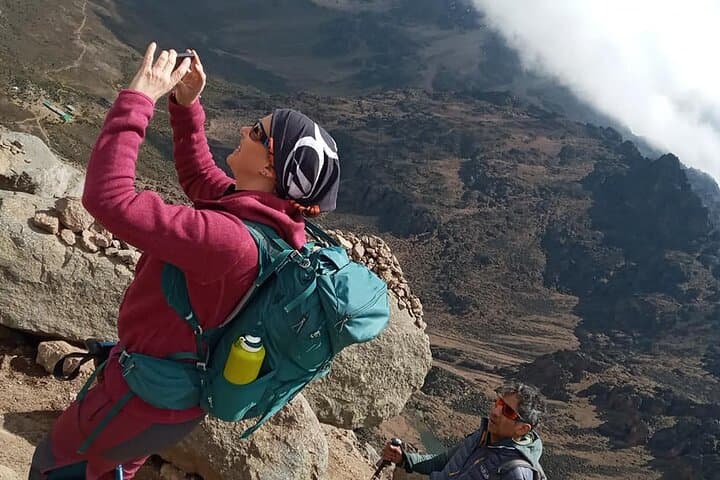
Practically, expect daily stages of 5–23 km with typical ascents of 300–900 m between camps, a pre-dawn summit push from Mackinders to Point Lenana, and a descent that tests knees more than lungs. Weather can swing from bright sun to sleet; glacier views are shrinking as the ice retreats.
Plan for deliberate pacing and acclimatization: hydrate, sleep extra at intermediate camps, and start summit bids at 2:00 a.m. Footwear with grip, warm layers, and a reliable headlamp matter more than speed. With careful preparation this route delivers big alpine exposure without technical climbing—just sustained, high-altitude walking and the chance to stand on one of Africa’s great shoulders.
challenging.
6 days.
Good aerobic fitness with experience on multi-day treks; ability to carry a 10–12 kg pack and walk 4–8 hours a day at altitude.
No—Point Lenana is a non-technical trek route; the challenge is altitude and sustained ascent rather than rock-climbing.
June–August and December–February tend to offer the most stable weather and clearer summit views; avoid long rains in March–May if possible.
Guides and crew are typically included on organized multi-day climbs; porters may carry communal gear but check booking details for personal porter availability.
Acute mountain sickness is possible above 3,000 m—proper pacing, hydration, and an extra acclimatization night reduce risk; descend if symptoms worsen.
Mount Kenya has long cultural significance for the Kikuyu and other local groups; European exploration and mapping intensified in the late 19th and early 20th centuries.
The route sits inside Mount Kenya National Park and Forest Reserve; visitors should follow park rules, minimize campfire use, and pack out waste as the glaciers are retreating and sensitive alpine soils recover slowly.
Shagami Kenya Tours and Safaris operates guided outdoor trips and adventures with an emphasis on safety, stewardship, and memorable experiences.

Dawn on the lower slopes of Mount Kenya feels like an engine warming—mist lifts from the forest and the trail tightens into a hard, purposeful line toward the alpine.
Dawn on the lower slopes of Mount Kenya feels like an engine warming—mist lifts from the forest and the trail tightens into a hard, purposeful line toward the alpine.
This six-day Naro Moru/Sirimon-style itinerary moves steadily from montane forest into heath and alpine moorland, then onto the high ridges that lead to Point Lenana (about 4,985 m). Along the way hikers cross heath, tussock grasslands and the upper Hausberg valley with views toward the Lewis and Tyndall glaciers and the sheer north faces of Batian and Nelion.
Mount Kenya is both geological monument and cultural landmark: carved by ancient volcanism and glaciation and long held sacred by the Kikuyu people. Early European explorers mapped the peaks at the turn of the 20th century; trails today still follow those historic approaches. Wildlife shifts with elevation—elephants and colobus monkeys in the forest, rock hyrax and specialized alpine plants higher up.
Practically, expect daily stages of 5–23 km with typical ascents of 300–900 m between camps, a pre-dawn summit push from Mackinders to Point Lenana, and a descent that tests knees more than lungs. Weather can swing from bright sun to sleet; glacier views are shrinking as the ice retreats.
Plan for deliberate pacing and acclimatization: hydrate, sleep extra at intermediate camps, and start summit bids at 2:00 a.m. Footwear with grip, warm layers, and a reliable headlamp matter more than speed. With careful preparation this route delivers big alpine exposure without technical climbing—just sustained, high-altitude walking and the chance to stand on one of Africa’s great shoulders.