THE ADVENTURE COLLECTIVE® · Independent discovery and booking for outdoor travel

Trek the Marangu (Coca‑Cola) Route over six days, moving hut‑to‑hut from rainforest to the summit crater. This practical guide explains what to expect, how to acclimatize and the gear that will get you to Uhuru Peak.
Trek the Marangu (Coca‑Cola) Route over six days, moving hut‑to‑hut from rainforest to the summit crater. This practical guide explains what to expect, how to acclimatize and the gear that will get you to Uhuru Peak.
Dawn at Marangu Gate is a wash of blue shadow: porters stoke stoves, guides adjust packs and the rainforest breathes steam into the trail. You step onto a narrow path that quickly folds into mossy trunks and dripping ferns; the mountain’s lower flanks pull you along with a steady, patient resistance.
Verified experiences and guided adventures in the surrounding area.
Operated by Karagwe Tours & Safaris · Marangu, Kilimanjaro Region
Dawn at Marangu Gate is a wash of blue shadow: porters stoke stoves, guides adjust packs and the rainforest breathes steam into the trail. You step onto a narrow path that quickly folds into mossy trunks and dripping ferns; the mountain’s lower flanks pull you along with a steady, patient resistance.
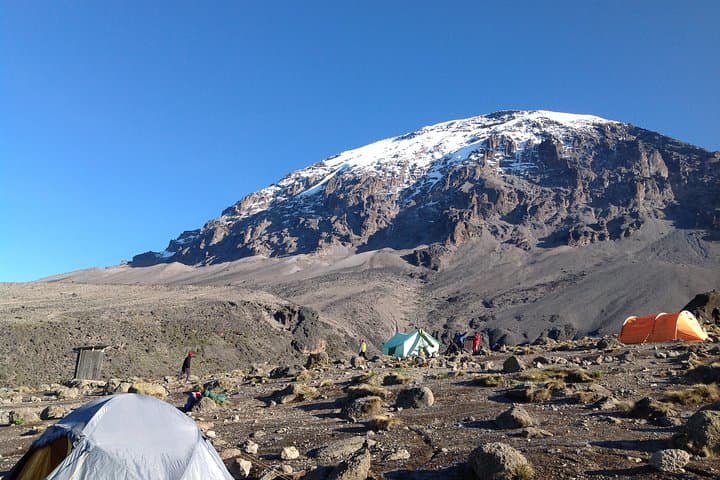
The Marangu Route—often called the Coca‑Cola Route—is Kilimanjaro’s oldest, hut-to-hut path. Its history is tied to early 20th‑century European exploration and the development of the park’s hut system, which still defines its character: predictable camps, established water points and clear lines of ascent. Geologically, you traverse rainforest into heath and moorland before the stark alpine desert and the volcanic saddle below Kibo’s crater rim.
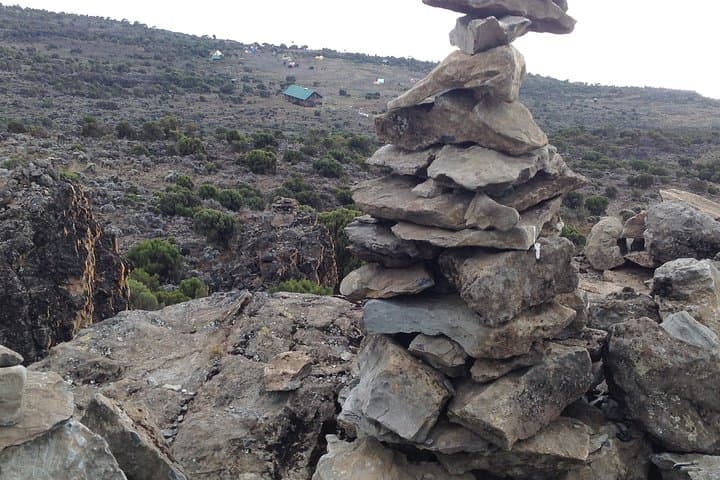
Culturally, the route passes Chagga farmland and villages where coffee and banana terraces frame the approach; guides and porters bring both local knowledge and the logistics that make a summit possible. Expect changing terrain—slick roots in the cloud forest, tussock and scree higher up—each section testing different muscles and resolve.
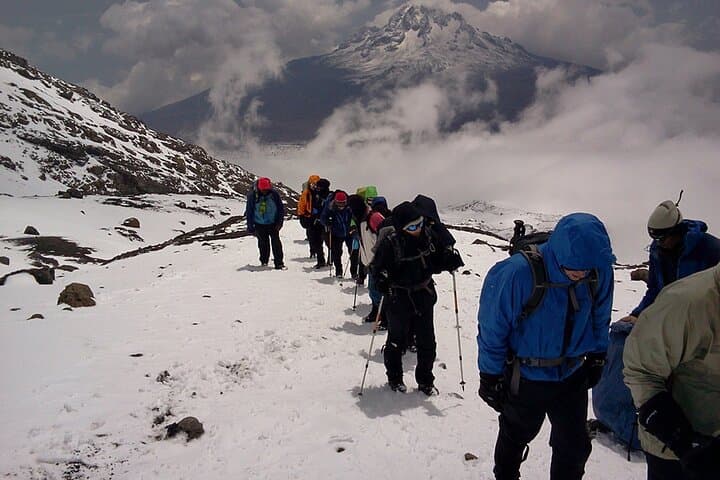
Practical guidance: pace your ascent, hydrate and prioritize sleep at Horombo Hut to aid acclimatization. Carry layers for sharp temperature swings and a reliable headlamp for the pre‑dawn summit push. Give the night summit attempt respect—it’s long, steep and altitude is the limiting factor, not technical difficulty. On descent, watch for loose scree and tired knees; trekking poles and good boots repay themselves.
This six‑day itinerary balances directness and acclimatization, making a summit attempt accessible to fit, well‑prepared trekkers who respect altitude and local mountain protocols.
challenging.
6 days.
Good cardiovascular fitness with experience on multi‑day hikes; ability to handle long days and high altitude is required
Marangu is often described as the easiest due to hut accommodation and a more gradual profile, but altitude remains the main challenge and success depends on acclimatization and fitness.
No technical climbing skills are required; the summit involves steep hiking over scree and snow, not rock climbing, but it requires stamina and altitude tolerance.
Huts have basic toilet facilities; water is available at lower huts—above ~4,130m you must manage limited water and may need to buy or melt snow at Kibo, so carry sufficient water capacity.
Park entrance and conservation fees are required; reputable operators include these in pricing and handle registration at Marangu Gate—always confirm inclusions before booking.
Marangu is Kilimanjaro’s oldest established route with the mountain hut system developed in the early 20th century to support guided ascents and tourism.
Kilimanjaro National Park manages visitor impact via park fees, waste management rules and porter welfare initiatives; trekkers should pack out non‑biodegradable waste and follow guide instructions.
Karagwe Tours & Safaris operates guided outdoor trips and adventures with an emphasis on safety, stewardship, and memorable experiences.
Dawn at Marangu Gate is a wash of blue shadow: porters stoke stoves, guides adjust packs and the rainforest breathes steam into the trail. You step onto a narrow path that quickly folds into mossy trunks and dripping ferns; the mountain’s lower flanks pull you along with a steady, patient resistance.
Dawn at Marangu Gate is a wash of blue shadow: porters stoke stoves, guides adjust packs and the rainforest breathes steam into the trail. You step onto a narrow path that quickly folds into mossy trunks and dripping ferns; the mountain’s lower flanks pull you along with a steady, patient resistance.
The Marangu Route—often called the Coca‑Cola Route—is Kilimanjaro’s oldest, hut-to-hut path. Its history is tied to early 20th‑century European exploration and the development of the park’s hut system, which still defines its character: predictable camps, established water points and clear lines of ascent. Geologically, you traverse rainforest into heath and moorland before the stark alpine desert and the volcanic saddle below Kibo’s crater rim.
Culturally, the route passes Chagga farmland and villages where coffee and banana terraces frame the approach; guides and porters bring both local knowledge and the logistics that make a summit possible. Expect changing terrain—slick roots in the cloud forest, tussock and scree higher up—each section testing different muscles and resolve.
Practical guidance: pace your ascent, hydrate and prioritize sleep at Horombo Hut to aid acclimatization. Carry layers for sharp temperature swings and a reliable headlamp for the pre‑dawn summit push. Give the night summit attempt respect—it’s long, steep and altitude is the limiting factor, not technical difficulty. On descent, watch for loose scree and tired knees; trekking poles and good boots repay themselves.
This six‑day itinerary balances directness and acclimatization, making a summit attempt accessible to fit, well‑prepared trekkers who respect altitude and local mountain protocols.