THE ADVENTURE COLLECTIVE® · Independent discovery and booking for outdoor travel

Follow the Machame Route from rainforest to summit on this six-day Kilimanjaro climb. Expect progressive altitude gains, varied terrain from muddy rainforest to scree, and practical tips to make the summit push safer and more comfortable.
Follow the Machame Route from rainforest to summit on this six-day Kilimanjaro climb. Expect progressive altitude gains, varied terrain from muddy rainforest to scree, and practical tips to make the summit push safer and more comfortable.
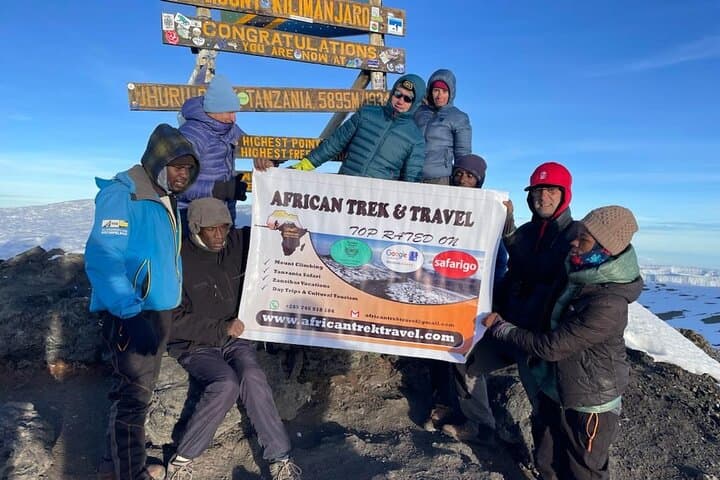
Dawn breaks over moss-draped trunks as you step through Machame Gate; the rainforest presses close, heavy with the scent of wet earth and mountain. Each day feels like a handhold on a living mountain — the forest gives way to heath, moorland, high desert and finally a staccato of scree beneath the crater rim. The Machame Route is a classic south-side approach that moves from 1,640 m at the gate to Uhuru Peak at 5,895 m in six days, trading wide vistas for hard, gradual gains designed to aid acclimatization.
Verified experiences and guided adventures in the surrounding area.
Operated by African Trek & Travel l.t.d (moshi) · Moshi, Kilimanjaro Region
Dawn breaks over moss-draped trunks as you step through Machame Gate; the rainforest presses close, heavy with the scent of wet earth and mountain. Each day feels like a handhold on a living mountain — the forest gives way to heath, moorland, high desert and finally a staccato of scree beneath the crater rim. The Machame Route is a classic south-side approach that moves from 1,640 m at the gate to Uhuru Peak at 5,895 m in six days, trading wide vistas for hard, gradual gains designed to aid acclimatization.
Geologically Kilimanjaro is a stratovolcano of three cones — Kibo, Mawenzi and Shira — with Kibo’s icy summit formed by volcanic uplift and glacial carving. Culturally the mountain sits in Chagga country: look for terraced farms and learn how local guides and porters keep long-standing mountain traditions alive. Flora shifts dramatically — towering rainforest, afro-alpine lobelias and the stubbled desert near the crater — and each belt feels like its own ecosystem with weather that can change without apology.
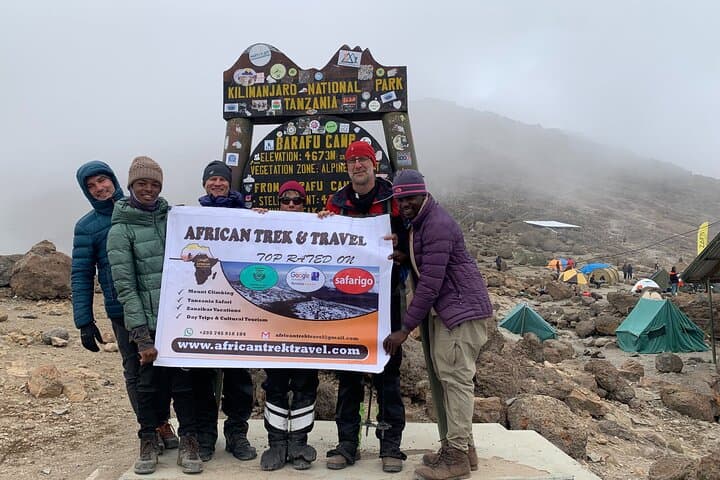
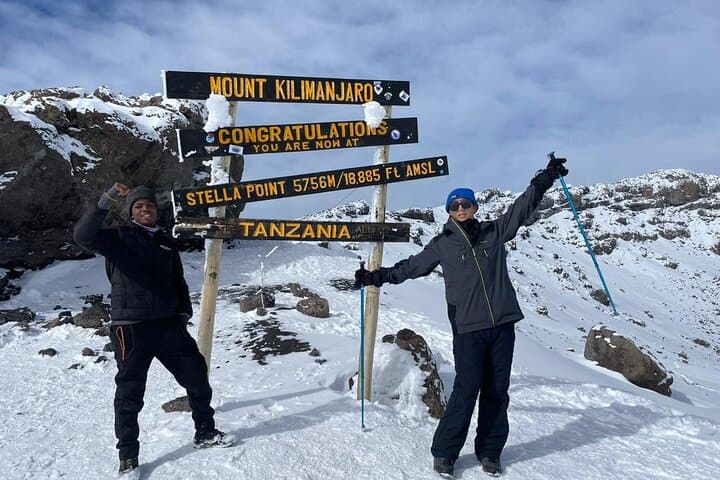
Practical guidance: average daily hiking is 4–8 hours with notable elevation gains (Day 1 ~+1,200 m; summit push from Barafu begins around midnight). Expect mixed terrain — muddy trails, rocky ridgelines and steep scree near Stella Point. Hydration, slow pacing, layered clothing and a reliable headlamp make the difference on summit night. Permit and park registration occur at Machame Gate; customary tipping for crew is done at the end in Moshi. With realistic fitness and respect for altitude, the Machame Route is one of the most rewarding non-technical climbs in Africa.
challenging.
6 days.
Good cardiovascular fitness and experience with multi-day hiking; ability to hike 4–8 hours per day at altitude is recommended
No technical mountaineering (ropes or glacier travel) is required on the Machame Route; the summit push is steep scree and loose rock but non-technical.
Dry seasons (January–March and June–October) offer more stable weather and clearer summit views, though climbs are possible year-round with proper preparation.
Summit rotations typically begin around midnight; expect 6–8 hours round trip from Barafu to Uhuru Peak and back to Barafu/Mweka depending on pace and conditions.
Permits and park registration are required; verify with your operator whether fees are included in the package before booking.
Kilimanjaro has long been a landmark for local Chagga people and was first summited in 1889; the mountain’s trails evolved with local guiding traditions and early European exploration.
Kilimanjaro National Park manages visitor impact with permit systems and strict camping sites; climbers should pack out plastics and minimize fire use to protect fragile high-altitude habitats.
African Trek & Travel l.t.d (moshi) operates guided outdoor trips and adventures with an emphasis on safety, stewardship, and memorable experiences.
Dawn breaks over moss-draped trunks as you step through Machame Gate; the rainforest presses close, heavy with the scent of wet earth and mountain. Each day feels like a handhold on a living mountain — the forest gives way to heath, moorland, high desert and finally a staccato of scree beneath the crater rim. The Machame Route is a classic south-side approach that moves from 1,640 m at the gate to Uhuru Peak at 5,895 m in six days, trading wide vistas for hard, gradual gains designed to aid acclimatization.
Dawn breaks over moss-draped trunks as you step through Machame Gate; the rainforest presses close, heavy with the scent of wet earth and mountain. Each day feels like a handhold on a living mountain — the forest gives way to heath, moorland, high desert and finally a staccato of scree beneath the crater rim. The Machame Route is a classic south-side approach that moves from 1,640 m at the gate to Uhuru Peak at 5,895 m in six days, trading wide vistas for hard, gradual gains designed to aid acclimatization.
Geologically Kilimanjaro is a stratovolcano of three cones — Kibo, Mawenzi and Shira — with Kibo’s icy summit formed by volcanic uplift and glacial carving. Culturally the mountain sits in Chagga country: look for terraced farms and learn how local guides and porters keep long-standing mountain traditions alive. Flora shifts dramatically — towering rainforest, afro-alpine lobelias and the stubbled desert near the crater — and each belt feels like its own ecosystem with weather that can change without apology.
Practical guidance: average daily hiking is 4–8 hours with notable elevation gains (Day 1 ~+1,200 m; summit push from Barafu begins around midnight). Expect mixed terrain — muddy trails, rocky ridgelines and steep scree near Stella Point. Hydration, slow pacing, layered clothing and a reliable headlamp make the difference on summit night. Permit and park registration occur at Machame Gate; customary tipping for crew is done at the end in Moshi. With realistic fitness and respect for altitude, the Machame Route is one of the most rewarding non-technical climbs in Africa.