THE ADVENTURE COLLECTIVE® · Independent discovery and booking for outdoor travel

Traverse rainforest, alpine moorland and lunar scree on the 6-day Lemosho Route to Uhuru Peak. This guided climb balances steady acclimatization with technical sections and offers sweeping Shira Plateau views before the long summit night.
Traverse rainforest, alpine moorland and lunar scree on the 6-day Lemosho Route to Uhuru Peak. This guided climb balances steady acclimatization with technical sections and offers sweeping Shira Plateau views before the long summit night.
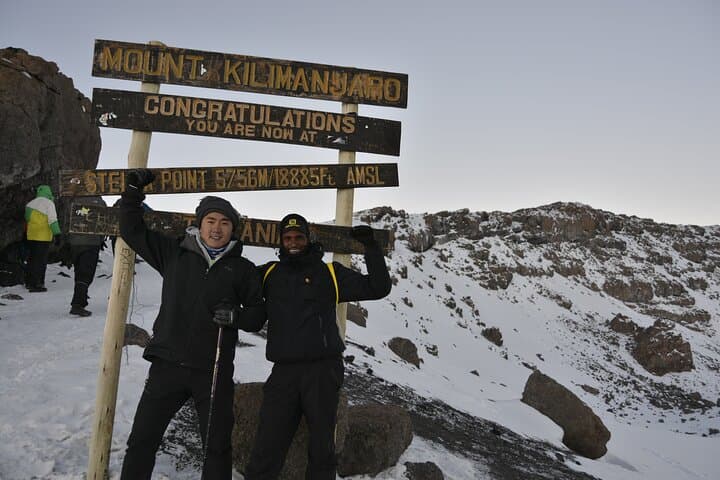
Rain-sticky air presses against your jacket as the trail slips under a green cathedral of moss and giant heather. Porters' footsteps and distant bird calls thread through the forest; the peak of Kibo appears and disappears like a promise through a shifting veil of cloud. On the Lemosho Route, the mountain opens in stages—first a cool, fern-lined climb, then a wide, windswept plateau, then the thin, lunar slope that leads to Stella Point and the rim. By the time the summit greets the first light, the crater cliffs have a gravity all their own, as if the mountain exhales and reveals its teeth.
Verified experiences and guided adventures in the surrounding area.
Operated by KILIMANJARO CLIMBING TOURS · Moshi, Kilimanjaro Region
Rain-sticky air presses against your jacket as the trail slips under a green cathedral of moss and giant heather. Porters' footsteps and distant bird calls thread through the forest; the peak of Kibo appears and disappears like a promise through a shifting veil of cloud. On the Lemosho Route, the mountain opens in stages—first a cool, fern-lined climb, then a wide, windswept plateau, then the thin, lunar slope that leads to Stella Point and the rim. By the time the summit greets the first light, the crater cliffs have a gravity all their own, as if the mountain exhales and reveals its teeth.
Geology has built Kilimanjaro in layers: Kibo, a dormant stratovolcano whose summit houses the ice-capped crater; Mawenzi, a jagged erosional remnant; and Shira, a collapsed caldera. The Lemosho Route approaches from the west, giving climbers early views across Shira Plateau and a gradual altitude profile that helps with acclimatization. The Chagga people have lived on Kilimanjaro’s lower slopes for centuries, farming coffee and banana terraces around Moshi, the town that has long been the gateway for summit attempts. European climbers first reached Uhuru Peak in 1889; today, every climb threads together local guides, porters and global travelers.
The itinerary compresses classic Lemosho highlights into six days: start at Lemosho Gate (~2,100 m) and move through Big Tree Camp into the Shira Plateau, an alpine moorland. Day three climbs from Shira 2 to the Lava Tower (approx. 4,630 m / 15,190 ft) — a 7 km push taking 4–5 hours — then descends 3 km to Barranco Camp for recovery. The hardest effort comes on summit night: a pre-dawn ascent from Barafu Camp to Stella Point and Uhuru Peak (5,895 m / 19,341 ft), then a long descent to Millennium and on to Mweka Gate.
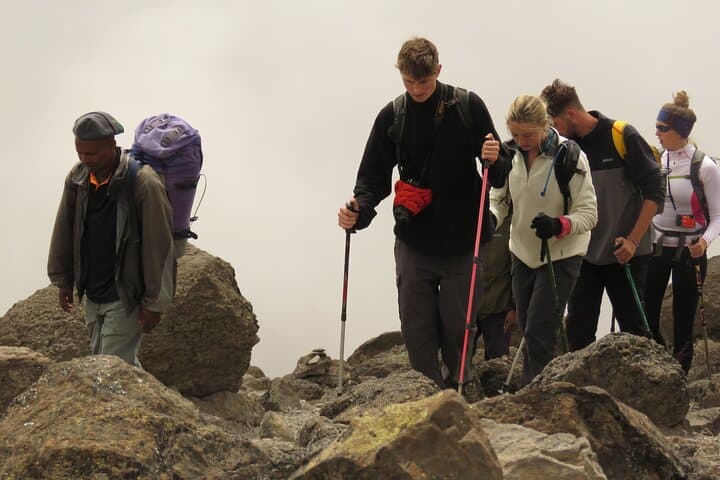
Practical edge: expect roughly 60–70 km cumulative hiking and ~3,700–3,800 m of elevation gain from Lemosho Gate to Uhuru Peak. Terrain varies from root-strewn rainforest to soft tussock and loose volcanic scree; trekking poles and layered insulation are essential. The tour includes camping, five breakfasts, five dinners and six lunches, portable toilet access, and hotel pickup in Moshi. Hydration, steady pacing and sleep are your best tools against altitude—follow your guides’ pace and consider a slow drinking regimen and Diamox only after medical consultation.
Book with at least a few days in Moshi to acclimatize and sort permits. Pack a reliable headlamp for the summit push, warm gloves and footwear with aggressive traction for scree. Respect park rules: Kilimanjaro National Park enforces permits and carries a conservation fee; stay on trail and minimize waste. Reach the summit and the mountain gives you not just a view, but a clearer sense of how raw geology, human history and careful planning combine to make a successful climb.
challenging.
6 days.
Good cardiovascular fitness and prior multi-day trekking experience recommended; able to hike 4–8 hours daily with varying elevation.
Compacting Lemosho into six days is achievable but demanding—there’s steady daily ascent and a long summit night; strong fitness and good acclimatization are essential.
This tour notes "All Fees and Taxes" included and provides camping logistics; confirm specific park permit coverage with the operator at booking.
Speak with a travel clinic about altitude medication (e.g., acetazolamide) and vaccinations; bring a basic first-aid kit and inform guides of medical history.
No technical climbing skills are required—this is a trek—however, experience with long days of hiking and high-altitude exposure is strongly recommended.
Camps provide tents and meals; the itinerary includes portable toilets and communal dining; hot showers are typically only available before and after the climb in Moshi hotels.
Dry months (January–March, June–October) offer more stable weather and clearer summit windows, though conditions on the mountain can change rapidly.
Kilimanjaro’s first recorded summit of Uhuru Peak was in 1889; the mountain’s routes now connect local Chagga culture and decades of international climbing traditions.
Kilimanjaro is a protected national park with strict permit rules—minimize waste, use designated toilet facilities and support local porters and guides ethically.
KILIMANJARO CLIMBING TOURS operates guided outdoor trips and adventures with an emphasis on safety, stewardship, and memorable experiences.
Rain-sticky air presses against your jacket as the trail slips under a green cathedral of moss and giant heather. Porters' footsteps and distant bird calls thread through the forest; the peak of Kibo appears and disappears like a promise through a shifting veil of cloud. On the Lemosho Route, the mountain opens in stages—first a cool, fern-lined climb, then a wide, windswept plateau, then the thin, lunar slope that leads to Stella Point and the rim. By the time the summit greets the first light, the crater cliffs have a gravity all their own, as if the mountain exhales and reveals its teeth.
Rain-sticky air presses against your jacket as the trail slips under a green cathedral of moss and giant heather. Porters' footsteps and distant bird calls thread through the forest; the peak of Kibo appears and disappears like a promise through a shifting veil of cloud. On the Lemosho Route, the mountain opens in stages—first a cool, fern-lined climb, then a wide, windswept plateau, then the thin, lunar slope that leads to Stella Point and the rim. By the time the summit greets the first light, the crater cliffs have a gravity all their own, as if the mountain exhales and reveals its teeth.
Geology has built Kilimanjaro in layers: Kibo, a dormant stratovolcano whose summit houses the ice-capped crater; Mawenzi, a jagged erosional remnant; and Shira, a collapsed caldera. The Lemosho Route approaches from the west, giving climbers early views across Shira Plateau and a gradual altitude profile that helps with acclimatization. The Chagga people have lived on Kilimanjaro’s lower slopes for centuries, farming coffee and banana terraces around Moshi, the town that has long been the gateway for summit attempts. European climbers first reached Uhuru Peak in 1889; today, every climb threads together local guides, porters and global travelers.
The itinerary compresses classic Lemosho highlights into six days: start at Lemosho Gate (~2,100 m) and move through Big Tree Camp into the Shira Plateau, an alpine moorland. Day three climbs from Shira 2 to the Lava Tower (approx. 4,630 m / 15,190 ft) — a 7 km push taking 4–5 hours — then descends 3 km to Barranco Camp for recovery. The hardest effort comes on summit night: a pre-dawn ascent from Barafu Camp to Stella Point and Uhuru Peak (5,895 m / 19,341 ft), then a long descent to Millennium and on to Mweka Gate.
Practical edge: expect roughly 60–70 km cumulative hiking and ~3,700–3,800 m of elevation gain from Lemosho Gate to Uhuru Peak. Terrain varies from root-strewn rainforest to soft tussock and loose volcanic scree; trekking poles and layered insulation are essential. The tour includes camping, five breakfasts, five dinners and six lunches, portable toilet access, and hotel pickup in Moshi. Hydration, steady pacing and sleep are your best tools against altitude—follow your guides’ pace and consider a slow drinking regimen and Diamox only after medical consultation.
Book with at least a few days in Moshi to acclimatize and sort permits. Pack a reliable headlamp for the summit push, warm gloves and footwear with aggressive traction for scree. Respect park rules: Kilimanjaro National Park enforces permits and carries a conservation fee; stay on trail and minimize waste. Reach the summit and the mountain gives you not just a view, but a clearer sense of how raw geology, human history and careful planning combine to make a successful climb.