THE ADVENTURE COLLECTIVE® · Independent discovery and booking for outdoor travel

Climb Kilimanjaro’s quieter north face on the Rongai Route: six days of rainforest, moorland, alpine desert and a pre-dawn summit push to Uhuru Peak. This guide covers what to expect, how to prepare, and essential tips for success.
Climb Kilimanjaro’s quieter north face on the Rongai Route: six days of rainforest, moorland, alpine desert and a pre-dawn summit push to Uhuru Peak. This guide covers what to expect, how to prepare, and essential tips for success.
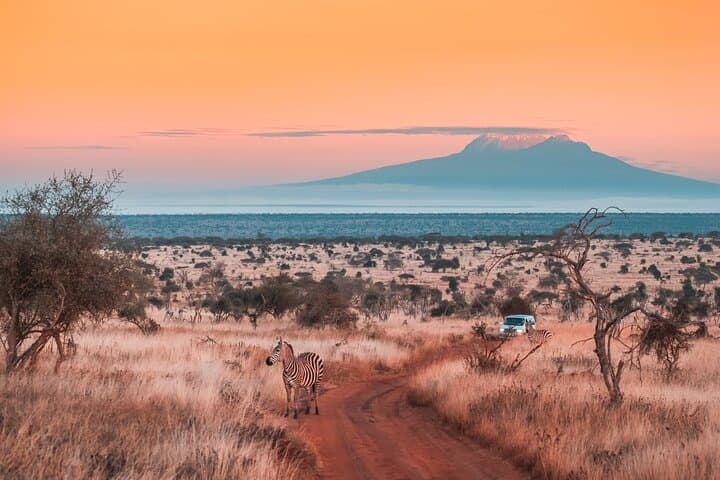
The minibus leaves Moshi before dawn, headlights cutting through a lattice of coffee trees and mist. By midmorning the road slips into forest and the air takes on a damp, green weight — leaves whisper, porters adjust loads, and the mountain’s north face hangs like a slow-moving promise. This is the Rongai Route: quieter than Marangu, steeper in places, and held by few visitors who prefer its northerly approach and drier microclimate during rains.
Verified experiences and guided adventures in the surrounding area.
Operated by Kentau Safaris · Moshi, Kilimanjaro Region
The minibus leaves Moshi before dawn, headlights cutting through a lattice of coffee trees and mist. By midmorning the road slips into forest and the air takes on a damp, green weight — leaves whisper, porters adjust loads, and the mountain’s north face hangs like a slow-moving promise. This is the Rongai Route: quieter than Marangu, steeper in places, and held by few visitors who prefer its northerly approach and drier microclimate during rains.
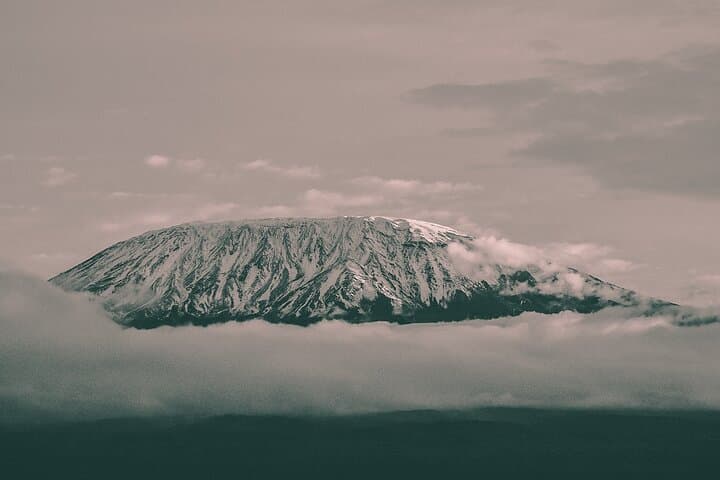
Geologically Kilimanjaro is a composite volcano with three cones — Kibo, Mawenzi and Shira. The Rongai approach skirts across rainforest and moorland before rising into alpine desert that reveals Kibo’s ice fields — the Rebmann and Ratzel glaciers that still crown the crater rim. The climb threads through Chagga agricultural lands and old caravan tracks used by local guides and communities for generations; European exploratory ascents in the late 19th century gave Kilimanjaro international fame, but the mountain remains central to local culture and livelihoods.
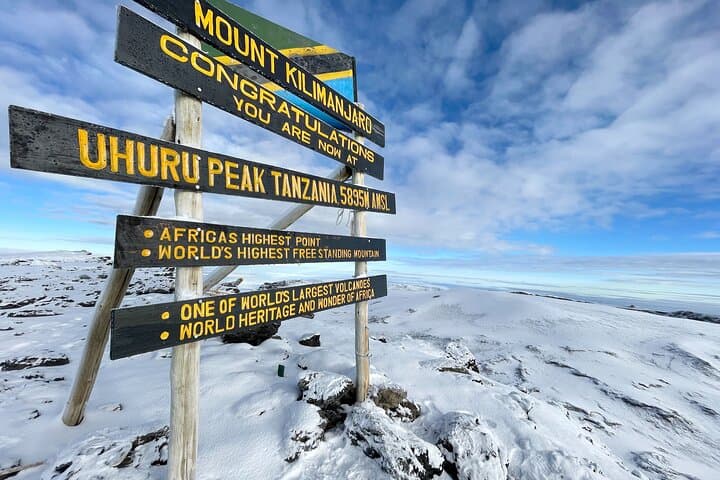
On this six-day itinerary you’ll cover roughly 62.5 km of trail and gain about 3,000 m in elevation from the park gate to Uhuru Peak (5,895 m). Daily stages are intentionally short in distance but focused on steady elevation gain: a rainforest climb to Simba Camp (7 km), a moorland push to Second Cave (5.8 km), a short day into semi-desert (3.3 km), a move toward Kibo Huts (6.7 km), the summit night — Stella Point and Uhuru Peak — and a long descent through Mandara and Marangu gates back to Moshi.
Expect terrain to change dramatically: muddy, root-tangled rainforest gives way to heather and tussock, then raw volcanic scree and wind-buffed rock. At altitude, the air is thin and unforgiving; the summit night starts between midnight and 2 a.m., with switchbacks, scree, and a reward of sunrise from Stella Point or Uhuru.
Practical guidance: pace is everything. Drink frequently, eat small meals, and practice the two-steps-forward, one-step-back rhythm on steep scree. Layering is essential — temperatures swing from humid jungle warmth to subzero summit wind. Your operator handles logistics: permits, camping, meals and transfers from Moshi, but be proactive about packing warm sleep layers, a reliable headlamp, and spare batteries. Tip your crew generously at trip’s end — they are the engine that makes summit success possible.
Rongai is suited to trekkers with moderate trekking experience who prioritize acclimatization and quieter trails. With careful pacing, respect for altitude, and solid gear, the route delivers one of Kilimanjaro’s most solitary and satisfying approaches to the roof of Africa.
challenging.
6 days (daily hikes 3–7 hours; summit night 5–7 hours ascent plus descent).
Good cardiovascular fitness with prior multi-day trekking experience; ability to carry a daypack for long summit push.
June to October and January to February are the driest and clearest; Rongai performs better during rains because the north side gets less precipitation.
The summit night is the longest and most strenuous: plan for a midnight start, 5–7 hours to the crater rim, and steep scree — pacing and layers are critical.
No technical climbing skills are required, but prior multi-day trekking experience and good fitness improve your odds of success.
Acute Mountain Sickness can occur; guides monitor symptoms, and itineraries emphasize acclimatization—descend if severe symptoms appear.
This package includes camping accommodations on the mountain and meals as listed; hotels in Moshi are separate.
Budget roughly $15–25 per porter per trek day and $20–40 for guides overall, depending on service and group size.
The Chagga people have lived in Kilimanjaro’s foothills for centuries; European explorers popularized summit attempts in the late 1800s while local guides have long been custodians of the routes.
Kilimanjaro National Park fees fund conservation and porter welfare programs; respect camp rules, pack out waste, and support ethical operators that pay fair wages.
Kentau Safaris operates guided outdoor trips and adventures with an emphasis on safety, stewardship, and memorable experiences.
The minibus leaves Moshi before dawn, headlights cutting through a lattice of coffee trees and mist. By midmorning the road slips into forest and the air takes on a damp, green weight — leaves whisper, porters adjust loads, and the mountain’s north face hangs like a slow-moving promise. This is the Rongai Route: quieter than Marangu, steeper in places, and held by few visitors who prefer its northerly approach and drier microclimate during rains.
The minibus leaves Moshi before dawn, headlights cutting through a lattice of coffee trees and mist. By midmorning the road slips into forest and the air takes on a damp, green weight — leaves whisper, porters adjust loads, and the mountain’s north face hangs like a slow-moving promise. This is the Rongai Route: quieter than Marangu, steeper in places, and held by few visitors who prefer its northerly approach and drier microclimate during rains.
Geologically Kilimanjaro is a composite volcano with three cones — Kibo, Mawenzi and Shira. The Rongai approach skirts across rainforest and moorland before rising into alpine desert that reveals Kibo’s ice fields — the Rebmann and Ratzel glaciers that still crown the crater rim. The climb threads through Chagga agricultural lands and old caravan tracks used by local guides and communities for generations; European exploratory ascents in the late 19th century gave Kilimanjaro international fame, but the mountain remains central to local culture and livelihoods.
On this six-day itinerary you’ll cover roughly 62.5 km of trail and gain about 3,000 m in elevation from the park gate to Uhuru Peak (5,895 m). Daily stages are intentionally short in distance but focused on steady elevation gain: a rainforest climb to Simba Camp (7 km), a moorland push to Second Cave (5.8 km), a short day into semi-desert (3.3 km), a move toward Kibo Huts (6.7 km), the summit night — Stella Point and Uhuru Peak — and a long descent through Mandara and Marangu gates back to Moshi.
Expect terrain to change dramatically: muddy, root-tangled rainforest gives way to heather and tussock, then raw volcanic scree and wind-buffed rock. At altitude, the air is thin and unforgiving; the summit night starts between midnight and 2 a.m., with switchbacks, scree, and a reward of sunrise from Stella Point or Uhuru.
Practical guidance: pace is everything. Drink frequently, eat small meals, and practice the two-steps-forward, one-step-back rhythm on steep scree. Layering is essential — temperatures swing from humid jungle warmth to subzero summit wind. Your operator handles logistics: permits, camping, meals and transfers from Moshi, but be proactive about packing warm sleep layers, a reliable headlamp, and spare batteries. Tip your crew generously at trip’s end — they are the engine that makes summit success possible.
Rongai is suited to trekkers with moderate trekking experience who prioritize acclimatization and quieter trails. With careful pacing, respect for altitude, and solid gear, the route delivers one of Kilimanjaro’s most solitary and satisfying approaches to the roof of Africa.