THE ADVENTURE COLLECTIVE® · Independent discovery and booking for outdoor travel

This six-day private circuit threads Jordan’s highlights from Amman to the Dead Sea—Petra’s carved facades, Wadi Rum’s desert silence, and Jerash’s colonnaded avenues. Practical, compact, and culturally rich, it’s a logistic-friendly way to see Jordan’s signature landscapes.
This six-day private circuit threads Jordan’s highlights from Amman to the Dead Sea—Petra’s carved facades, Wadi Rum’s desert silence, and Jerash’s colonnaded avenues. Practical, compact, and culturally rich, it’s a logistic-friendly way to see Jordan’s signature landscapes.
Dust from the Kings' Highway lifts as the minivan threads between limestone ridges and ochre dunes, and the first morning in Amman feels tangible—callused mosaic stones underfoot, city traffic humming, and the air carrying incense and cardamom. Over six days the route moves from Roman theaters and Byzantine mosaics to Nabatean rock-carved facades, then out across Wadi Rum’s silent sandstone to the buoyant surface of the Dead Sea.
Verified experiences and guided adventures in the surrounding area.
Operated by Jordan Private Tours and Travel · Amman, Amman Governorate
Dust from the Kings' Highway lifts as the minivan threads between limestone ridges and ochre dunes, and the first morning in Amman feels tangible—callused mosaic stones underfoot, city traffic humming, and the air carrying incense and cardamom. Over six days the route moves from Roman theaters and Byzantine mosaics to Nabatean rock-carved facades, then out across Wadi Rum’s silent sandstone to the buoyant surface of the Dead Sea.
History here is physical: Jerash preserves Greco-Roman columns that still hold line and shadow; Petra’s facades are sandstone pages carved by Nabatean hands and wind; Karak Castle records Crusader and Ottoman strategies in its thick walls. Geology explains the color shifts—limestones and sandstones erode differently, so cliffs, canyons, and dunes read like a layered field guide.
Culture appears in small things: Bedouin tea poured at sunset, mosaic art workshops in Madaba, and the communal rhythm of markets in Amman. Wadi Rum sits within a protected area—its fragile desert crust and sparse scrub require low-impact travel.
Practical guidance: plan for early starts in summer to avoid peak heat, carry 2–3 liters of water, and wear sturdy shoes for Petra’s uneven steps and short canyon scrambles. The itinerary includes a 2-hour jeep safari and one night at a Bedouin camp roughly 8–12 km from the nearest road, so expect basic facilities and simple meals. Purchase a Jordan Pass in advance to streamline site entries where applicable. With moderate fitness and layered clothing, this circuit offers concentrated exposure to Jordan’s landscapes, history, and desert nights without technical climbing or long treks.
moderate.
6 days.
Moderate fitness recommended—comfortable walking for several hours, some uneven terrain and short climbs in Petra and Wadi Rum.
Yes: the tour accepts single travelers, though single-room supplements may apply; check booking options for rooming policies.
Entrance fees and local site guides are not included unless specified; purchasing the Jordan Pass often covers major site entries.
The camp is located inside Wadi Rum Protected Area roughly 8–12 km from the nearest paved road and village, offering basic facilities and a Jeep tour included in the itinerary.
Many nationalities benefit from the Jordan Pass which waives visa fees if purchased before arrival; check Jordan Pass eligibility and your country’s entry requirements.
Petra was the Nabatean kingdom’s capital and a key caravan hub; Jerash grew under Roman influence as a provincial center. Karak Castle reflects Crusader and subsequent military layers along the Kings' Highway.
Wadi Rum is a designated protected area; visitors should follow marked tracks and avoid collecting artifacts. The Dead Sea region faces water-level decline—minimize freshwater usage and support responsible operators.
Jordan Private Tours and Travel operates guided outdoor trips and adventures with an emphasis on safety, stewardship, and memorable experiences.

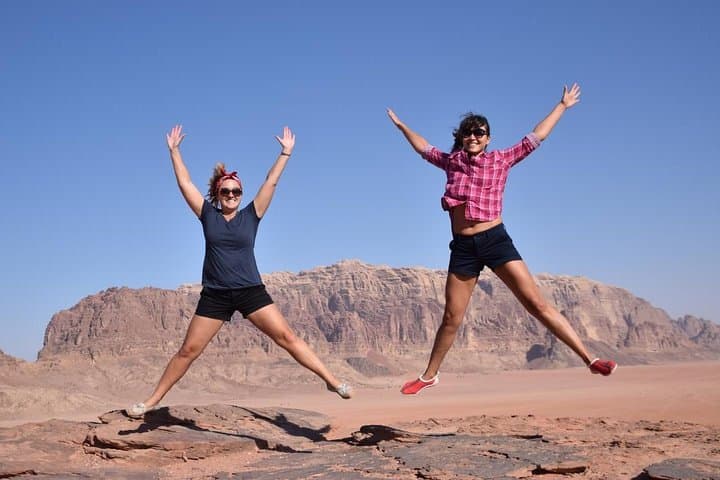

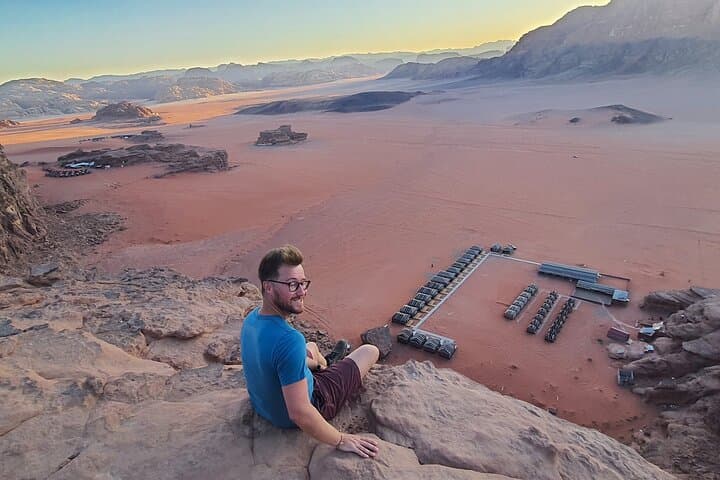
Dust from the Kings' Highway lifts as the minivan threads between limestone ridges and ochre dunes, and the first morning in Amman feels tangible—callused mosaic stones underfoot, city traffic humming, and the air carrying incense and cardamom. Over six days the route moves from Roman theaters and Byzantine mosaics to Nabatean rock-carved facades, then out across Wadi Rum’s silent sandstone to the buoyant surface of the Dead Sea.
Dust from the Kings' Highway lifts as the minivan threads between limestone ridges and ochre dunes, and the first morning in Amman feels tangible—callused mosaic stones underfoot, city traffic humming, and the air carrying incense and cardamom. Over six days the route moves from Roman theaters and Byzantine mosaics to Nabatean rock-carved facades, then out across Wadi Rum’s silent sandstone to the buoyant surface of the Dead Sea.
History here is physical: Jerash preserves Greco-Roman columns that still hold line and shadow; Petra’s facades are sandstone pages carved by Nabatean hands and wind; Karak Castle records Crusader and Ottoman strategies in its thick walls. Geology explains the color shifts—limestones and sandstones erode differently, so cliffs, canyons, and dunes read like a layered field guide.
Culture appears in small things: Bedouin tea poured at sunset, mosaic art workshops in Madaba, and the communal rhythm of markets in Amman. Wadi Rum sits within a protected area—its fragile desert crust and sparse scrub require low-impact travel.
Practical guidance: plan for early starts in summer to avoid peak heat, carry 2–3 liters of water, and wear sturdy shoes for Petra’s uneven steps and short canyon scrambles. The itinerary includes a 2-hour jeep safari and one night at a Bedouin camp roughly 8–12 km from the nearest road, so expect basic facilities and simple meals. Purchase a Jordan Pass in advance to streamline site entries where applicable. With moderate fitness and layered clothing, this circuit offers concentrated exposure to Jordan’s landscapes, history, and desert nights without technical climbing or long treks.