THE ADVENTURE COLLECTIVE® · Independent discovery and booking for outdoor travel

Swap Marrakech’s heat for nights under the stars and six days of walking through the raw Jbel Saghro massif. This guided trek links juniper-clad cols, pink-laurel gorges and remote Berber villages with wild camping and local mule support.
Swap Marrakech’s heat for nights under the stars and six days of walking through the raw Jbel Saghro massif. This guided trek links juniper-clad cols, pink-laurel gorges and remote Berber villages with wild camping and local mule support.
Night falls hard in the Saghro: stars spill across a sky with no light pollution, and the massif’s ridges drop away into deep ochre shadows. On day one the drive from Marrakech loosens the city’s bustle, trading tarmac for palm groves and kasbahs until the Dadès valley narrows and dry riverbeds begin to dare you to cross them.
Verified experiences and guided adventures in the surrounding area.
Operated by Smart Morocco Tours Excursions · Marrakech, Marrakesh-Safi
Night falls hard in the Saghro: stars spill across a sky with no light pollution, and the massif’s ridges drop away into deep ochre shadows. On day one the drive from Marrakech loosens the city’s bustle, trading tarmac for palm groves and kasbahs until the Dadès valley narrows and dry riverbeds begin to dare you to cross them.
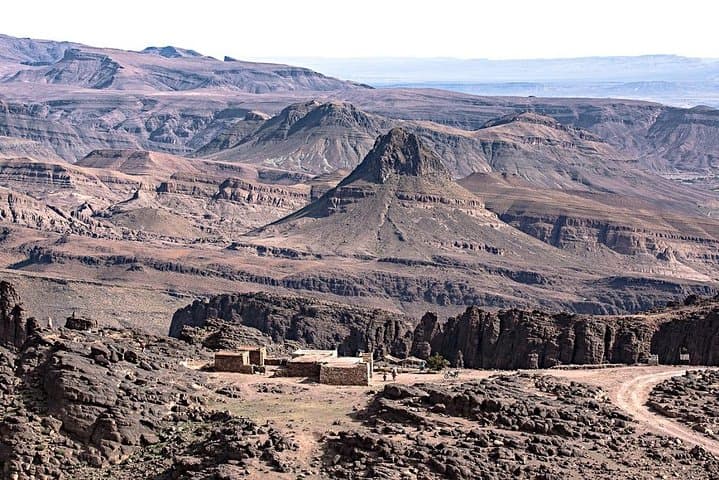
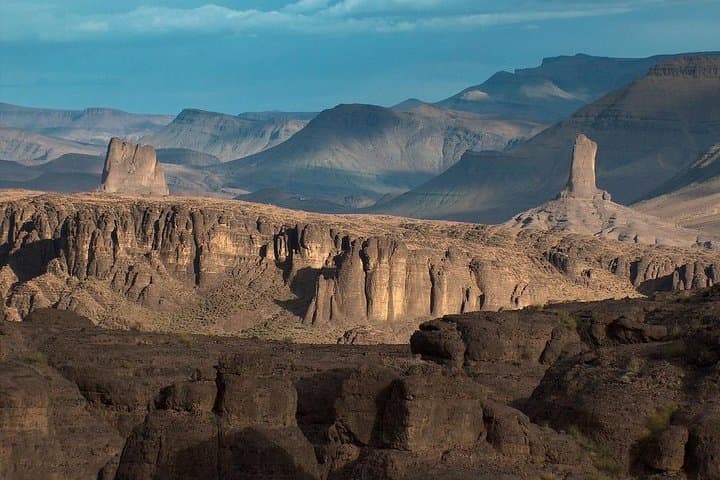
Geology here is blunt and ancient—folded volcanic and sedimentary rock carved by wind and episodic floods into serrated ridgelines and pink-laurel gorges. The human story is close: small Berber villages, mule tracks and ruined kasbahs mark centuries of nomadic routes and local trade. Guides and muleteers keep those routes alive; nights are spent in simple gites and under tents beside the oued.
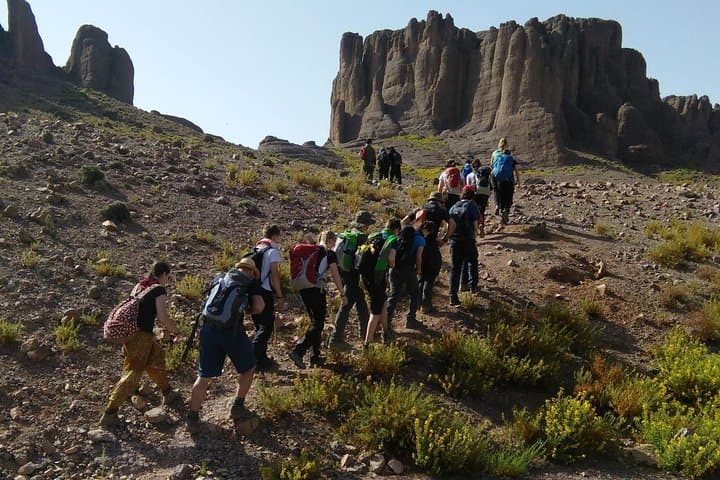
Expect 4–6 hours of walking most days on loose scree, packed dirt tracks, juniper stands and occasional steep pitches (some days include ~200 m+ climbs). Terrain demands steady footing rather than technical gear; navigation is guided but can be exposed and remote.
Practical edge: aim for spring or autumn for milder temperatures, pack a warm 3-season sleeping bag for nights that can drop sharply, and carry at least 2.5–3 L of water with purification backup—water points are intermittent. Respect local customs in villages, tip muleteers, and use leave-no-trace practices: the Saghro’s sparse vegetation and fragile soils recover slowly. This is a guided, multi-day immersion in southern Morocco’s raw uplands—rough, quiet and rewarding for hikers who want wild camping and authentic Berber encounters.
moderate.
6 days.
Should be comfortable walking 4–6 hours per day on uneven terrain and able to manage short elevation gains of 150–400 m.
Participants should have a moderate level of fitness—able to hike 4–6 hours a day on uneven ground and manage regular ascents/descents.
The trek includes guided wild camping and local camp equipment, but confirm sleeping bag requirements and personal items with the operator.
Much of the Saghro is remote; cell coverage is intermittent, so the guide carries basic emergency equipment and transfers are arranged from Marrakech.
Spring and autumn offer the most comfortable temperatures and flowering in some valleys; summer can be very hot and winter may bring cold nights and occasional snow at higher elevations.
The Saghro massif sits on traditional Berber lands used by nomadic herders and caravan routes; abandoned kasbahs mark a long history of local agriculture and trade.
This is a fragile semi-arid ecosystem—minimize campfire use, pack out all waste, and conserve water; support local guides who practice low-impact camping.
Smart Morocco Tours Excursions operates guided outdoor trips and adventures with an emphasis on safety, stewardship, and memorable experiences.

Night falls hard in the Saghro: stars spill across a sky with no light pollution, and the massif’s ridges drop away into deep ochre shadows. On day one the drive from Marrakech loosens the city’s bustle, trading tarmac for palm groves and kasbahs until the Dadès valley narrows and dry riverbeds begin to dare you to cross them.
Night falls hard in the Saghro: stars spill across a sky with no light pollution, and the massif’s ridges drop away into deep ochre shadows. On day one the drive from Marrakech loosens the city’s bustle, trading tarmac for palm groves and kasbahs until the Dadès valley narrows and dry riverbeds begin to dare you to cross them.
Geology here is blunt and ancient—folded volcanic and sedimentary rock carved by wind and episodic floods into serrated ridgelines and pink-laurel gorges. The human story is close: small Berber villages, mule tracks and ruined kasbahs mark centuries of nomadic routes and local trade. Guides and muleteers keep those routes alive; nights are spent in simple gites and under tents beside the oued.
Expect 4–6 hours of walking most days on loose scree, packed dirt tracks, juniper stands and occasional steep pitches (some days include ~200 m+ climbs). Terrain demands steady footing rather than technical gear; navigation is guided but can be exposed and remote.
Practical edge: aim for spring or autumn for milder temperatures, pack a warm 3-season sleeping bag for nights that can drop sharply, and carry at least 2.5–3 L of water with purification backup—water points are intermittent. Respect local customs in villages, tip muleteers, and use leave-no-trace practices: the Saghro’s sparse vegetation and fragile soils recover slowly. This is a guided, multi-day immersion in southern Morocco’s raw uplands—rough, quiet and rewarding for hikers who want wild camping and authentic Berber encounters.