THE ADVENTURE COLLECTIVE® · Independent discovery and booking for outdoor travel

Cross High Atlas passes, explore a UNESCO ksar and sleep under desert stars on a six-day loop from Marrakech. This itinerary blends Marrakech’s medina culture with mountain gorges, fossil towns and the orange ridges of Erg Chebbi.
Cross High Atlas passes, explore a UNESCO ksar and sleep under desert stars on a six-day loop from Marrakech. This itinerary blends Marrakech’s medina culture with mountain gorges, fossil towns and the orange ridges of Erg Chebbi.
The clatter of the medina fades as your vehicle leaves Marrakech, the city’s ochre walls shrinking behind you while the High Atlas rises like a wall of wind and stone.
Verified experiences and guided adventures in the surrounding area.
Operated by Sunny Morocco · Marrakech, Marrakesh-Safi
The clatter of the medina fades as your vehicle leaves Marrakech, the city’s ochre walls shrinking behind you while the High Atlas rises like a wall of wind and stone.
By mid-morning you roll through the Tizi n’Tichka pass (≈2,260 m), where terraced Berber villages and plunging river valleys give way to ochre kasbahs. Ait Ben Haddou appears as stacked earthen houses against the sky — a fortified ksar with a cinematic reputation. Further south the road loosens into rose-scented valleys and the dramatic canyons of Dades and Todra, whose vertical limestone walls climb hundreds of meters above the river. Then the landscape changes: miles of hammada hardpan and a sudden sweep of golden Erg Chebbi dunes, where camel caravans creak across the lip of the desert toward a camp for sunset.
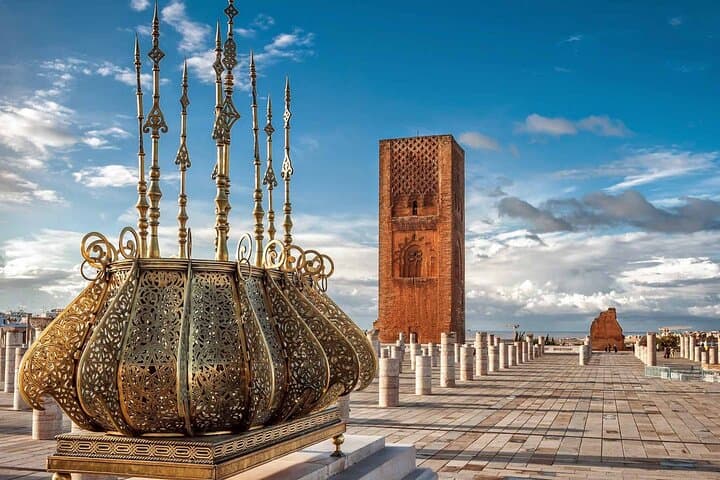
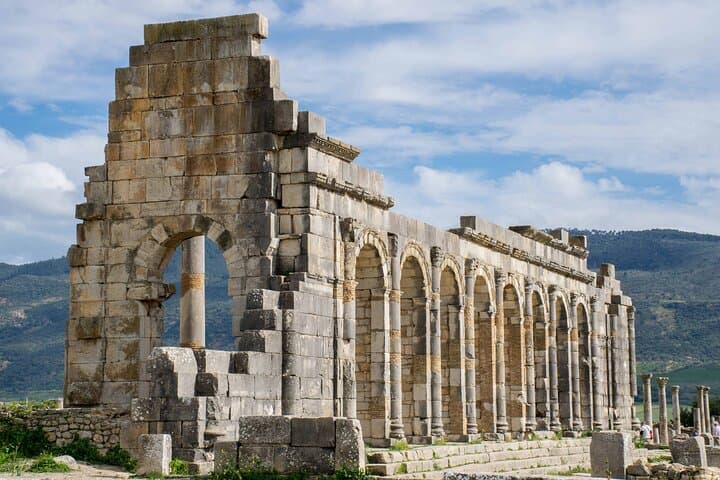
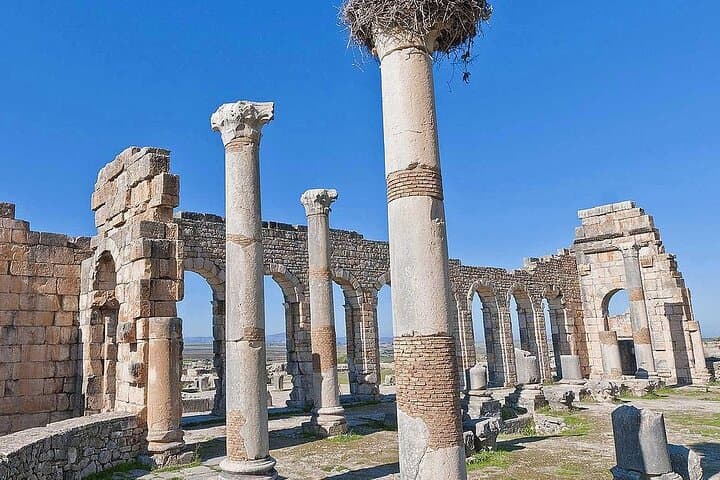
This route threads Morocco’s cultural and geological layers: Saadian and Alaouite-era palaces in Marrakech, Roman mosaics at Volubilis, the cedar forests around Azrou, and fossil workshops near Erfoud that speak to ancient seas.
Practical guidance: expect long driving days (some legs 4–6 hours). Pack layered clothing for 0–20°C swings between desert nights and mountain passes; bring cash for small purchases and modest dress for religious sites. Sunrise and sunset on the dunes are the high points — plan early starts and evenings in camp. Mobility requirements are low, but uneven surfaces, camel saddles, and stairs in riads mean comfortable shoes and basic balance are helpful.
The trip balances cultural city walks, dramatic mountain roads, and the elemental silence of the Sahara — a compact, six-day cross-section of Morocco’s diverse terrain and history.
moderate.
6 days.
Suitable for travelers with basic fitness; daily walking in medina streets and dunes plus long vehicle transfers require stamina for multi-hour days.
Expect several long drives—many legs range from 3 to 6 hours depending on stops; the route balances driving with guided visits and short hikes.
Camps typically offer basic private tents with mattresses, blankets and shared or private facilities depending on the operator; nights can be chilly.
Most breakfasts, lunches and dinners during the tour are included and select site admissions (e.g., Ait Ben Haddou) are often covered; confirm specifics at booking.
The tour is rated easy for most fitness levels, but camel rides, uneven surfaces and steps in riads mean a reasonable mobility level is recommended; check accessibility needs with the operator.
The route connects imperial-era cities (Marrakech, Fez, Meknes) with caravan-era sites and Roman Volubilis, reflecting layers of Berber, Arab and Roman influence.
The Sahara’s dune systems are sensitive to vehicle traffic and overgrazing; stick to marked tracks, avoid disturbing archaeological sites and support local eco-conscious operators.
Sunny Morocco operates guided outdoor trips and adventures with an emphasis on safety, stewardship, and memorable experiences.
The clatter of the medina fades as your vehicle leaves Marrakech, the city’s ochre walls shrinking behind you while the High Atlas rises like a wall of wind and stone.
The clatter of the medina fades as your vehicle leaves Marrakech, the city’s ochre walls shrinking behind you while the High Atlas rises like a wall of wind and stone.
By mid-morning you roll through the Tizi n’Tichka pass (≈2,260 m), where terraced Berber villages and plunging river valleys give way to ochre kasbahs. Ait Ben Haddou appears as stacked earthen houses against the sky — a fortified ksar with a cinematic reputation. Further south the road loosens into rose-scented valleys and the dramatic canyons of Dades and Todra, whose vertical limestone walls climb hundreds of meters above the river. Then the landscape changes: miles of hammada hardpan and a sudden sweep of golden Erg Chebbi dunes, where camel caravans creak across the lip of the desert toward a camp for sunset.
This route threads Morocco’s cultural and geological layers: Saadian and Alaouite-era palaces in Marrakech, Roman mosaics at Volubilis, the cedar forests around Azrou, and fossil workshops near Erfoud that speak to ancient seas.
Practical guidance: expect long driving days (some legs 4–6 hours). Pack layered clothing for 0–20°C swings between desert nights and mountain passes; bring cash for small purchases and modest dress for religious sites. Sunrise and sunset on the dunes are the high points — plan early starts and evenings in camp. Mobility requirements are low, but uneven surfaces, camel saddles, and stairs in riads mean comfortable shoes and basic balance are helpful.
The trip balances cultural city walks, dramatic mountain roads, and the elemental silence of the Sahara — a compact, six-day cross-section of Morocco’s diverse terrain and history.