THE ADVENTURE COLLECTIVE® · Independent discovery and booking for outdoor travel

A six-day private loop from New Delhi to Agra, Jaipur and Pushkar that pairs sunrise visits to the Taj Mahal with Mughal forts, Rajput palaces and Pushkar’s unique Brahma Temple. Ideal for travelers who want a compact cultural survey with private transport and guided highlights.
A six-day private loop from New Delhi to Agra, Jaipur and Pushkar that pairs sunrise visits to the Taj Mahal with Mughal forts, Rajput palaces and Pushkar’s unique Brahma Temple. Ideal for travelers who want a compact cultural survey with private transport and guided highlights.
You step out before dawn and the Taj Mahal glows like a promise—cool marble absorbing the last night and handing it back as light. The road between Delhi, Agra, Jaipur and Pushkar moves from frenetic bazaars to wide Mughal lawns and then into the pink sandstone ramps of Rajasthan; wind over scrub and lakefront ghats punctuates the journey like a resting breath.
Verified experiences and guided adventures in the surrounding area.
Operated by Same Day Tour Agra · New Delhi, Delhi
You step out before dawn and the Taj Mahal glows like a promise—cool marble absorbing the last night and handing it back as light. The road between Delhi, Agra, Jaipur and Pushkar moves from frenetic bazaars to wide Mughal lawns and then into the pink sandstone ramps of Rajasthan; wind over scrub and lakefront ghats punctuates the journey like a resting breath.
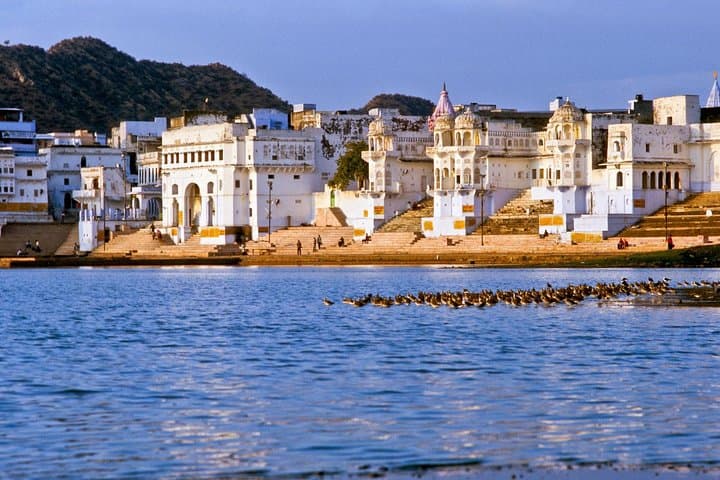
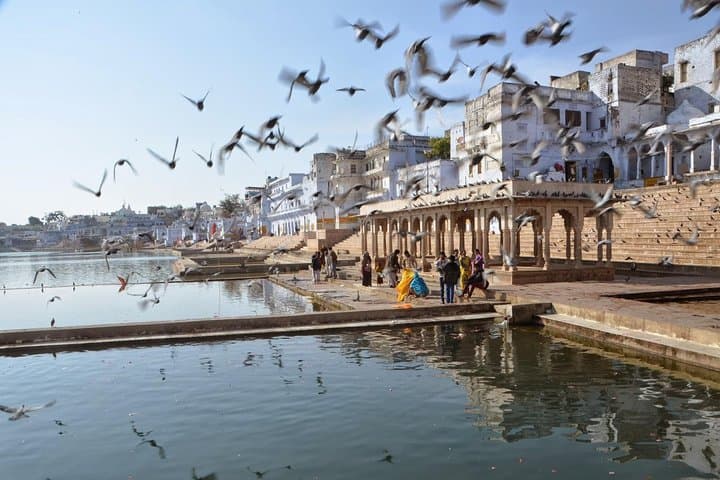
This route is layered history: Delhi’s Mughal and British-era monuments, Humayun’s Tomb and Qutub Minar reveal imperial grammar; Agra’s Taj and Agra Fort are Mughal craft at scale; Fatehpur Sikri records a short-lived urban experiment in red sandstone. Jaipur’s planned streets and Amber Fort show Rajput fortification and royal ceremony, while Pushkar centers on the rare Brahma Temple and a sacred lake ringed by ghats—cultural practices that have shaped local rhythms for centuries.
Expect a practical, paced itinerary—early-morning Taj visits to avoid heat and crowds, guided walks through crowded Chandni Chowk, and drives of 3–5 hours between cities. The private-transport format keeps luggage and timing simple, but many sites have steps and uneven stone floors; comfortable footwear and awareness make the difference.
Bring sun protection, modest clothing for temple visits, and small change for market bargaining. Hydrate steadily—Rajasthan’s air can push you harder than you expect—and plan rest windows in midday heat. With basic preparation this six-day loop delivers concentrated history, vivid street life, and a brief desert edge around Pushkar—an efficient survey of North India’s most photographed and culturally resonant sites.
moderate.
6 days (approx. 8–10 hours/day including travel).
Comfortable walking ability for 2–4 hours daily, ability to manage stairs and uneven surfaces; not strenuous but active.
The complex has accessible routes and wheelchairs on request, but some older forts and palaces have many steps—check the provider ahead for specific assistance.
This private tour includes breakfast and private transport; monument entrance fees are typically not included—confirm with the operator before booking.
October to March offers cooler temperatures and clearer skies; summers (April–June) are hot and require early starts to avoid heat.
Private-format tours usually allow customization—contact the operator to add nights, skip sites, or alter pickup/drop-off points.
The Golden Triangle strings Mughal imperial projects and Rajput court culture together: Delhi and Agra display Mughal urban planning and mausoleum craft, while Jaipur reflects 18th-century Rajput town design and palace art.
High visitation at the Taj and other monuments stresses local infrastructure; travelers can reduce impact by using refillable water bottles, avoiding single-use plastics, and following site rules.
Same Day Tour Agra operates guided outdoor trips and adventures with an emphasis on safety, stewardship, and memorable experiences.


You step out before dawn and the Taj Mahal glows like a promise—cool marble absorbing the last night and handing it back as light. The road between Delhi, Agra, Jaipur and Pushkar moves from frenetic bazaars to wide Mughal lawns and then into the pink sandstone ramps of Rajasthan; wind over scrub and lakefront ghats punctuates the journey like a resting breath.
You step out before dawn and the Taj Mahal glows like a promise—cool marble absorbing the last night and handing it back as light. The road between Delhi, Agra, Jaipur and Pushkar moves from frenetic bazaars to wide Mughal lawns and then into the pink sandstone ramps of Rajasthan; wind over scrub and lakefront ghats punctuates the journey like a resting breath.
This route is layered history: Delhi’s Mughal and British-era monuments, Humayun’s Tomb and Qutub Minar reveal imperial grammar; Agra’s Taj and Agra Fort are Mughal craft at scale; Fatehpur Sikri records a short-lived urban experiment in red sandstone. Jaipur’s planned streets and Amber Fort show Rajput fortification and royal ceremony, while Pushkar centers on the rare Brahma Temple and a sacred lake ringed by ghats—cultural practices that have shaped local rhythms for centuries.
Expect a practical, paced itinerary—early-morning Taj visits to avoid heat and crowds, guided walks through crowded Chandni Chowk, and drives of 3–5 hours between cities. The private-transport format keeps luggage and timing simple, but many sites have steps and uneven stone floors; comfortable footwear and awareness make the difference.
Bring sun protection, modest clothing for temple visits, and small change for market bargaining. Hydrate steadily—Rajasthan’s air can push you harder than you expect—and plan rest windows in midday heat. With basic preparation this six-day loop delivers concentrated history, vivid street life, and a brief desert edge around Pushkar—an efficient survey of North India’s most photographed and culturally resonant sites.