THE ADVENTURE COLLECTIVE® · Independent discovery and booking for outdoor travel

A six-day loop from Ulaanbaatar across Tsagaan Suvarga, Bayanzag (Flaming Cliffs), Khongor sand dunes and Yoliin Am. Expect long drives, ger-camp nights and close encounters with nomadic life and dramatic desert geology.
A six-day loop from Ulaanbaatar across Tsagaan Suvarga, Bayanzag (Flaming Cliffs), Khongor sand dunes and Yoliin Am. Expect long drives, ger-camp nights and close encounters with nomadic life and dramatic desert geology.
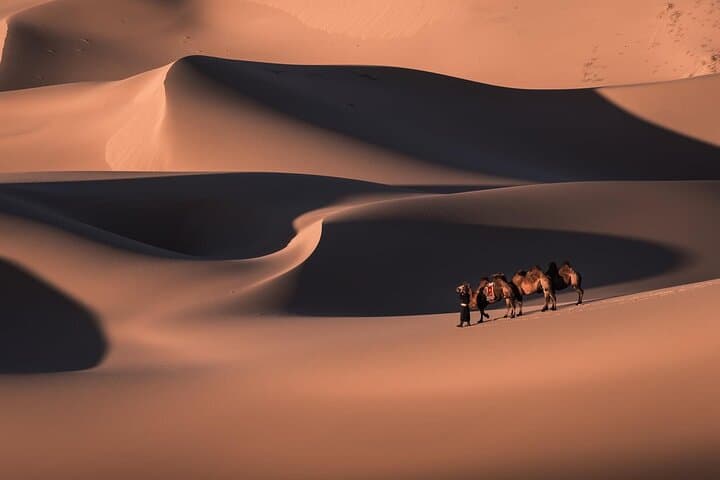
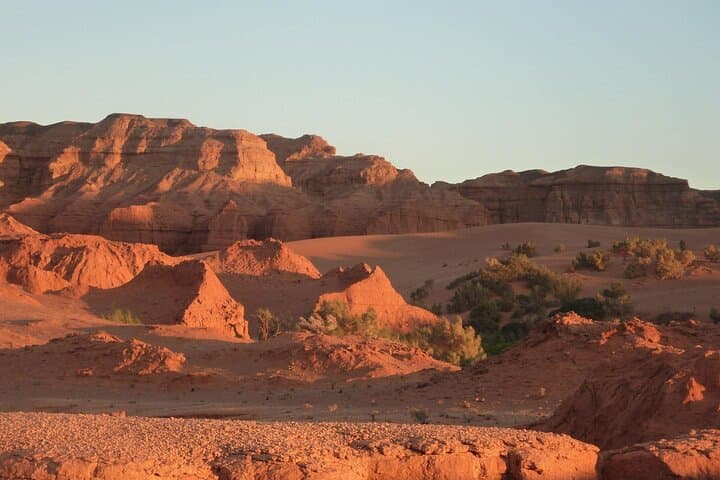
The first light hits the sand like a slow pulse — long ridges of Khongor singing as the wind pushes across them, cliffs at Bayanzag catching fire at sunset, and a narrow ribbon of ice carving Yoliin Am’s shadowed throat. On this six-day loop from Ulaanbaatar, travelers move from paved highway to salt-flat, from statue-topped memorials to the hush of a ger camp under a vaulting sky.
Verified experiences and guided adventures in the surrounding area.
Operated by Nomadic Hospitality Mongolia · Ulaanbaatar, Ulaanbaatar
The first light hits the sand like a slow pulse — long ridges of Khongor singing as the wind pushes across them, cliffs at Bayanzag catching fire at sunset, and a narrow ribbon of ice carving Yoliin Am’s shadowed throat. On this six-day loop from Ulaanbaatar, travelers move from paved highway to salt-flat, from statue-topped memorials to the hush of a ger camp under a vaulting sky.
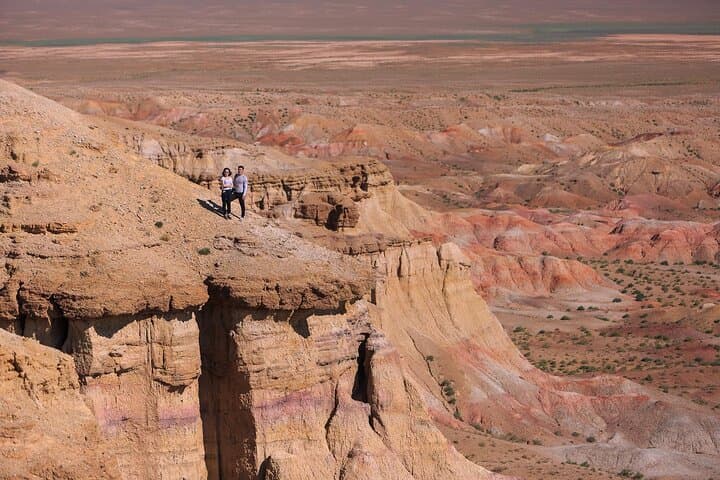
The route threads both human and deep time: Genghis Khan’s stainless-steel monument and Terelj’s temple speak to national identity and Buddhist practice, while Roy Chapman Andrews’ early 20th-century digs at the Flaming Cliffs remind visitors that the Gobi yielded some of Mongolia’s most important paleontological finds. Geologically the region is an erosion-made landscape — escarpments of Tsagaan Suvarga, wind-carved Khongoryn sand, and isolated outcrops like Baga Gazriin Chuluu rising from the steppe.
Culturally, nights in gers and visits to nomadic families provide direct contact with pastoral life and a chance to observe camel herding, hospitality, and local foodways.
Practical guidance: expect long drives (one-way legs of several hours), basic tourist ger accommodations, and a mix of short hikes and camel rides. Pack layers for hot days and cold nights, bring a sunhat and at least 2–3 liters of water per day, and prepare for uneven sand and rocky terrain. Photographic opportunities are constant — but fossil protection and local customs are non-negotiable: leave finds untouched and ask before photographing people. With a moderate fitness level and a readiness for desert rhythms, this itinerary delivers dramatic landscapes, hands-on culture, and the quiet scale of the Gobi.
moderate.
6 days.
Moderate fitness recommended — able to do short hikes, climb dunes and endure several hours in a vehicle each day
This tour includes pickup in Ulaanbaatar; most travelers fly or are driven out of the city as part of the itinerary, with an overnight return to Ulaanbaatar at the end.
Accommodations alternate between tourist ger (yurt) camps, simple local ger family stays, and a hotel night in Dalanzadgad; expect basic but clean facilities and shared amenities at camps.
Yes — several legs are multi-hour drives (one return leg to Ulaanbaatar can be around 8–10 hours total); plan for vehicle time and stop for stretches and photo breaks.
You’ll visit Bayanzag (Flaming Cliffs), the historic site where early dinosaur eggs were found; handling fossils is prohibited and guides will explain site rules and context.
Flaming Cliffs (Bayanzag) are where Roy Chapman Andrews and early paleontologists uncovered dinosaur eggs and bones; the region has been occupied by nomadic pastoralists for centuries, reflected in ger culture and seasonal herding routes.
The Gobi’s fragile soils and fossil beds are easily damaged; stick to established paths, do not remove geological or archaeological material, and minimize campfire and waste impact.
Nomadic Hospitality Mongolia operates guided outdoor trips and adventures with an emphasis on safety, stewardship, and memorable experiences.
The first light hits the sand like a slow pulse — long ridges of Khongor singing as the wind pushes across them, cliffs at Bayanzag catching fire at sunset, and a narrow ribbon of ice carving Yoliin Am’s shadowed throat. On this six-day loop from Ulaanbaatar, travelers move from paved highway to salt-flat, from statue-topped memorials to the hush of a ger camp under a vaulting sky.
The first light hits the sand like a slow pulse — long ridges of Khongor singing as the wind pushes across them, cliffs at Bayanzag catching fire at sunset, and a narrow ribbon of ice carving Yoliin Am’s shadowed throat. On this six-day loop from Ulaanbaatar, travelers move from paved highway to salt-flat, from statue-topped memorials to the hush of a ger camp under a vaulting sky.
The route threads both human and deep time: Genghis Khan’s stainless-steel monument and Terelj’s temple speak to national identity and Buddhist practice, while Roy Chapman Andrews’ early 20th-century digs at the Flaming Cliffs remind visitors that the Gobi yielded some of Mongolia’s most important paleontological finds. Geologically the region is an erosion-made landscape — escarpments of Tsagaan Suvarga, wind-carved Khongoryn sand, and isolated outcrops like Baga Gazriin Chuluu rising from the steppe.
Culturally, nights in gers and visits to nomadic families provide direct contact with pastoral life and a chance to observe camel herding, hospitality, and local foodways.
Practical guidance: expect long drives (one-way legs of several hours), basic tourist ger accommodations, and a mix of short hikes and camel rides. Pack layers for hot days and cold nights, bring a sunhat and at least 2–3 liters of water per day, and prepare for uneven sand and rocky terrain. Photographic opportunities are constant — but fossil protection and local customs are non-negotiable: leave finds untouched and ask before photographing people. With a moderate fitness level and a readiness for desert rhythms, this itinerary delivers dramatic landscapes, hands-on culture, and the quiet scale of the Gobi.