THE ADVENTURE COLLECTIVE® · Independent discovery and booking for outdoor travel

A six-day, guided circuit from Ulaanbaatar that pairs dramatic geology with nomadic culture: hike Yol Valley, climb Khongoryn Els, watch the Flaming Cliffs at sunset and sleep in tourist ger camps. Expect long drives, short hikes and unforgettable desert skies.
A six-day, guided circuit from Ulaanbaatar that pairs dramatic geology with nomadic culture: hike Yol Valley, climb Khongoryn Els, watch the Flaming Cliffs at sunset and sleep in tourist ger camps. Expect long drives, short hikes and unforgettable desert skies.
At dawn the Gobi spreads out like an ocean of ochre and gravel; wind sketches ripples across sand, and a solitary ger camp smokes in the distance.
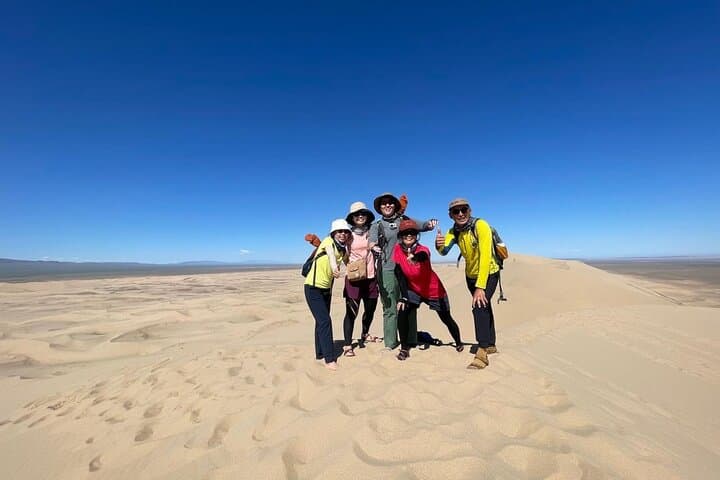
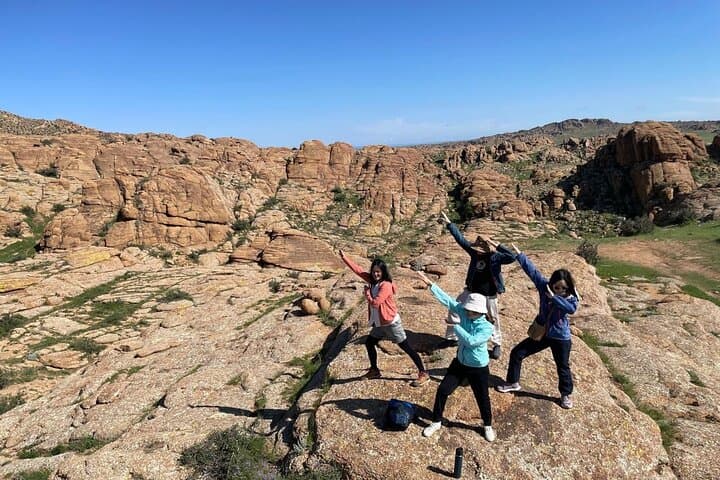
This six-day loop from Ulaanbaatar threads through Baga Gazariin Chuluu’s granite outcrops, the ice-cut gorge of Yol Valley, the towering Khongoryn sand sea, Bayanzag’s red cliffs, and the white limestone terraces of Tsagaan Suvarga.
Verified experiences and guided adventures in the surrounding area.
Operated by Zendmen Travel Mongolia · Dalanzadgad, Omnogovi Province
At dawn the Gobi spreads out like an ocean of ochre and gravel; wind sketches ripples across sand, and a solitary ger camp smokes in the distance.
This six-day loop from Ulaanbaatar threads through Baga Gazariin Chuluu’s granite outcrops, the ice-cut gorge of Yol Valley, the towering Khongoryn sand sea, Bayanzag’s red cliffs, and the white limestone terraces of Tsagaan Suvarga.
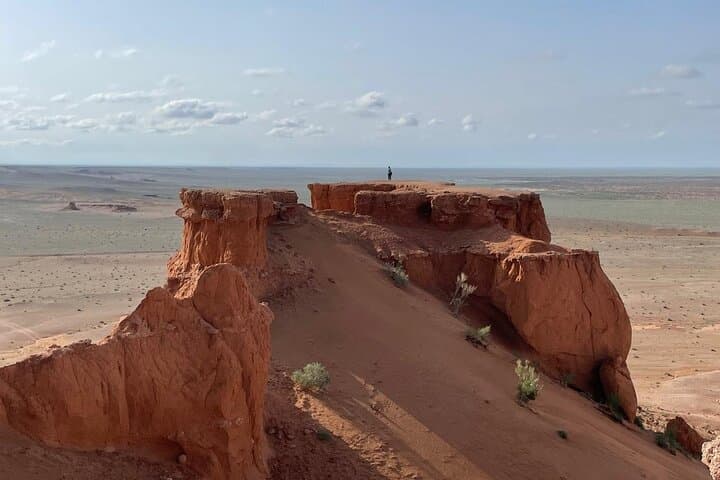
Geology here is plain to read: Paleozoic granite, Jurassic red sandstone and wind-formed aeolian dunes tell a story of shifting climates and deep time. Bayanzag (the Flaming Cliffs) is famous for early 20th-century dinosaur discoveries, and Del Uul’s petroglyphs and local herder camps reveal the long human presence on these routes.
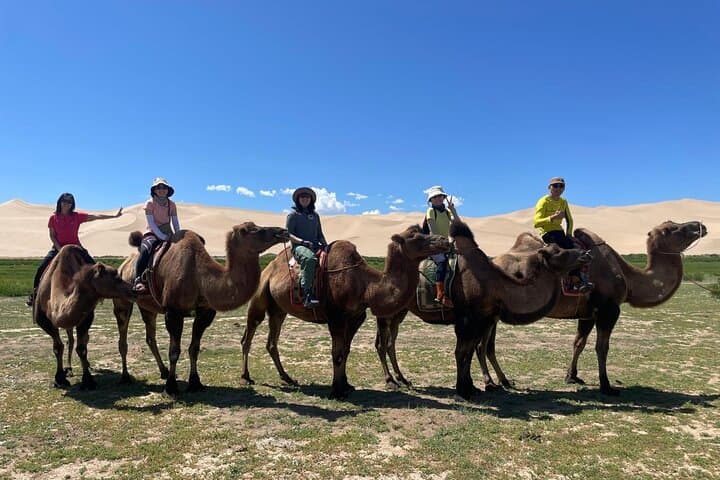
Expect long drives between highlights (several hours most days), short guided hikes into gorges and up dune slopes, and nights in tourist ger camps with separate shower and toilet facilities. Guides handle logistics, meals and park fees; optional local activities include camel rides, visits with nomadic families, and quad-biking across the sands.
Practical tips: pack sun protection and windproof layers, bring at least 2–3 liters of water for daytime walks, and wear sturdy boots for dunes and rocky scrambles. Start hikes early to avoid midday heat and save camera batteries—star-filled nights here reward a late-night patrol of the sky. Embrace slow travel: much of the Gobi’s appeal is the space between sites, the sudden herd of Bactrian camels, and the silence that follows sunset. Bring local currency and a power bank; always ask before photographing nomads respectfully.
moderate.
6 days.
Moderate — able to endure long vehicle transfers, several short hikes and climbs up sand dunes.
A moderate level of fitness is required: be comfortable with several short hikes, dune climbs and extended vehicle transfers.
Tourist ger camps on this route provide twin ger accommodation with separate shower and toilet buildings, basic hot showers and hearty meals.
Reception is intermittent outside towns; camps may offer limited charging but bring a power bank and spare camera batteries.
Visa requirements depend on nationality; check current Mongolian entry rules and routine vaccinations—consult your doctor for travel-specific advice.
Bayanzag earned global attention after early 20th-century paleontological digs uncovered dinosaur fossils; the region has long supported nomadic routes across the steppe.
The Gobi is ecologically fragile—minimize campfire impact, avoid off-track driving over vegetation, and respect water scarcity and herder lands.
Zendmen Travel Mongolia operates guided outdoor trips and adventures with an emphasis on safety, stewardship, and memorable experiences.
At dawn the Gobi spreads out like an ocean of ochre and gravel; wind sketches ripples across sand, and a solitary ger camp smokes in the distance.
This six-day loop from Ulaanbaatar threads through Baga Gazariin Chuluu’s granite outcrops, the ice-cut gorge of Yol Valley, the towering Khongoryn sand sea, Bayanzag’s red cliffs, and the white limestone terraces of Tsagaan Suvarga.
At dawn the Gobi spreads out like an ocean of ochre and gravel; wind sketches ripples across sand, and a solitary ger camp smokes in the distance.
This six-day loop from Ulaanbaatar threads through Baga Gazariin Chuluu’s granite outcrops, the ice-cut gorge of Yol Valley, the towering Khongoryn sand sea, Bayanzag’s red cliffs, and the white limestone terraces of Tsagaan Suvarga.
Geology here is plain to read: Paleozoic granite, Jurassic red sandstone and wind-formed aeolian dunes tell a story of shifting climates and deep time. Bayanzag (the Flaming Cliffs) is famous for early 20th-century dinosaur discoveries, and Del Uul’s petroglyphs and local herder camps reveal the long human presence on these routes.
Expect long drives between highlights (several hours most days), short guided hikes into gorges and up dune slopes, and nights in tourist ger camps with separate shower and toilet facilities. Guides handle logistics, meals and park fees; optional local activities include camel rides, visits with nomadic families, and quad-biking across the sands.
Practical tips: pack sun protection and windproof layers, bring at least 2–3 liters of water for daytime walks, and wear sturdy boots for dunes and rocky scrambles. Start hikes early to avoid midday heat and save camera batteries—star-filled nights here reward a late-night patrol of the sky. Embrace slow travel: much of the Gobi’s appeal is the space between sites, the sudden herd of Bactrian camels, and the silence that follows sunset. Bring local currency and a power bank; always ask before photographing nomads respectfully.