THE ADVENTURE COLLECTIVE® · Independent discovery and booking for outdoor travel

Spend six active days biking, kayaking, hiking and snorkeling between Santa Cruz and Isabela. This compact multi-sport route blends volcanic landscapes, close wildlife encounters, and guided conservation insights — practical for travelers with moderate fitness.
Spend six active days biking, kayaking, hiking and snorkeling between Santa Cruz and Isabela. This compact multi-sport route blends volcanic landscapes, close wildlife encounters, and guided conservation insights — practical for travelers with moderate fitness.
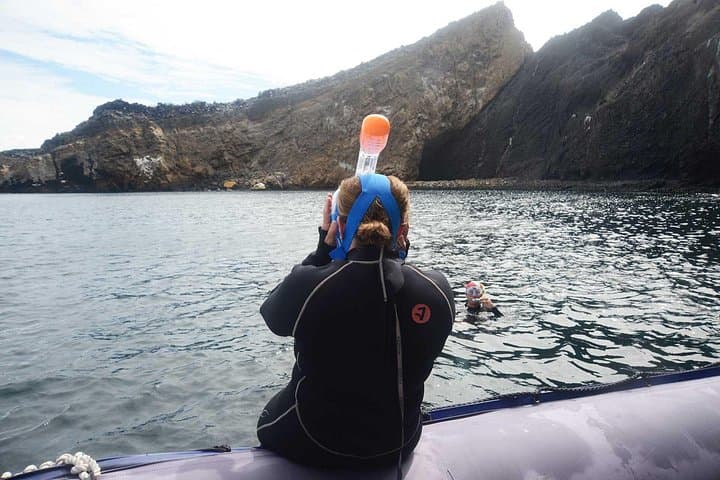
Salt wind and volcanic dust meet here — the Galápagos archipelago in miniature plays out across six active days. You arrive through Baltra, move between Santa Cruz and Isabela, and swap boat decks for hiking boots, a bicycle, and a kayak. Trails cross hardened lava and grassy highlands; shorelines offer clear water where penguins and sea turtles ride the current close to shore.
Verified experiences and guided adventures in the surrounding area.
Operated by Galapagos Tours Nature Galapagos & Ecuador · Puerto Ayora, Galápagos
Salt wind and volcanic dust meet here — the Galápagos archipelago in miniature plays out across six active days. You arrive through Baltra, move between Santa Cruz and Isabela, and swap boat decks for hiking boots, a bicycle, and a kayak. Trails cross hardened lava and grassy highlands; shorelines offer clear water where penguins and sea turtles ride the current close to shore.
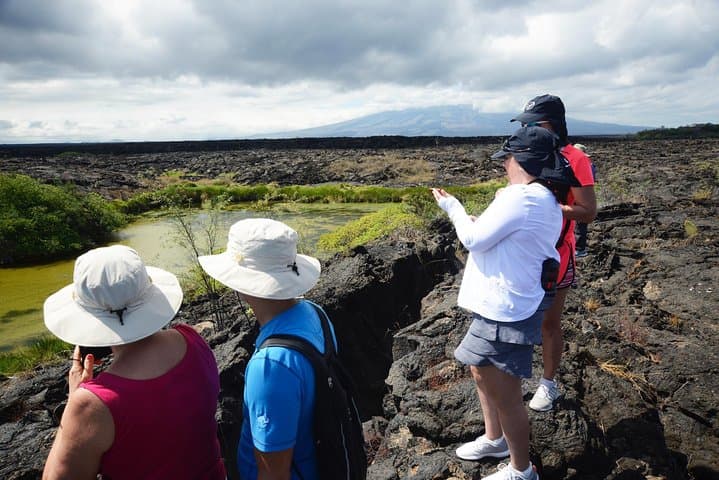
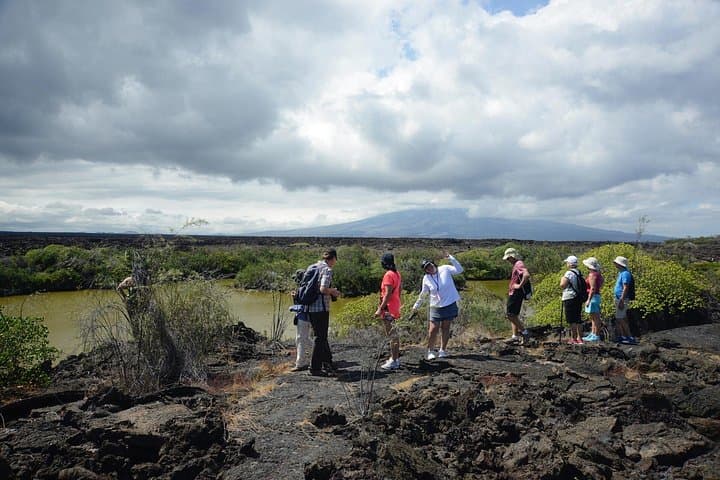
Geology and history are part of the route. Sierra Negra’s caldera, one of the world’s largest, opens on a moonlike plain of recent lava flows; the islands themselves are a living laboratory Darwin put on the map. Local towns such as Puerto Ayora grew around fishing and scientific work — the Charles Darwin Research Station remains a focal point for conservation and breeding programs.
Culturally, the islands are small communities that balance tourism and fishing; guides are registered by the Galapagos National Park and brief you on strict biosecurity and protected-area rules. Expect guided hikes of 2–4 hours across uneven volcanic ground, a 12 km trek on Sierra Negra with mostly gradual grades, short bike loops through wetlands, and 1–2 hour sheltered kayak and snorkel sessions.
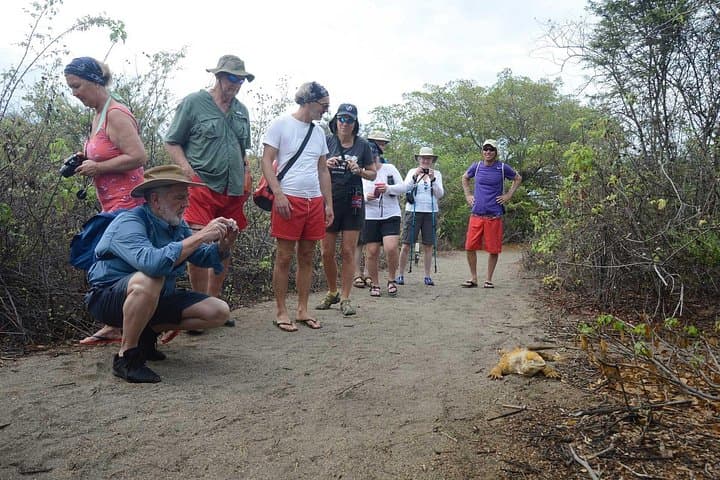
Practical guide: pack reef-safe sunscreen, a quick-dry shirt, sturdy walking shoes, and a lightweight rain shell. Bring seasickness meds for inter-island crossings and a reusable water bottle — drinking water is available at hotels. Plan for early starts to avoid midday sun and follow guide briefings closely: wildlife is wild and approaches are regulated for safety and conservation.
moderate.
6 days (active excursions each day; individual outings 1–6 hours).
Moderate fitness required — comfortable walking 2–4 hours on uneven terrain, basic cycling and recreational kayaking.
No — guided snorkel sessions are suitable for beginners who are comfortable in the water; guides stay close and lifejackets are provided.
Public speedboat transfers between islands are mentioned but you are responsible for obtaining tickets in some segments; confirm arrangements with the operator before travel.
Itineraries are subject to change due to weather, park rules, or flight times; guides will adapt activities as needed for safety and logistics.
Besides a national park fee and possible transit card, flights to Baltra require standard Ecuador travel documents; passport details are required at booking and biosecurity checks occur on arrival.
The islands are volcanic in origin and became central to scientific theory after Charles Darwin’s visit in 1835; settlements expanded later around ports and research stations.
Galápagos National Park enforces strict visitor rules, biosecurity checks, and limits on access to sensitive sites; follow leave-no-trace practices and avoid touching wildlife.
Galapagos Tours Nature Galapagos & Ecuador operates guided outdoor trips and adventures with an emphasis on safety, stewardship, and memorable experiences.
Salt wind and volcanic dust meet here — the Galápagos archipelago in miniature plays out across six active days. You arrive through Baltra, move between Santa Cruz and Isabela, and swap boat decks for hiking boots, a bicycle, and a kayak. Trails cross hardened lava and grassy highlands; shorelines offer clear water where penguins and sea turtles ride the current close to shore.
Salt wind and volcanic dust meet here — the Galápagos archipelago in miniature plays out across six active days. You arrive through Baltra, move between Santa Cruz and Isabela, and swap boat decks for hiking boots, a bicycle, and a kayak. Trails cross hardened lava and grassy highlands; shorelines offer clear water where penguins and sea turtles ride the current close to shore.
Geology and history are part of the route. Sierra Negra’s caldera, one of the world’s largest, opens on a moonlike plain of recent lava flows; the islands themselves are a living laboratory Darwin put on the map. Local towns such as Puerto Ayora grew around fishing and scientific work — the Charles Darwin Research Station remains a focal point for conservation and breeding programs.
Culturally, the islands are small communities that balance tourism and fishing; guides are registered by the Galapagos National Park and brief you on strict biosecurity and protected-area rules. Expect guided hikes of 2–4 hours across uneven volcanic ground, a 12 km trek on Sierra Negra with mostly gradual grades, short bike loops through wetlands, and 1–2 hour sheltered kayak and snorkel sessions.
Practical guide: pack reef-safe sunscreen, a quick-dry shirt, sturdy walking shoes, and a lightweight rain shell. Bring seasickness meds for inter-island crossings and a reusable water bottle — drinking water is available at hotels. Plan for early starts to avoid midday sun and follow guide briefings closely: wildlife is wild and approaches are regulated for safety and conservation.