THE ADVENTURE COLLECTIVE® · Independent discovery and booking for outdoor travel

Float above Luxor at sunrise and walk the Nile’s living history in this six-day itinerary that links Luxor’s pharaonic heart to Aswan’s island temples and Nubian villages. Expect easy walks, expert guiding, and a mix of archaeology, river scenery, and local culture.
Float above Luxor at sunrise and walk the Nile’s living history in this six-day itinerary that links Luxor’s pharaonic heart to Aswan’s island temples and Nubian villages. Expect easy walks, expert guiding, and a mix of archaeology, river scenery, and local culture.
The sun lifts off the desert rim and paints the Nile in gold as you stand on the balloon’s basket, Luxor’s temples shrinking into carved geometry below. On the ground, palm-lined feluccas slip like dark pens across the river; temple stones hold a quiet that requires only a guide’s voice to set them speaking again.
Verified experiences and guided adventures in the surrounding area.
Operated by Ahmed Ebeid Gabr · Luxor, Luxor Governorate
The sun lifts off the desert rim and paints the Nile in gold as you stand on the balloon’s basket, Luxor’s temples shrinking into carved geometry below. On the ground, palm-lined feluccas slip like dark pens across the river; temple stones hold a quiet that requires only a guide’s voice to set them speaking again.
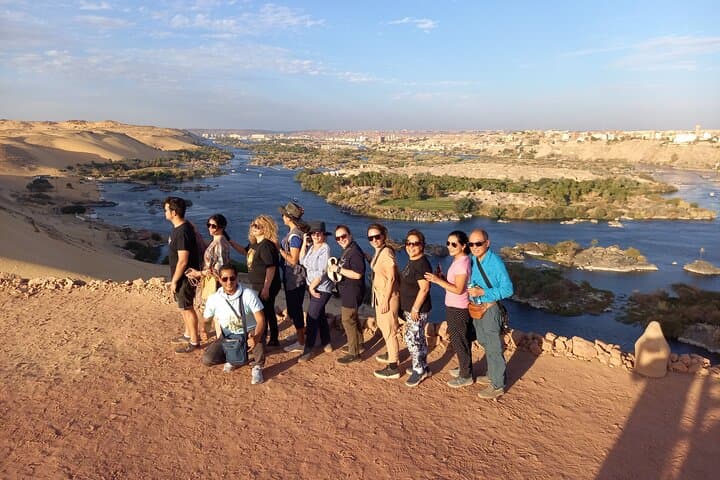
This six-day route threads Luxor’s East and West Banks with the river city of Aswan: the Valley of the Kings and Hatshepsut’s austere terraces, Karnak’s forest of columns, the double temple of Kom Ombo and the rescued Philae on Agilkia Island. Geologically, the Nile valley is a ribbon of alluvium carved between limestone cliffs and desert plateaus; salts and seasonal flooding shaped how ancient builders sited temples and crops. Culturally, you’ll meet Nubian hospitality in vivid homes painted cobalt and saffron, and witness UNESCO’s mid-20th-century relocation of Philae — an engineering rescue as dramatic as the monuments themselves.
Practicalities: expect mostly easy walking on uneven stone and packed sand, small groups, and short drives in air-conditioned vehicles between sites. Mornings are best for touring: cooler light, thinner crowds, and clearer photography. Carry 1–2 liters of water, sun protection, and a compact daypack; modest dress is required at religious sites. Balloons launch before dawn, so prepare for an early pickup and light breezy chill at altitude. With basic fitness and comfortable footwear, the itinerary is suitable for most travelers who can manage several hours of standing and walking per day.
This trip pairs storytelling with logistics — ancient stones, living river culture, and a sunrise that makes the whole valley feel momentarily renewed.
easy.
6 days.
Suitable for travelers in average health who can walk and stand several hours per day; not strenuous but involves uneven ground and early starts.
Tombs are shaded and often cooler than outside, but they can be narrow and require bending; bring a light layer and avoid enclosed spaces if you have claustrophobia.
Balloon operators in Luxor follow established safety procedures and briefings; flights depend on suitable wind and weather and may be canceled for safety reasons.
Many nationalities require a visa for Egypt — check current entry rules with your embassy or the operator before travel; e-visas are available for many visitors.
The operator lists wheelchair accessibility for some transfers, but many archaeological sites have uneven ground and steps; contact the provider in advance to review specific accessibility needs.
Philae Temple was dismantled and relocated in the 1960s and 1970s under UNESCO supervision to save it from the rising waters of the Aswan High Dam.
Tourism supports local economies but puts pressure on fragile sites; follow site rules, avoid touching reliefs, and use local guides to support responsible visitation.
Ahmed Ebeid Gabr operates guided outdoor trips and adventures with an emphasis on safety, stewardship, and memorable experiences.
The sun lifts off the desert rim and paints the Nile in gold as you stand on the balloon’s basket, Luxor’s temples shrinking into carved geometry below. On the ground, palm-lined feluccas slip like dark pens across the river; temple stones hold a quiet that requires only a guide’s voice to set them speaking again.
The sun lifts off the desert rim and paints the Nile in gold as you stand on the balloon’s basket, Luxor’s temples shrinking into carved geometry below. On the ground, palm-lined feluccas slip like dark pens across the river; temple stones hold a quiet that requires only a guide’s voice to set them speaking again.
This six-day route threads Luxor’s East and West Banks with the river city of Aswan: the Valley of the Kings and Hatshepsut’s austere terraces, Karnak’s forest of columns, the double temple of Kom Ombo and the rescued Philae on Agilkia Island. Geologically, the Nile valley is a ribbon of alluvium carved between limestone cliffs and desert plateaus; salts and seasonal flooding shaped how ancient builders sited temples and crops. Culturally, you’ll meet Nubian hospitality in vivid homes painted cobalt and saffron, and witness UNESCO’s mid-20th-century relocation of Philae — an engineering rescue as dramatic as the monuments themselves.
Practicalities: expect mostly easy walking on uneven stone and packed sand, small groups, and short drives in air-conditioned vehicles between sites. Mornings are best for touring: cooler light, thinner crowds, and clearer photography. Carry 1–2 liters of water, sun protection, and a compact daypack; modest dress is required at religious sites. Balloons launch before dawn, so prepare for an early pickup and light breezy chill at altitude. With basic fitness and comfortable footwear, the itinerary is suitable for most travelers who can manage several hours of standing and walking per day.
This trip pairs storytelling with logistics — ancient stones, living river culture, and a sunrise that makes the whole valley feel momentarily renewed.