THE ADVENTURE COLLECTIVE® · Independent discovery and booking for outdoor travel

Move from Cairo’s spirited Nile evenings to Abu Simbel’s monumental façades and Luxor’s valley tombs on this six-day circuit. Expect early starts, heat-managed sightseeing and UNESCO stories woven through modern engineering and ancient craftsmanship.
Move from Cairo’s spirited Nile evenings to Abu Simbel’s monumental façades and Luxor’s valley tombs on this six-day circuit. Expect early starts, heat-managed sightseeing and UNESCO stories woven through modern engineering and ancient craftsmanship.
The Nile slides past in a ribbon of light as you step onto the deck of a dinner cruise in Cairo, the city’s modern skyline watching ancient stone in the distance. Over six days you move between epochs: the living bustle of city markets, the slow current at Aswan, and the monumental silence of Luxor’s mortuary temples.
Verified experiences and guided adventures in the surrounding area.
Operated by Egypt Charming Tours · Cairo, Cairo Governorate
The Nile slides past in a ribbon of light as you step onto the deck of a dinner cruise in Cairo, the city’s modern skyline watching ancient stone in the distance. Over six days you move between epochs: the living bustle of city markets, the slow current at Aswan, and the monumental silence of Luxor’s mortuary temples.
Start in Cairo where the Giza plateau looms—triangles of limestone that have survived millennia of sand, salt and human curiosity. From there the itinerary threads through the Egyptian Museum and the new Grand Egyptian Museum, before an internal flight takes you south to Aswan. The High Dam and the relocated Philae Temple tell a modern tale of engineering and UNESCO-led rescue; Abu Simbel’s twin temples speak to imperial scale and calendrical precision. In Luxor, the Valley of the Kings, Hatshepsut’s terraced mortuary and Karnak’s avenue of ram-headed sphinxes reveal ritual geometry carved in stone.
Geologically, these monuments sit on the Nile’s floodplain and adjacent sandstone and limestone ridges—surfaces that erode slowly and demand regular conservation. Culturally, the route crosses millennia of religious and political change, visible in reliefs, obelisks and funerary architecture.
Practically: plan early mornings to avoid heat and crowds, carry refillable water and sun protection, and expect a mix of paved museum grounds and uneven archaeological surfaces—stairs, narrow passageways and loose stone. Guides and included entrance fees simplify logistics; comfortable walking shoes and a light daypack make the days smoother. This itinerary balances slow Nile moments with structured archaeological exploration—an accessible but richly historic journey.
easy.
6 days.
Suitable for most travelers in fair health; expect several days of walking up to a few miles with stairs and uneven surfaces.
Yes—entrance fees to the listed sites and internal flights (Cairo–Aswan, Luxor–Cairo) are included per the itinerary.
Many stops and transportation options are wheelchair accessible, but some archaeological sites have uneven surfaces and stairs—contact the operator to confirm specific needs.
Most visitors need a visa—check your nationality requirements and obtain a visa in advance or on arrival where applicable.
Yes—infants are allowed but must sit on laps for some transfers; child policies and seats vary so confirm when booking.
The route links Old Kingdom pyramid builders at Giza with New Kingdom mortuary complexes in Thebes and the mid-20th-century engineering of the Aswan High Dam; Abu Simbel was physically relocated in a massive UNESCO rescue operation in the 1960s.
Tourism supports conservation funds, but high visitor numbers stress fragile reliefs and tomb pigments—stick to paths and follow guide instructions to minimize impact.
Egypt Charming Tours operates guided outdoor trips and adventures with an emphasis on safety, stewardship, and memorable experiences.


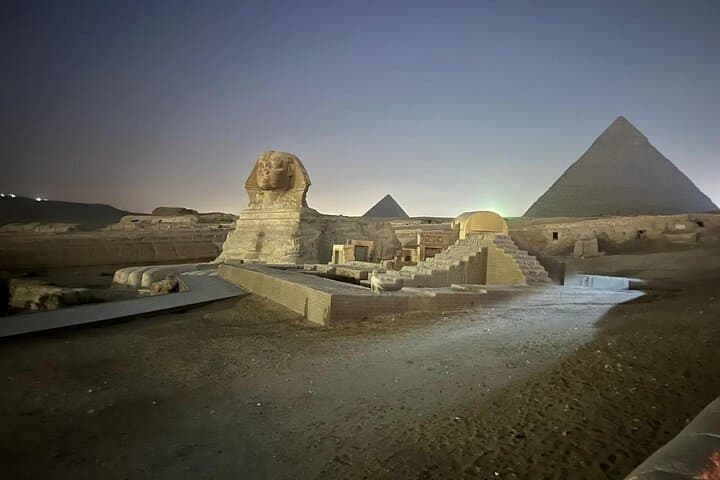
The Nile slides past in a ribbon of light as you step onto the deck of a dinner cruise in Cairo, the city’s modern skyline watching ancient stone in the distance. Over six days you move between epochs: the living bustle of city markets, the slow current at Aswan, and the monumental silence of Luxor’s mortuary temples.
The Nile slides past in a ribbon of light as you step onto the deck of a dinner cruise in Cairo, the city’s modern skyline watching ancient stone in the distance. Over six days you move between epochs: the living bustle of city markets, the slow current at Aswan, and the monumental silence of Luxor’s mortuary temples.
Start in Cairo where the Giza plateau looms—triangles of limestone that have survived millennia of sand, salt and human curiosity. From there the itinerary threads through the Egyptian Museum and the new Grand Egyptian Museum, before an internal flight takes you south to Aswan. The High Dam and the relocated Philae Temple tell a modern tale of engineering and UNESCO-led rescue; Abu Simbel’s twin temples speak to imperial scale and calendrical precision. In Luxor, the Valley of the Kings, Hatshepsut’s terraced mortuary and Karnak’s avenue of ram-headed sphinxes reveal ritual geometry carved in stone.
Geologically, these monuments sit on the Nile’s floodplain and adjacent sandstone and limestone ridges—surfaces that erode slowly and demand regular conservation. Culturally, the route crosses millennia of religious and political change, visible in reliefs, obelisks and funerary architecture.
Practically: plan early mornings to avoid heat and crowds, carry refillable water and sun protection, and expect a mix of paved museum grounds and uneven archaeological surfaces—stairs, narrow passageways and loose stone. Guides and included entrance fees simplify logistics; comfortable walking shoes and a light daypack make the days smoother. This itinerary balances slow Nile moments with structured archaeological exploration—an accessible but richly historic journey.