THE ADVENTURE COLLECTIVE® · Independent discovery and booking for outdoor travel

Spend six days tracing the Khmer Empire from Angkor Wat’s galleries to Tonle Sap’s floating villages. This small-group tour pairs early starts and guided insights with easy walking and cultural experiences like an Apsara dance performance.
Spend six days tracing the Khmer Empire from Angkor Wat’s galleries to Tonle Sap’s floating villages. This small-group tour pairs early starts and guided insights with easy walking and cultural experiences like an Apsara dance performance.
You step out before dawn, the causeway slick with dew and Angkor Wat’s reflection sharpening in the moat as light creeps over the central tower. The air smells of wet stone and jasmine; guides call out small details in low voices while the ruins seem to wake around you.
Verified experiences and guided adventures in the surrounding area.
Operated by Indochina Tour · Siem Reap, Siem Reap
You step out before dawn, the causeway slick with dew and Angkor Wat’s reflection sharpening in the moat as light creeps over the central tower. The air smells of wet stone and jasmine; guides call out small details in low voices while the ruins seem to wake around you.
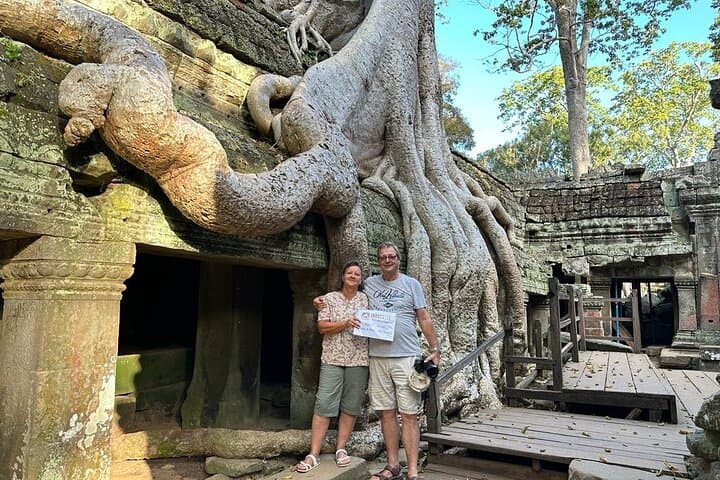
This six-day itinerary moves from the grand galleries of Angkor Wat—built under King Suryavarman II in the early 12th century—to the enigmatic faces of Bayon in Angkor Thom, and the tree-clad corridors of Ta Prohm, where roots have slowly reclaimed human craft. Geologically the region sits on sandstone bedrock that was carved for kilns and lintels; centuries of monsoon cycles have both preserved and weathered the bas-reliefs you’ll study.
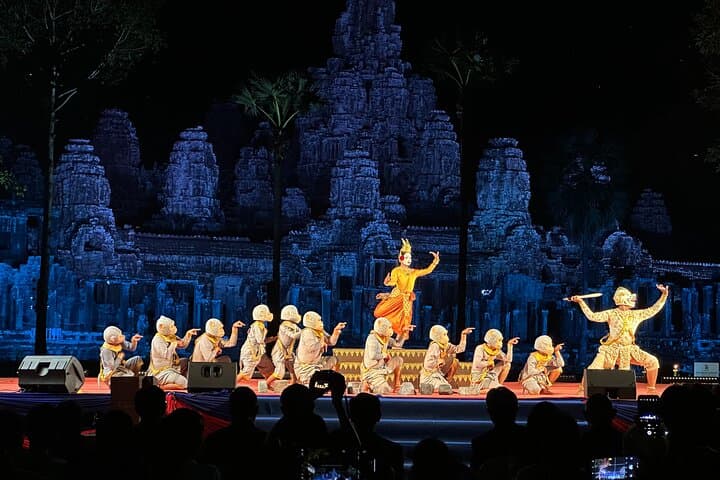
Culturally, the tour threads living Khmer traditions into archaeology: Apsara dance, artisan workshops at Artisans Angkor, and fishing communities on Tonle Sap’s floating villages that adapt to an annual tidal pulse that expands the lake several times over. Phnom Kulen adds a different note—waterfalls and riverbed carvings where pilgrims once bathed.
Practical guidance: expect mostly easy walking but repeated stair climbs and sun exposure. The small-group format (max 10) uses air-conditioned vehicles and 4-star hotels in Siem Reap; breakfasts are provided on five mornings. Bring modest temple clothing (shoulders and knees covered), a refillable water bottle, sun protection, and comfortable shoes with grip for slick laterite and mossy steps. Buy or confirm your Angkor park pass in advance, plan early starts to avoid heat and crowds, and allow slow time at quieter temples like Preah Khan to appreciate details the big sites lose to crowds.
easy.
6 days.
Suitable for travelers in average fitness—requires repeated stair climbs and several hours walking each day
Yes—visitors must purchase an Angkor Archaeological Park pass (1-, 3- or 7-day options) at the official ticket center; confirm whether your tour includes it.
The itinerary is rated easy with short walks, but there are many stairs and uneven surfaces; families and older travelers should plan a slower pace and notify the operator of mobility needs.
Cambodian riels and US dollars are widely accepted in Siem Reap; tipping guides and drivers is customary—small daily tips for local staff are appreciated.
Angkor Wat and Ta Prohm attract the most visitors; early-morning starts, late afternoons, or visiting secondary temples like Preah Khan reduces crowding.
Angkor was the heart of the Khmer Empire (9th–15th centuries); Angkor Wat, constructed in the early 1100s, later transitioned from a Hindu state temple to a major Buddhist site.
Heavy visitation stresses fragile sandstone and foundations—stay on marked paths, avoid climbing on reliefs, and support local conservation initiatives and artisans to help preserve the sites.
Indochina Tour operates guided outdoor trips and adventures with an emphasis on safety, stewardship, and memorable experiences.
You step out before dawn, the causeway slick with dew and Angkor Wat’s reflection sharpening in the moat as light creeps over the central tower. The air smells of wet stone and jasmine; guides call out small details in low voices while the ruins seem to wake around you.
You step out before dawn, the causeway slick with dew and Angkor Wat’s reflection sharpening in the moat as light creeps over the central tower. The air smells of wet stone and jasmine; guides call out small details in low voices while the ruins seem to wake around you.
This six-day itinerary moves from the grand galleries of Angkor Wat—built under King Suryavarman II in the early 12th century—to the enigmatic faces of Bayon in Angkor Thom, and the tree-clad corridors of Ta Prohm, where roots have slowly reclaimed human craft. Geologically the region sits on sandstone bedrock that was carved for kilns and lintels; centuries of monsoon cycles have both preserved and weathered the bas-reliefs you’ll study.
Culturally, the tour threads living Khmer traditions into archaeology: Apsara dance, artisan workshops at Artisans Angkor, and fishing communities on Tonle Sap’s floating villages that adapt to an annual tidal pulse that expands the lake several times over. Phnom Kulen adds a different note—waterfalls and riverbed carvings where pilgrims once bathed.
Practical guidance: expect mostly easy walking but repeated stair climbs and sun exposure. The small-group format (max 10) uses air-conditioned vehicles and 4-star hotels in Siem Reap; breakfasts are provided on five mornings. Bring modest temple clothing (shoulders and knees covered), a refillable water bottle, sun protection, and comfortable shoes with grip for slick laterite and mossy steps. Buy or confirm your Angkor park pass in advance, plan early starts to avoid heat and crowds, and allow slow time at quieter temples like Preah Khan to appreciate details the big sites lose to crowds.