THE ADVENTURE COLLECTIVE® · Independent discovery and booking for outdoor travel

Leap onto a speedboat in Trou d'Eau Douce and spend seven hours skimming the east coast—snorkeling Blue Bay's coral gardens, visiting five islets, and lunching on Ile aux Cerfs. Fast rides, clear water, and local history make this a compact, high-energy day on Mauritius.
Leap onto a speedboat in Trou d'Eau Douce and spend seven hours skimming the east coast—snorkeling Blue Bay's coral gardens, visiting five islets, and lunching on Ile aux Cerfs. Fast rides, clear water, and local history make this a compact, high-energy day on Mauritius.
The speedboat punches through the Indian Ocean like a live wire—spray fanning the sun, the engine's chorus urging the island forward. You feel the boat climb each swell and drop, the shoreline of Mauritius shrinking into a strip of palm and reef as the guide points the bow toward Ile aux Cerfs. On a day like this the sea is a palette of blues: nearshore aquamarine over the coral beds, a deeper navy beyond the reef.
Verified experiences and guided adventures in the surrounding area.
Operated by Island Cove Mauritius · Trou d'Eau Douce, Grand Port District
The speedboat punches through the Indian Ocean like a live wire—spray fanning the sun, the engine's chorus urging the island forward. You feel the boat climb each swell and drop, the shoreline of Mauritius shrinking into a strip of palm and reef as the guide points the bow toward Ile aux Cerfs. On a day like this the sea is a palette of blues: nearshore aquamarine over the coral beds, a deeper navy beyond the reef.
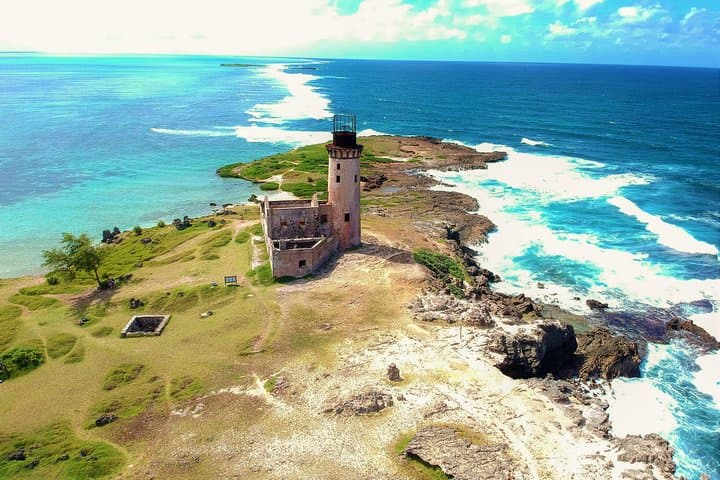
This seven-hour loop threads five small islands and the Blue Bay Marine Park, sites where history and geology sit shoulder to shoulder. The islands are products of volcanic uplift and coral growth; their white sands are ground skeletons of coralline life, and their fringes hide gardens of brain and staghorn coral. Ile au Phare (Ile aux Fouquets) carries a colonial footnote—first charted by Dutch sailors in 1598 and later the site of a 19th-century lighthouse—while Ile de la Passe witnessed the naval clash of Grand Port in 1810, a rare French victory in the Napoleonic campaigns.
Culturally, the east coast still lives by the tide. Mahébourg and Trou d'Eau Douce are fishing towns where Creole language and foodways—freshly grilled fish, rougaille—remain central. The guide’s commentary often folds in the human story: who fished which lagoon, which family tended which islet.
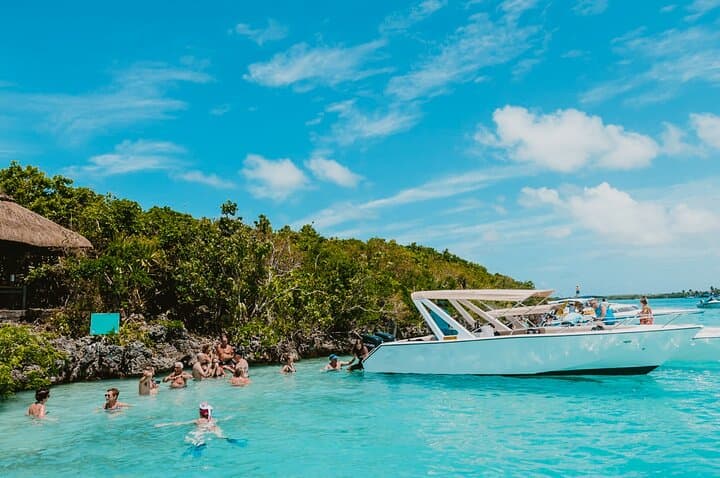
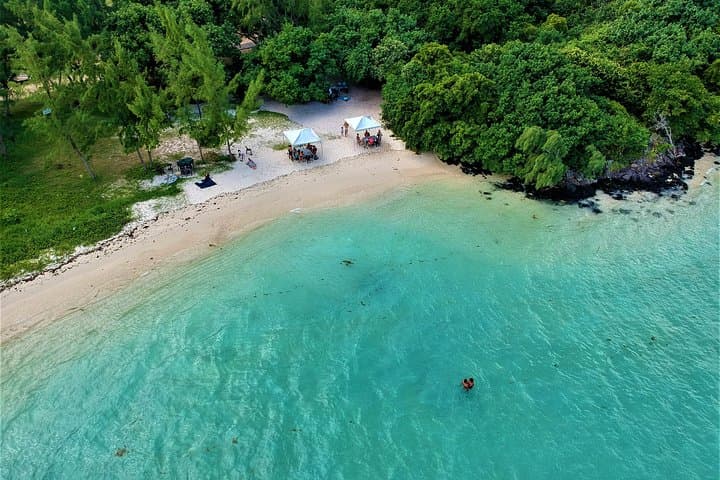
Practically, the day is built for easy exploration. Your agent meets you at the Trou d'Eau Douce debarcadere; the boat carries up to 18 and stops for a 45-minute visit to Ile aux Cerfs, a briefing and two snorkeling sessions at Blue Bay or Ilot Mangenie depending on conditions, plus brief visits to small islets and the waterfall at Grand River South East for photos. Snorkel gear and an open bar are included; lunch arrives island-side.
Expect calm, shallow water at the marine park and fast, thrilling transits between islands. Wear reef-safe sunscreen, a snug mask and fins, and a light windlayer for the trip back when spray cools the skin. If you are prone to motion sickness, take precautions—morning departures usually mean gentler seas.
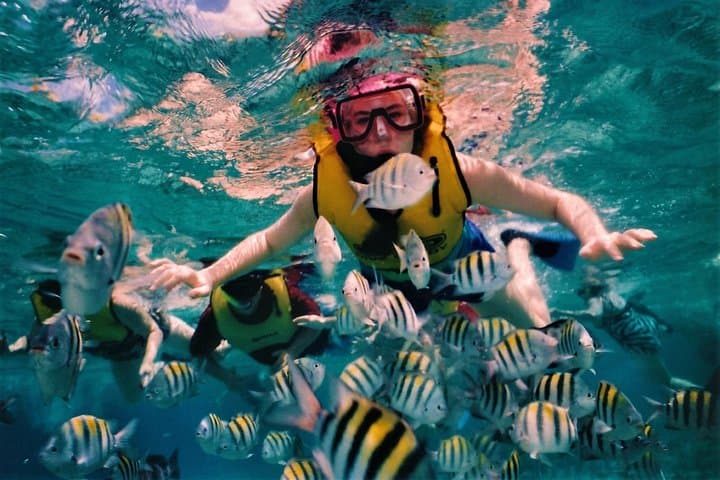
Blue Bay is protected as a marine park and Ramsar site, so swimmers are asked not to touch coral or feed fish. The reward for restraint is a clear view into a living reef—parrotfish, garden eels and hard corals wrapping the seafloor.
For travelers seeking an active, accessible day on the water, this itinerary delivers fast riding, solid snorkeling, and a slice of Mauritian coastal history—all in a single, well-paced outing.
easy.
7 hours.
Light activity level—ability to climb aboard a speedboat and swim/snorkel for short sessions.
You meet the agent at the debarcadere in Trou d'Eau Douce; the tour departs and returns to the same point.
Yes—snorkelling equipment is included; you may bring your own mask for a better fit.
The tour is family-friendly; however, non-swimmers should use provided flotation and stay within guided snorkeling areas.
The operator will cancel or reschedule if conditions are unsafe, with refunds available if notified more than 24 hours before departure.
Lunch, bottled water, snacks and an open bar are included as listed in the itinerary.
Basic facilities are available at the departure pier and on some island stops; boats typically do not have full restrooms.
The east coast islands were charted by early Dutch and later became strategic points during colonial naval battles, including the 1810 Battle of Grand Port near Ile de la Passe.
Blue Bay is a Ramsar-designated marine park; visitors should avoid touching coral, use reef-safe sunscreen and follow guides' instructions to protect fragile ecosystems.
Island Cove Mauritius operates guided outdoor trips and adventures with an emphasis on safety, stewardship, and memorable experiences.
The speedboat punches through the Indian Ocean like a live wire—spray fanning the sun, the engine's chorus urging the island forward. You feel the boat climb each swell and drop, the shoreline of Mauritius shrinking into a strip of palm and reef as the guide points the bow toward Ile aux Cerfs. On a day like this the sea is a palette of blues: nearshore aquamarine over the coral beds, a deeper navy beyond the reef.
The speedboat punches through the Indian Ocean like a live wire—spray fanning the sun, the engine's chorus urging the island forward. You feel the boat climb each swell and drop, the shoreline of Mauritius shrinking into a strip of palm and reef as the guide points the bow toward Ile aux Cerfs. On a day like this the sea is a palette of blues: nearshore aquamarine over the coral beds, a deeper navy beyond the reef.
This seven-hour loop threads five small islands and the Blue Bay Marine Park, sites where history and geology sit shoulder to shoulder. The islands are products of volcanic uplift and coral growth; their white sands are ground skeletons of coralline life, and their fringes hide gardens of brain and staghorn coral. Ile au Phare (Ile aux Fouquets) carries a colonial footnote—first charted by Dutch sailors in 1598 and later the site of a 19th-century lighthouse—while Ile de la Passe witnessed the naval clash of Grand Port in 1810, a rare French victory in the Napoleonic campaigns.
Culturally, the east coast still lives by the tide. Mahébourg and Trou d'Eau Douce are fishing towns where Creole language and foodways—freshly grilled fish, rougaille—remain central. The guide’s commentary often folds in the human story: who fished which lagoon, which family tended which islet.
Practically, the day is built for easy exploration. Your agent meets you at the Trou d'Eau Douce debarcadere; the boat carries up to 18 and stops for a 45-minute visit to Ile aux Cerfs, a briefing and two snorkeling sessions at Blue Bay or Ilot Mangenie depending on conditions, plus brief visits to small islets and the waterfall at Grand River South East for photos. Snorkel gear and an open bar are included; lunch arrives island-side.
Expect calm, shallow water at the marine park and fast, thrilling transits between islands. Wear reef-safe sunscreen, a snug mask and fins, and a light windlayer for the trip back when spray cools the skin. If you are prone to motion sickness, take precautions—morning departures usually mean gentler seas.
Blue Bay is protected as a marine park and Ramsar site, so swimmers are asked not to touch coral or feed fish. The reward for restraint is a clear view into a living reef—parrotfish, garden eels and hard corals wrapping the seafloor.
For travelers seeking an active, accessible day on the water, this itinerary delivers fast riding, solid snorkeling, and a slice of Mauritian coastal history—all in a single, well-paced outing.