THE ADVENTURE COLLECTIVE® · Independent discovery and booking for outdoor travel

Traverse Wuyi’s sandstone peaks and bamboo-lined Jiuqu Stream, then trade mountains for Xiamen’s coastal lanes and Gulangyu’s ferry-lit streets on this 5-day private tour. Hike, taste Da Hong Pao tea, and explore seaside heritage with a local guide.
Traverse Wuyi’s sandstone peaks and bamboo-lined Jiuqu Stream, then trade mountains for Xiamen’s coastal lanes and Gulangyu’s ferry-lit streets on this 5-day private tour. Hike, taste Da Hong Pao tea, and explore seaside heritage with a local guide.
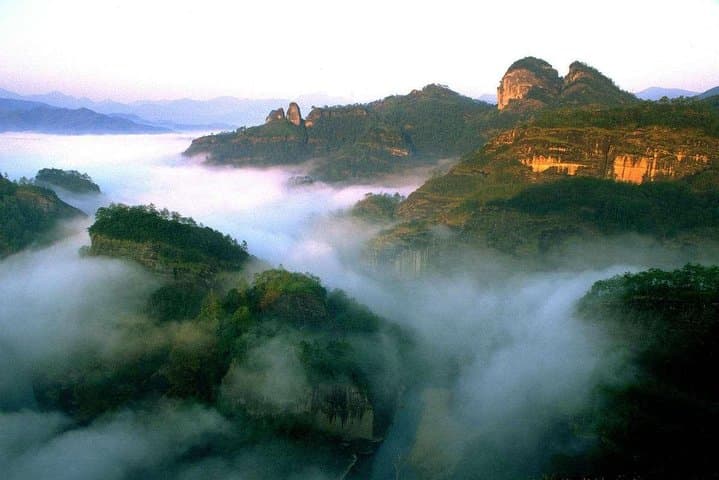
Dawn in the Wuyi Mountains begins with river mists peeling off sheer sandstone ridges. You move through bamboo groves toward the Heavenly Peak, the path alternating between carved stone steps and shaded forest track. Later, the inland drama gives way to sea air on Gulangyu: narrow lanes, colonial villas, and a ferry crossing that signals a change in pace.
Verified experiences and guided adventures in the surrounding area.
Operated by MoreFunAsia · Wuyishan, Fujian
Dawn in the Wuyi Mountains begins with river mists peeling off sheer sandstone ridges. You move through bamboo groves toward the Heavenly Peak, the path alternating between carved stone steps and shaded forest track. Later, the inland drama gives way to sea air on Gulangyu: narrow lanes, colonial villas, and a ferry crossing that signals a change in pace.
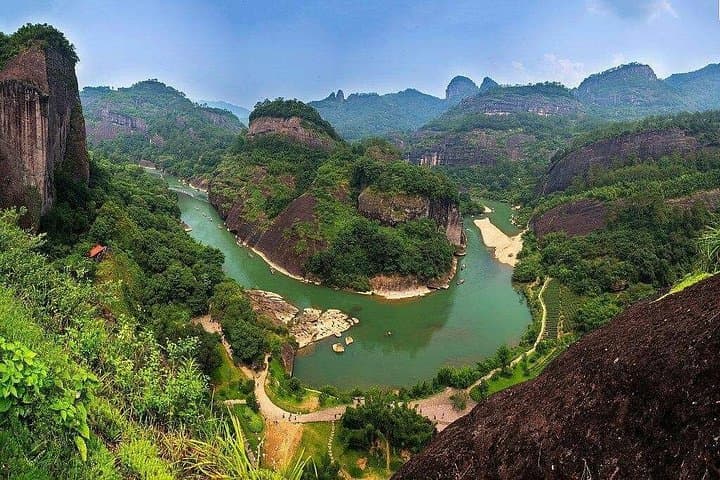
Wuyi is both geological gallery and cultural archive—granite and Danxia-style rock formations shaped rivers into the sinuous Jiuqu Stream. The region’s tea history is inseparable from the land; Da Hong Pao, the celebrated “Big Red Robe,” comes from bushes grown on these steeps and has anchored local rituals for centuries. Xiamen and Gulangyu counterpoint Wuyi with coastal trade history, seaside promenades, and a compact island where walking replaces traffic.
Expect a full day of steady uphill and stair climbing at Wuyi (moderate elevation gain, uneven terrain), a bamboo-raft float on the Jiuqu Stream, and shorter cultural walks in Xiamen and Gulangyu. Local guides explain tea processing, point out sandstone ridges and temple sites, and arrange bullet-train transfers between Nanping and Xiamen.
Practical: layer for changing microclimates, bring a refillable bottle, and wear shoes with good grip for wet stone steps. Plan for early starts to avoid crowds at key viewpoints and allow time to sample Da Hong Pao in a tea house—both sensory reward and cultural lesson.
moderate.
5 days (approx. 8–10 hours per day on active days).
Moderate — suitable for travelers who can handle several hours of walking with elevation and stairs.
The itinerary includes entrance to listed attractions and bullet-train tickets from Wuyi Mountain to Xiamen; local transfers and selected meals are provided as noted.
The main day includes moderate stair climbs and some steep sections; it’s suitable for most fit travelers but not recommended for those with serious cardiovascular issues.
Yes—visits to tea areas and tastings at Da Hong Pao scenic spots are included, offering insight into local tea culture and processing.
Some parts of the tour and select attractions are wheelchair accessible, but mountain trails and bamboo-raft sections are not; contact the operator to discuss specific needs.
Wuyi Mountain is a UNESCO cultural and natural site with millennia of tea cultivation and a history of scholarly retreats; Xiamen/Gulangyu reflect Fujian’s maritime trade and colonial-era architecture.
Visitor limits and trail maintenance help protect fragile eroding sandstone and tea terraces—stay on marked paths and minimize waste.
MoreFunAsia operates guided outdoor trips and adventures with an emphasis on safety, stewardship, and memorable experiences.
Dawn in the Wuyi Mountains begins with river mists peeling off sheer sandstone ridges. You move through bamboo groves toward the Heavenly Peak, the path alternating between carved stone steps and shaded forest track. Later, the inland drama gives way to sea air on Gulangyu: narrow lanes, colonial villas, and a ferry crossing that signals a change in pace.
Dawn in the Wuyi Mountains begins with river mists peeling off sheer sandstone ridges. You move through bamboo groves toward the Heavenly Peak, the path alternating between carved stone steps and shaded forest track. Later, the inland drama gives way to sea air on Gulangyu: narrow lanes, colonial villas, and a ferry crossing that signals a change in pace.
Wuyi is both geological gallery and cultural archive—granite and Danxia-style rock formations shaped rivers into the sinuous Jiuqu Stream. The region’s tea history is inseparable from the land; Da Hong Pao, the celebrated “Big Red Robe,” comes from bushes grown on these steeps and has anchored local rituals for centuries. Xiamen and Gulangyu counterpoint Wuyi with coastal trade history, seaside promenades, and a compact island where walking replaces traffic.
Expect a full day of steady uphill and stair climbing at Wuyi (moderate elevation gain, uneven terrain), a bamboo-raft float on the Jiuqu Stream, and shorter cultural walks in Xiamen and Gulangyu. Local guides explain tea processing, point out sandstone ridges and temple sites, and arrange bullet-train transfers between Nanping and Xiamen.
Practical: layer for changing microclimates, bring a refillable bottle, and wear shoes with good grip for wet stone steps. Plan for early starts to avoid crowds at key viewpoints and allow time to sample Da Hong Pao in a tea house—both sensory reward and cultural lesson.