THE ADVENTURE COLLECTIVE® · Independent discovery and booking for outdoor travel

Board a traditional klotok and travel upriver into Tanjung Puting National Park for a five-day mix of boat nights, jungle trekking and feeding-station visits to see rehabilitated and wild orangutans. Expect lowland rainforest, river villages, firefly-lit creeks and multi-stage conservation work.
Board a traditional klotok and travel upriver into Tanjung Puting National Park for a five-day mix of boat nights, jungle trekking and feeding-station visits to see rehabilitated and wild orangutans. Expect lowland rainforest, river villages, firefly-lit creeks and multi-stage conservation work.
The klotok slips away from Kumai at dawn, the river slipping past mangrove roots and the air folding into humid green. Early light picks out the broad leaves of lowland dipterocarp trees while the Sekonyer River hums with insects and the occasional chatter of macaques. You feel the boat’s steady pitch as the guide pilots upriver toward Pondok Tanggui and the historic redwood platforms of Camp Leakey.
Verified experiences and guided adventures in the surrounding area.
Operated by lookorangutan · Pangkalan Bun, Central Kalimantan
The klotok slips away from Kumai at dawn, the river slipping past mangrove roots and the air folding into humid green. Early light picks out the broad leaves of lowland dipterocarp trees while the Sekonyer River hums with insects and the occasional chatter of macaques. You feel the boat’s steady pitch as the guide pilots upriver toward Pondok Tanggui and the historic redwood platforms of Camp Leakey.
Tanjung Puting National Park is one of Indonesia’s key orangutan rehabilitation landscapes, where fieldwork began in the 1970s under Biruté Galdikas. Geologically this is flat coastal lowland—silted river channels, peat islands and mangrove fringes—shaped by seasonal floods rather than elevation. Local Dayak communities and river villages like Tanjung Harapan keep traditional riverborne livelihoods; you’ll pass wooden stilt houses and floating markets that speak to that culture.
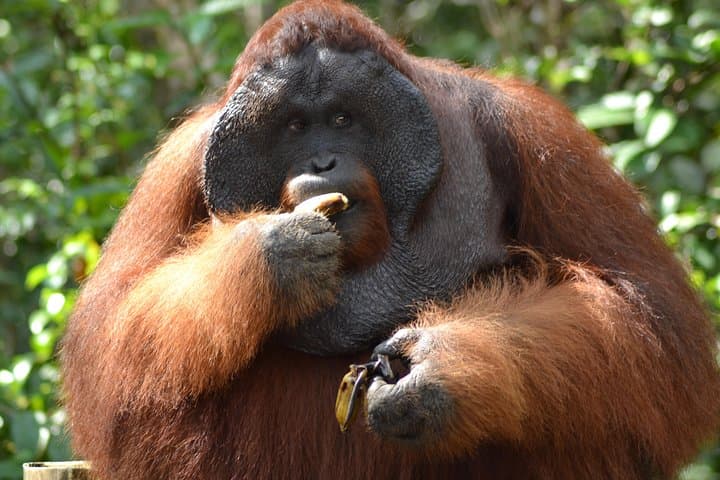
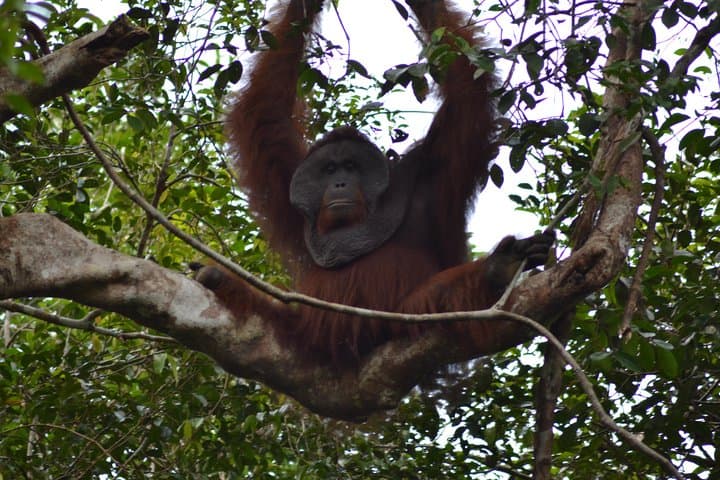
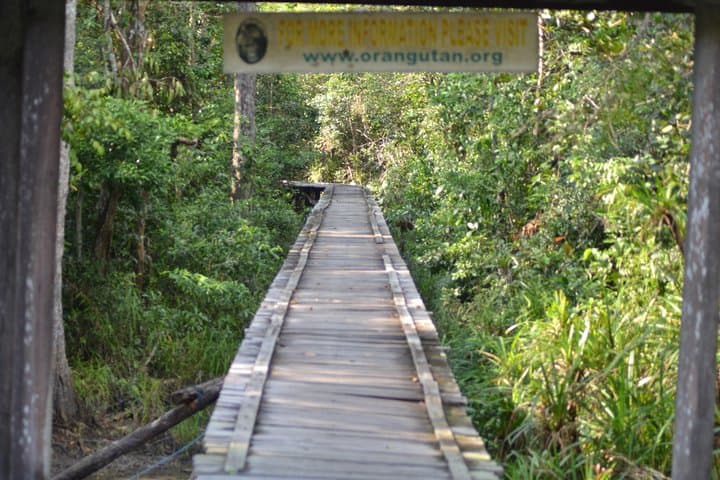
Expect a mix of slow boat travel, short guided treks and one longer forest push — the itinerary includes a roughly 9 km jungle trail through primary and secondary lowland rainforest where giant emergent trees tower above a dense understory. Wildlife highlights include wild and rehabilitated orangutans at feeding stations, gibbons, proboscis monkeys in the mangroves, and a night chorus of insects and fireflies along side creeks.
Practical notes: pack insect repellent, waterproof dry bags and quick-dry layers, and be ready for sticky heat and sudden tropical showers. Boat transfers and national park fees are typically handled; bring small cash for village purchases and respect ranger instructions at feeding posts. With basic fitness and a taste for humid, slow-paced jungle travel, this five-day trail delivers close wildlife encounters and an intimate look at conservation in action.
moderate.
5 days.
Suitable for travelers with regular walking fitness — expect multi-hour jungle hikes (including a 9 km trail) and boarding small boats; not technically demanding but physically humid.
Most travelers fly into Pangkalan Bun (Iskandar) airport and transfer by road to Kumai or board directly; this tour usually includes round-trip transfers from Pangkalan Bun.
No — sightings depend on animal movement. Feeding stations at Camp Leakey and Pondok Tanggui increase chances, but wildlife is wild; expect ethical viewing distances and ranger-managed sessions.
Accommodation alternates between liveaboard klotok houseboats, a tent platform for one night during the 9 km trek, and a Dayak homestay on the Arut River leg as described in the itinerary.
Children are allowed but must be accompanied by an adult; small boats and jungle trails require supervision and adherence to safety rules.
Camp Leakey became one of Indonesia’s first orangutan rehabilitation outposts in the 1970s under Biruté Galdikas and remains central to Tanjung Puting’s conservation story.
Tanjung Puting is crucial for orangutan rehabilitation but faces ongoing pressure from deforestation and peatland conversion; low-impact visits support ranger programs and local conservation initiatives.
lookorangutan operates guided outdoor trips and adventures with an emphasis on safety, stewardship, and memorable experiences.

The klotok slips away from Kumai at dawn, the river slipping past mangrove roots and the air folding into humid green. Early light picks out the broad leaves of lowland dipterocarp trees while the Sekonyer River hums with insects and the occasional chatter of macaques. You feel the boat’s steady pitch as the guide pilots upriver toward Pondok Tanggui and the historic redwood platforms of Camp Leakey.
The klotok slips away from Kumai at dawn, the river slipping past mangrove roots and the air folding into humid green. Early light picks out the broad leaves of lowland dipterocarp trees while the Sekonyer River hums with insects and the occasional chatter of macaques. You feel the boat’s steady pitch as the guide pilots upriver toward Pondok Tanggui and the historic redwood platforms of Camp Leakey.
Tanjung Puting National Park is one of Indonesia’s key orangutan rehabilitation landscapes, where fieldwork began in the 1970s under Biruté Galdikas. Geologically this is flat coastal lowland—silted river channels, peat islands and mangrove fringes—shaped by seasonal floods rather than elevation. Local Dayak communities and river villages like Tanjung Harapan keep traditional riverborne livelihoods; you’ll pass wooden stilt houses and floating markets that speak to that culture.
Expect a mix of slow boat travel, short guided treks and one longer forest push — the itinerary includes a roughly 9 km jungle trail through primary and secondary lowland rainforest where giant emergent trees tower above a dense understory. Wildlife highlights include wild and rehabilitated orangutans at feeding stations, gibbons, proboscis monkeys in the mangroves, and a night chorus of insects and fireflies along side creeks.
Practical notes: pack insect repellent, waterproof dry bags and quick-dry layers, and be ready for sticky heat and sudden tropical showers. Boat transfers and national park fees are typically handled; bring small cash for village purchases and respect ranger instructions at feeding posts. With basic fitness and a taste for humid, slow-paced jungle travel, this five-day trail delivers close wildlife encounters and an intimate look at conservation in action.