THE ADVENTURE COLLECTIVE® · Independent discovery and booking for outdoor travel

A five-day circuit from Casablanca to Merzouga and Marrakech that blends imperial cities, cedar forests, and the towering Erg Chebbi dunes. Expect long drives, camel rides into pink sand, sunrise vistas, and nights in riads and desert tents.
A five-day circuit from Casablanca to Merzouga and Marrakech that blends imperial cities, cedar forests, and the towering Erg Chebbi dunes. Expect long drives, camel rides into pink sand, sunrise vistas, and nights in riads and desert tents.
The road leaves Casablanca’s Atlantic edge and climbs into a changing country: whitewashed towns, cedar forests that nudge the sky, and at last the rounded silhouettes of the High Atlas before the land opens into ochre plains and the rising arms of Erg Chebbi.
Verified experiences and guided adventures in the surrounding area.
Operated by Morocco Tours Services · Merzouga, Drâa-Tafilalet
The road leaves Casablanca’s Atlantic edge and climbs into a changing country: whitewashed towns, cedar forests that nudge the sky, and at last the rounded silhouettes of the High Atlas before the land opens into ochre plains and the rising arms of Erg Chebbi.
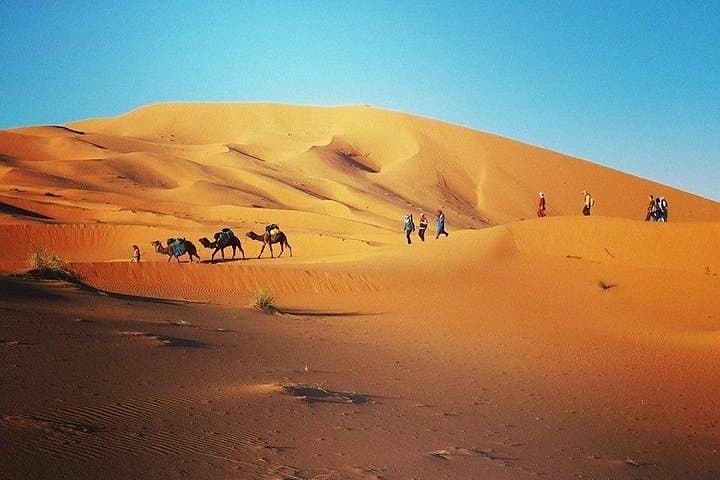
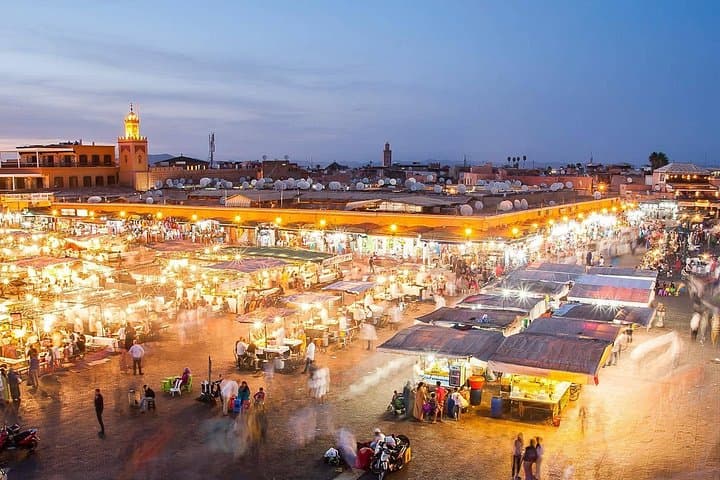
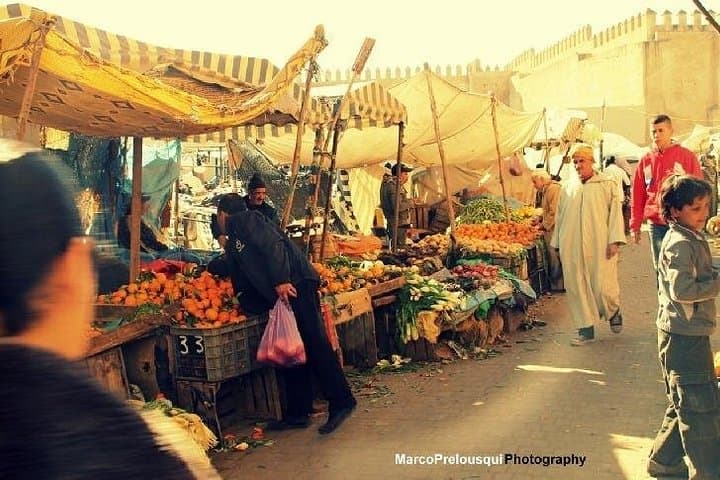
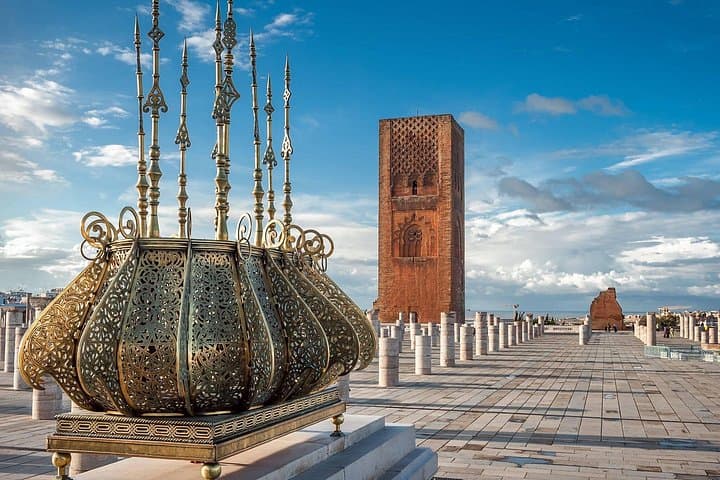
On this five-day loop, travelers move at the rhythm of Morocco — medina alleys in Fes and Rabat, Roman mosaics at Volubilis, and nights that trade city light for the slow burn of desert stars. The Erg Chebbi dunes near Merzouga are wind-made giants, some ramps of sand reaching roughly 100–150 meters; they shift daily, the wind daring you to chase a new crest. Along the route, kasbahs and ksours mark ancient trade arteries: this was once a corridor for salt, gold, and ideas.
Culturally, the tour threads Berber hospitality into its nights — tea rituals, shared meals in a riad, and the option of a nomad-style camp with live music around a low flame. Geologically, the landscape transitions from volcanic High Atlas outwash to aeolian sands that record seasonal winds.
Practical guidance: expect long drives interspersed with short walks and camel treks; the trip is physically easy but requires stamina for travel days and dune climbs at sunrise or sunset. Pack layers (desert nights are cold), strong sun protection, sturdy shoes for loose sand, and a refillable water bottle. If you’re photographing dunes, bring a lens cloth — sand is relentless. Allow buffer time at both ends in Casablanca or Marrakech for travel delays. Book with a company that provides A/C transport and local desert guides to support navigation and local economies.
easy.
5 days.
Suitable for travelers in average physical condition; be prepared for several hours of driving and short dune hikes or camel rides.
Most days involve minimal structured hiking—short walks in medinas, a dune climb at sunset or sunrise, and brief walks in gorges; the trip focuses on driving and cultural stops.
Camel rides to the camp and at least one night in a desert camp are included; tents are traditional nomad-style and dinners are usually communal.
Yes—it's rated easy and suitable for varied fitness levels, but camel rides and dune climbs may be tiring; inform the operator about mobility needs in advance.
Visitors to Morocco generally need a passport valid for the duration of stay; visa requirements depend on nationality—check Morocco’s consular guidance before travel.
The route follows parts of old trans-Saharan trade corridors; kasbahs and ksours along the way once stored and protected salt and caravan goods.
Erg ecosystems are fragile—avoid driving on native interdune vegetation and take all litter out. Favor locally owned camps to support community-based tourism.
Morocco Tours Services operates guided outdoor trips and adventures with an emphasis on safety, stewardship, and memorable experiences.
The road leaves Casablanca’s Atlantic edge and climbs into a changing country: whitewashed towns, cedar forests that nudge the sky, and at last the rounded silhouettes of the High Atlas before the land opens into ochre plains and the rising arms of Erg Chebbi.
The road leaves Casablanca’s Atlantic edge and climbs into a changing country: whitewashed towns, cedar forests that nudge the sky, and at last the rounded silhouettes of the High Atlas before the land opens into ochre plains and the rising arms of Erg Chebbi.
On this five-day loop, travelers move at the rhythm of Morocco — medina alleys in Fes and Rabat, Roman mosaics at Volubilis, and nights that trade city light for the slow burn of desert stars. The Erg Chebbi dunes near Merzouga are wind-made giants, some ramps of sand reaching roughly 100–150 meters; they shift daily, the wind daring you to chase a new crest. Along the route, kasbahs and ksours mark ancient trade arteries: this was once a corridor for salt, gold, and ideas.
Culturally, the tour threads Berber hospitality into its nights — tea rituals, shared meals in a riad, and the option of a nomad-style camp with live music around a low flame. Geologically, the landscape transitions from volcanic High Atlas outwash to aeolian sands that record seasonal winds.
Practical guidance: expect long drives interspersed with short walks and camel treks; the trip is physically easy but requires stamina for travel days and dune climbs at sunrise or sunset. Pack layers (desert nights are cold), strong sun protection, sturdy shoes for loose sand, and a refillable water bottle. If you’re photographing dunes, bring a lens cloth — sand is relentless. Allow buffer time at both ends in Casablanca or Marrakech for travel delays. Book with a company that provides A/C transport and local desert guides to support navigation and local economies.