THE ADVENTURE COLLECTIVE® · Independent discovery and booking for outdoor travel

Swap Marrakech’s spice-scented streets for wind-sculpted dunes on a five-day circuit from the High Atlas to Erg Chebbi. Expect kasbahs, palm oases, a camel trek at sunrise, and practical travel through southern Morocco’s changing landscapes.
Swap Marrakech’s spice-scented streets for wind-sculpted dunes on a five-day circuit from the High Atlas to Erg Chebbi. Expect kasbahs, palm oases, a camel trek at sunrise, and practical travel through southern Morocco’s changing landscapes.
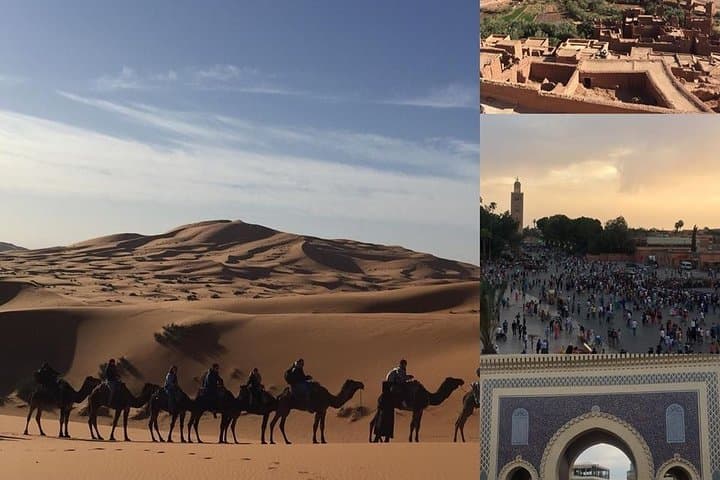
A wind-browned road unspools from Marrakech toward mountains and then silence. On this five-day circuit, travelers trade ochre medina alleys for the open, moving through High Atlas passes, kasbah towns, and finally the vast sweep of Erg Chebbi where dunes rise and roll like living waves.
Verified experiences and guided adventures in the surrounding area.
Operated by Mohamed Salem ARIBI · Merzouga, Drâa-Tafilalet
A wind-browned road unspools from Marrakech toward mountains and then silence. On this five-day circuit, travelers trade ochre medina alleys for the open, moving through High Atlas passes, kasbah towns, and finally the vast sweep of Erg Chebbi where dunes rise and roll like living waves.
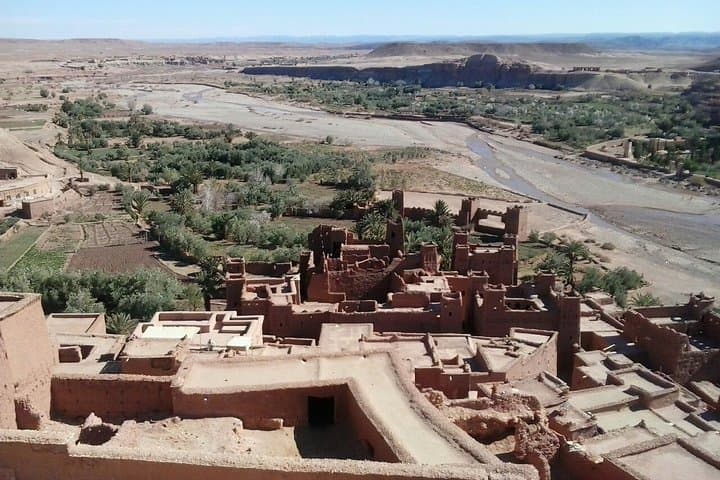
The route follows centuries-old caravan corridors: mud-brick ksars and the fortified kasbah of Ait Ben Haddou are reminders of trans-Saharan trade and local craft. Geology shifts quickly—red sandstone and folded High Atlas strata give way to alluvial plains and wind-sorted sands in the Errachidia region. Along the way, palm groves irrigated by ancient khettaras (underground channels) mark oases that support small Berber settlements and vibrant souks where argan and hand-stitched leather are traded.
Culturally, much of the human rhythm is practical and hospitable—shared tagines, evening tea, and the slow cadence of camel travel. Accommodation ranges from standard hotels in Ouarzazate to family-run desert camps beneath the stars.
Practicalities: expect long drive segments (several 3–6 hour legs), short hikes in gorges like Todgha, and a camel trek at sunrise or sunset across soft dunes. Bring breathable layers for hot days and cool nights, sun protection, and a reliable water bottle. Mobility needs are modest—mounting a camel and short walks on sand—but luggage limits for desert transfers apply.
Timing your visit for spring or autumn reduces heat stress; winter nights can be sharply cold. Respect private camps and local customs, conserve water, and leave no trace on fragile dunes.
moderate.
5 days.
Suitable for travelers in regular, active health who can manage multi-hour drives, mounting camels, and short dune walks.
Departures are commonly arranged from Marrakech or Fes with transfer back to the original pickup city; confirm your pickup point when booking.
Camel treks are low-impact—riding involves short stretches of sitting on a saddle and brief walks on sand; basic mobility is sufficient.
Options range from standard hotels in towns to private or luxury desert camps; meals are typically provided as listed in the itinerary.
The operator notes infants must sit on laps and infant seats are available; long drives and desert nights may be challenging for very young children.
The route follows former caravan paths and features kasbahs like Ait Ben Haddou—historic waystations on trans-Saharan trade and film-location backdrops.
The Sahara’s dune systems are fragile; avoid driving on dunes, minimize water use in oases, and support local guides who practice low-impact camping.
Mohamed Salem ARIBI operates guided outdoor trips and adventures with an emphasis on safety, stewardship, and memorable experiences.

A wind-browned road unspools from Marrakech toward mountains and then silence. On this five-day circuit, travelers trade ochre medina alleys for the open, moving through High Atlas passes, kasbah towns, and finally the vast sweep of Erg Chebbi where dunes rise and roll like living waves.
A wind-browned road unspools from Marrakech toward mountains and then silence. On this five-day circuit, travelers trade ochre medina alleys for the open, moving through High Atlas passes, kasbah towns, and finally the vast sweep of Erg Chebbi where dunes rise and roll like living waves.
The route follows centuries-old caravan corridors: mud-brick ksars and the fortified kasbah of Ait Ben Haddou are reminders of trans-Saharan trade and local craft. Geology shifts quickly—red sandstone and folded High Atlas strata give way to alluvial plains and wind-sorted sands in the Errachidia region. Along the way, palm groves irrigated by ancient khettaras (underground channels) mark oases that support small Berber settlements and vibrant souks where argan and hand-stitched leather are traded.
Culturally, much of the human rhythm is practical and hospitable—shared tagines, evening tea, and the slow cadence of camel travel. Accommodation ranges from standard hotels in Ouarzazate to family-run desert camps beneath the stars.
Practicalities: expect long drive segments (several 3–6 hour legs), short hikes in gorges like Todgha, and a camel trek at sunrise or sunset across soft dunes. Bring breathable layers for hot days and cool nights, sun protection, and a reliable water bottle. Mobility needs are modest—mounting a camel and short walks on sand—but luggage limits for desert transfers apply.
Timing your visit for spring or autumn reduces heat stress; winter nights can be sharply cold. Respect private camps and local customs, conserve water, and leave no trace on fragile dunes.