THE ADVENTURE COLLECTIVE® · Independent discovery and booking for outdoor travel

This five-day loop pairs the train journey to Machu Picchu with a high-altitude hike to Vinicunca (Rainbow Mountain). Expect Inca citadels, river canyon views, and a challenging day above 5,000 m that rewards you with dramatic color-striped geology.
This five-day loop pairs the train journey to Machu Picchu with a high-altitude hike to Vinicunca (Rainbow Mountain). Expect Inca citadels, river canyon views, and a challenging day above 5,000 m that rewards you with dramatic color-striped geology.
Dawn breaks over Cusco and the city exhales cold, thin air as you step into a van bound for the highlands. The road climbs through terraced fields and river-cut valleys; alpacas graze like punctuation marks on rust-colored hills, while the Vilcanota River threads the landscape toward the train that will take you to Machu Picchu. Over five days you trade urban stonework for Inca stonework and then for a sky-painting at 5,200 meters: Rainbow Mountain.
Verified experiences and guided adventures in the surrounding area.
Operated by Machupicchu Latin America · Cusco, Cusco
Dawn breaks over Cusco and the city exhales cold, thin air as you step into a van bound for the highlands. The road climbs through terraced fields and river-cut valleys; alpacas graze like punctuation marks on rust-colored hills, while the Vilcanota River threads the landscape toward the train that will take you to Machu Picchu. Over five days you trade urban stonework for Inca stonework and then for a sky-painting at 5,200 meters: Rainbow Mountain.
The itinerary stitches together Inca history and Andean geology. Pisac and Ollantaytambo show agricultural terraces, water channels and trapezoidal doorways—practical engineering that speaks of statecraft and ceremony. The Vilcanota (Urubamba) valley follows a tectonic seam, its steep canyons carved from uplift and glacial melt. Machu Picchu sits on a granite spine above a bend in the river, a strategic plateau reworked into plazas, temples and steep agricultural benches.
Expect early mornings, train rides along the canyon, and a 4–6 km round-trip hike to Rainbow Mountain with roughly 500–600 m of elevation gain from the trailhead. Terrain is high-altitude dirt trails, some loose rock, and exposed ridgelines. Guides handle logistics and permits; you handle the climb: steady pace, frequent breaks, and hydration.
Practical edge: acclimatize in Cusco for at least 48 hours, pack windproof layers and a sun hat, and budget time for the train schedule and possible altitude-related slow-downs. Bring cash for market stalls in Pisac, your passport for entry controls, and sensible boots—this trip rewards patience, pace, and respect for thin air.
challenging.
5 days.
Good aerobic fitness with prior high-elevation experience recommended; able to hike 4–6 km over uneven trail at altitude.
The hike is short but strenuous due to altitude: expect 2–3 hours round-trip from the trailhead with roughly 500–600 m ascent; take it slow and use altitude precautions.
Yes — this tour includes round-trip train to Aguas Calientes and Machu Picchu admission as listed in the inclusions.
Yes — your passport is required for train travel and entry checks at Machu Picchu; keep it accessible during travel days.
Travelers should have at least moderate fitness; the itinerary notes a moderate-to-high physical demand and altitude can limit participation for some guests.
The Sacred Valley was a backbone of Inca agriculture and administration; towns like Ollantaytambo retain living Inca-era terraces and urban planning.
Visitor numbers to Machu Picchu are regulated to protect fragile stonework and trails; follow guide instructions, stay on designated paths, and avoid single-use plastic when possible.
Machupicchu Latin America operates guided outdoor trips and adventures with an emphasis on safety, stewardship, and memorable experiences.


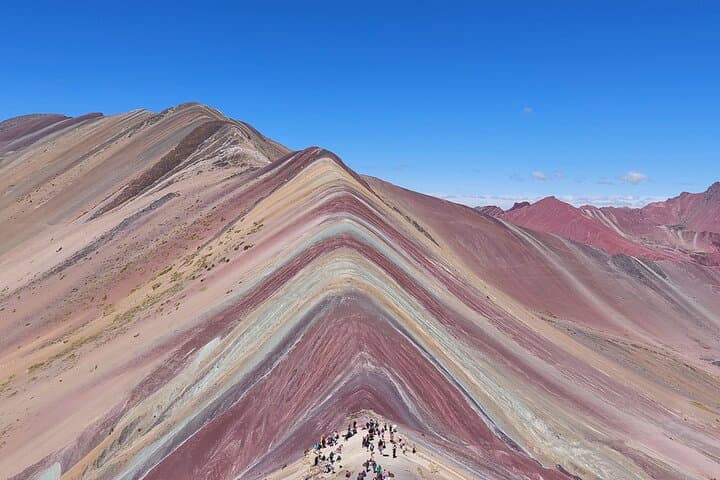
Dawn breaks over Cusco and the city exhales cold, thin air as you step into a van bound for the highlands. The road climbs through terraced fields and river-cut valleys; alpacas graze like punctuation marks on rust-colored hills, while the Vilcanota River threads the landscape toward the train that will take you to Machu Picchu. Over five days you trade urban stonework for Inca stonework and then for a sky-painting at 5,200 meters: Rainbow Mountain.
Dawn breaks over Cusco and the city exhales cold, thin air as you step into a van bound for the highlands. The road climbs through terraced fields and river-cut valleys; alpacas graze like punctuation marks on rust-colored hills, while the Vilcanota River threads the landscape toward the train that will take you to Machu Picchu. Over five days you trade urban stonework for Inca stonework and then for a sky-painting at 5,200 meters: Rainbow Mountain.
The itinerary stitches together Inca history and Andean geology. Pisac and Ollantaytambo show agricultural terraces, water channels and trapezoidal doorways—practical engineering that speaks of statecraft and ceremony. The Vilcanota (Urubamba) valley follows a tectonic seam, its steep canyons carved from uplift and glacial melt. Machu Picchu sits on a granite spine above a bend in the river, a strategic plateau reworked into plazas, temples and steep agricultural benches.
Expect early mornings, train rides along the canyon, and a 4–6 km round-trip hike to Rainbow Mountain with roughly 500–600 m of elevation gain from the trailhead. Terrain is high-altitude dirt trails, some loose rock, and exposed ridgelines. Guides handle logistics and permits; you handle the climb: steady pace, frequent breaks, and hydration.
Practical edge: acclimatize in Cusco for at least 48 hours, pack windproof layers and a sun hat, and budget time for the train schedule and possible altitude-related slow-downs. Bring cash for market stalls in Pisac, your passport for entry controls, and sensible boots—this trip rewards patience, pace, and respect for thin air.