THE ADVENTURE COLLECTIVE® · Independent discovery and booking for outdoor travel

A compact five-day route from Quito through Cotopaxi, Quilotoa, Baños, the Amazon foothills and Chimborazo—designed for active travelers who want guided logistics with independent-style freedom.
A compact five-day route from Quito through Cotopaxi, Quilotoa, Baños, the Amazon foothills and Chimborazo—designed for active travelers who want guided logistics with independent-style freedom.
You step out of Quito’s high, cool air into a landscape that changes by the hour: volcanic scree giving way to crater lake glass, then to humid jungle that seems to breathe around you.
Verified experiences and guided adventures in the surrounding area.
Operated by Wanderbus Ecuador · Quito, Pichincha
You step out of Quito’s high, cool air into a landscape that changes by the hour: volcanic scree giving way to crater lake glass, then to humid jungle that seems to breathe around you.
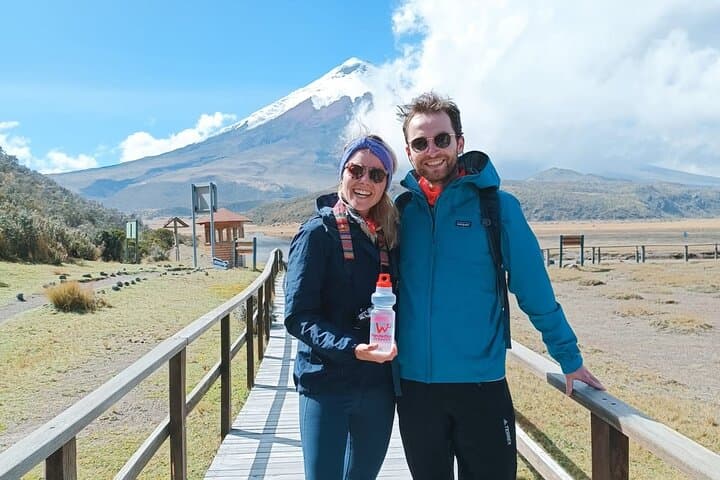
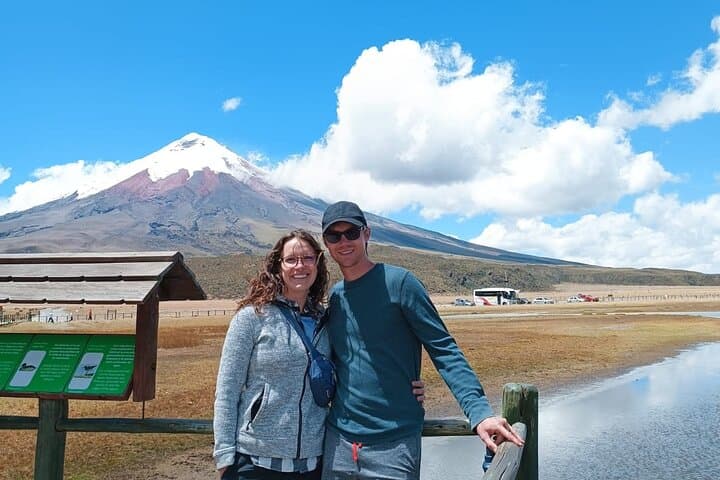
This five-day route threads together Ecuador’s Andean spine and its eastern foothills—Cotopaxi’s glacier-dusted cone (5,897 m) watches over grassy paramo, Quilotoa’s 3 km wide crater lake sits near 3,900 m with pumice and lapilli framing its rim, and Chimborazo’s slopes (refuge trail to ~5,100 m) test your legs with rocky, wind-scoured ascents. Baños drops you into a waterfall-streaked valley at ~1,800 m where hot springs steam and the Pastaza River dares you toward the Amazon basin.
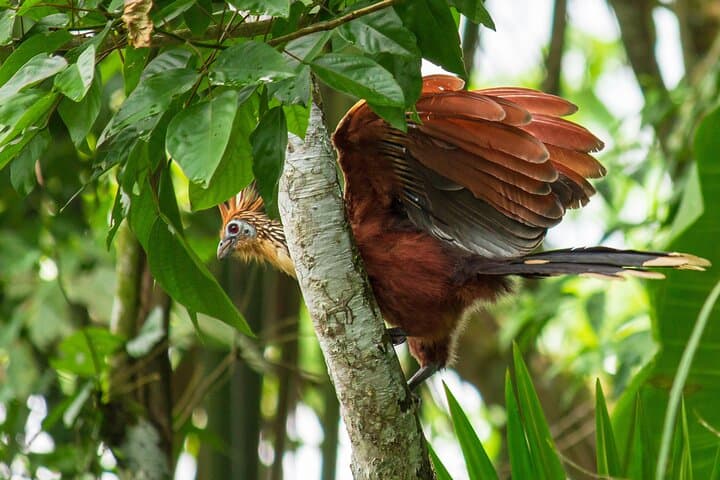
Along the way you’ll encounter indigenous highland markets, pre-Columbian stonework at Ingapirca, and small community-run farms—each stop offering cultural context for the landscapes: Incan road fragments, colonial churches, and Amazonian conservation projects like animal rescue centers and paiche hatcheries.
Practical guidance: expect daily transfers of 1–3 hours and multiple short hikes (1–5 km) with 200–1,000 m elevation change depending on the stop. Acclimatize in Quito, pace uphill sections, and carry water and sun protection—UV at 3,500–4,000 m bites fast. Waterproof layers are essential for the Amazon day.
This itinerary suits travelers with moderate fitness who value variety—active hikes, wildlife viewing, and cultural stops—pack light, sleep well, and plan a buffer day in Quito if you’re sensitive to altitude.
moderate.
5 days (approx.).
Moderate fitness: regular walkers who can handle 3–6 hour days with short steep sections and transfers.
Daily activity ranges from short guided walks (30–60 minutes) up to 3–5 km hikes with 200–800 m elevation gain depending on the stop.
Yes—several sites exceed 3,500 m; allow time to acclimatize in Quito, stay hydrated, avoid heavy exertion on day one, and consult your doctor about medication if needed.
Some entrance fees and guided activities are included; meals are often not included—expect to pay for lunch and some dinners locally.
Guides can usually assist with common dietary needs if informed at booking; bring snacks for specific requirements.
The route crosses Inca and pre-Inca landscapes—sites like Ingapirca preserve stonework tied to the Qhapaq Ñan network and Spanish colonial routes that shaped regional towns.
Local reserves and rescue centers near the Amazon work on rehabilitation and reforestation; visitors should stick to trails, avoid single-use plastics, and support community-run experiences.
Wanderbus Ecuador operates guided outdoor trips and adventures with an emphasis on safety, stewardship, and memorable experiences.
You step out of Quito’s high, cool air into a landscape that changes by the hour: volcanic scree giving way to crater lake glass, then to humid jungle that seems to breathe around you.
You step out of Quito’s high, cool air into a landscape that changes by the hour: volcanic scree giving way to crater lake glass, then to humid jungle that seems to breathe around you.
This five-day route threads together Ecuador’s Andean spine and its eastern foothills—Cotopaxi’s glacier-dusted cone (5,897 m) watches over grassy paramo, Quilotoa’s 3 km wide crater lake sits near 3,900 m with pumice and lapilli framing its rim, and Chimborazo’s slopes (refuge trail to ~5,100 m) test your legs with rocky, wind-scoured ascents. Baños drops you into a waterfall-streaked valley at ~1,800 m where hot springs steam and the Pastaza River dares you toward the Amazon basin.
Along the way you’ll encounter indigenous highland markets, pre-Columbian stonework at Ingapirca, and small community-run farms—each stop offering cultural context for the landscapes: Incan road fragments, colonial churches, and Amazonian conservation projects like animal rescue centers and paiche hatcheries.
Practical guidance: expect daily transfers of 1–3 hours and multiple short hikes (1–5 km) with 200–1,000 m elevation change depending on the stop. Acclimatize in Quito, pace uphill sections, and carry water and sun protection—UV at 3,500–4,000 m bites fast. Waterproof layers are essential for the Amazon day.
This itinerary suits travelers with moderate fitness who value variety—active hikes, wildlife viewing, and cultural stops—pack light, sleep well, and plan a buffer day in Quito if you’re sensitive to altitude.