THE ADVENTURE COLLECTIVE® · Independent discovery and booking for outdoor travel

Trace pharaonic processions from Luxor’s colonnades to Abydos’s royal lists and Dendera’s starry ceiling. This private five-day tour pairs guided temple visits with comfortable transfers and expert Egyptologists.
Trace pharaonic processions from Luxor’s colonnades to Abydos’s royal lists and Dendera’s starry ceiling. This private five-day tour pairs guided temple visits with comfortable transfers and expert Egyptologists.
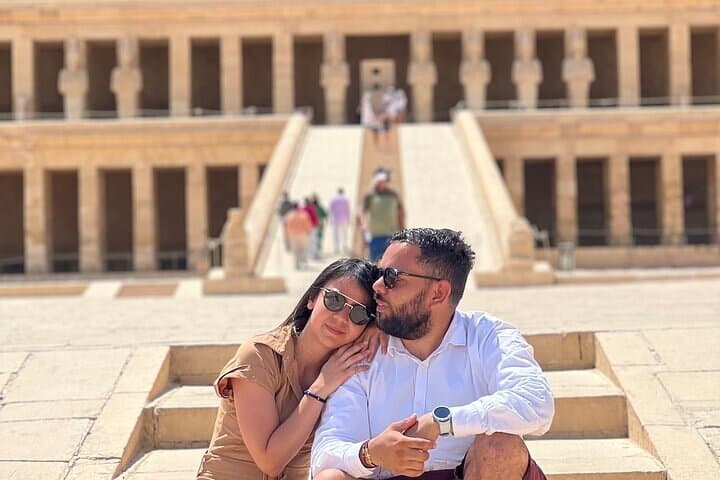
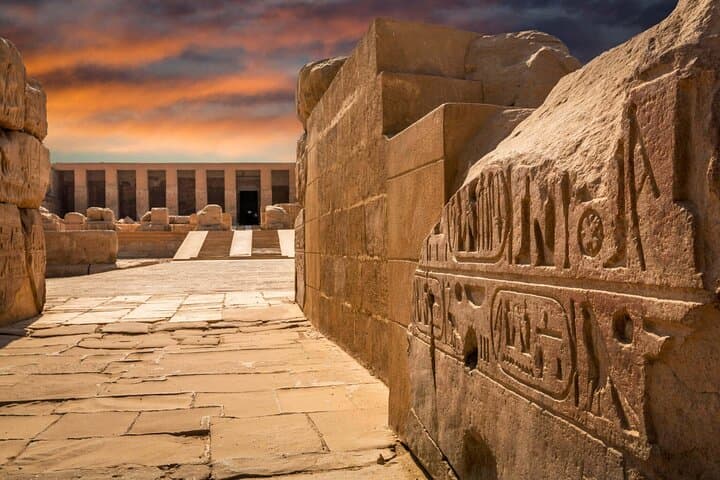
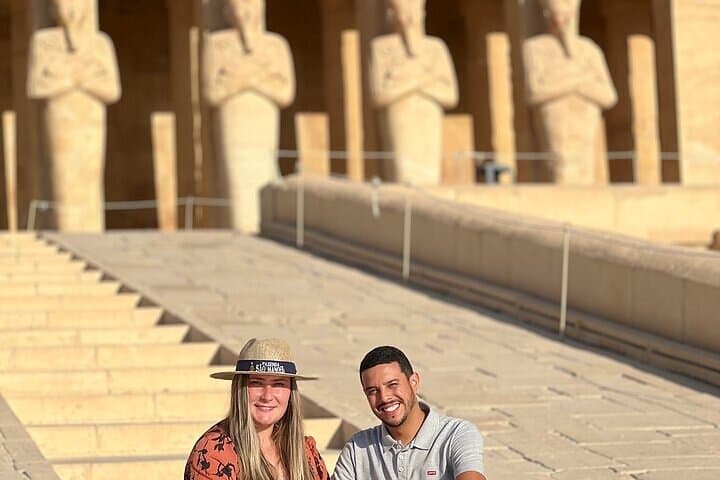
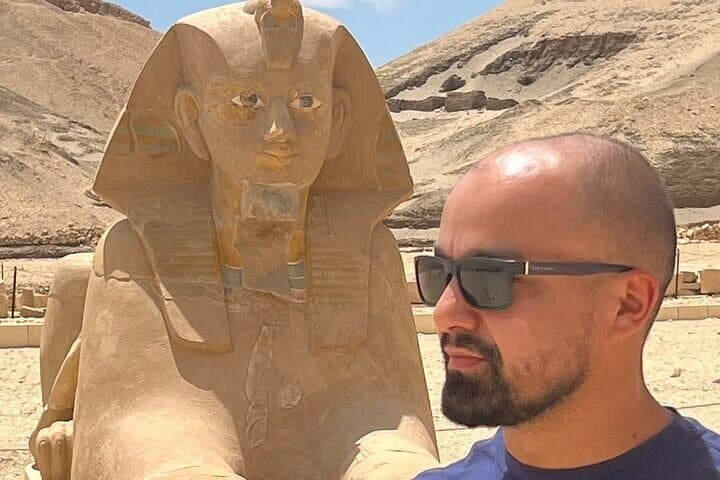
You step off the air-conditioned transfer into a wash of dry heat and the Nile’s slow, persistent pull; Luxor’s sandstone pylons rise ahead like pages from a very old book. Daylight carves hieroglyphs into shadow and relief, and by evening the corniche hums with feluccas crossing the river that still moves cities and time alike.
Verified experiences and guided adventures in the surrounding area.
Operated by Bastet Travel · Luxor, Luxor Governorate
You step off the air-conditioned transfer into a wash of dry heat and the Nile’s slow, persistent pull; Luxor’s sandstone pylons rise ahead like pages from a very old book. Daylight carves hieroglyphs into shadow and relief, and by evening the corniche hums with feluccas crossing the river that still moves cities and time alike.
This five-day private itinerary threads the great Theban sites — Karnak and Luxor Temples, the Valley of the Kings and Hatshepsut’s terraces — with two northerly outposts of cult and kingship: Abydos, home to Seti I’s temple and the Abydos King List, and Dendera, whose Hathor complex preserves astronomical ceilings and crypts. Geologically the region is flat alluvium beside the Nile; the temples are carved from local sandstone and decorated with pigments that have survived millennia in arid air. Culturally, these monuments reflect New Kingdom state religion, funerary practice, and later adaptive reuse as churches and mosques.
Expect short drives (Dendera ~1.5–2 hours north of Luxor; Abydos ~2.5–3 hours), easy to moderate walking with uneven stone, and stair descents into selected tombs. Mornings are best for light and cooler temperatures; afternoons suit museum stops and relaxed lunches. Local guides—Egyptologists—translate iconography into narrative, and small-group private transfers make timing flexible.
Practical essentials: wear sturdy, closed walking shoes, carry sun protection and 1–2 liters of water per person, plan for low-impact behavior inside tombs (no touching, limited flash), and confirm pickup times the night before. This is a cultural and outdoor program designed for steady walkers who want close encounters with pharaonic architecture rather than strenuous hiking.
easy.
5 days.
Suitable for travelers who can walk 2–4 hours a day on uneven ground and climb short flights of stairs.
Dendera is roughly 60–80 km north of Luxor (about 1.5–2 hours by car); Abydos is farther, around 150–180 km (2.5–3 hours), depending on traffic and stops.
Yes — entrance fees and a qualified Egyptologist guide are included in the tour package as described.
Many transfer vehicles are accessible and some sites have accessible routes, but tomb interiors and some temple areas have stairs and uneven surfaces—check specific access needs in advance.
Tipping is customary in Egypt; typical ranges are $5–10 per person per day for drivers and $10–20 per person per day for private guides, adjusted based on service level.
Luxor and its necropolis were central to New Kingdom state religion; temples here accumulated centuries of additions by pharaohs who sought divine legitimacy.
The region relies on sustainable tourism and strict site rules to protect pigments and reliefs; visitors should avoid touching surfaces and dispose of waste properly.
Bastet Travel operates guided outdoor trips and adventures with an emphasis on safety, stewardship, and memorable experiences.
You step off the air-conditioned transfer into a wash of dry heat and the Nile’s slow, persistent pull; Luxor’s sandstone pylons rise ahead like pages from a very old book. Daylight carves hieroglyphs into shadow and relief, and by evening the corniche hums with feluccas crossing the river that still moves cities and time alike.
You step off the air-conditioned transfer into a wash of dry heat and the Nile’s slow, persistent pull; Luxor’s sandstone pylons rise ahead like pages from a very old book. Daylight carves hieroglyphs into shadow and relief, and by evening the corniche hums with feluccas crossing the river that still moves cities and time alike.
This five-day private itinerary threads the great Theban sites — Karnak and Luxor Temples, the Valley of the Kings and Hatshepsut’s terraces — with two northerly outposts of cult and kingship: Abydos, home to Seti I’s temple and the Abydos King List, and Dendera, whose Hathor complex preserves astronomical ceilings and crypts. Geologically the region is flat alluvium beside the Nile; the temples are carved from local sandstone and decorated with pigments that have survived millennia in arid air. Culturally, these monuments reflect New Kingdom state religion, funerary practice, and later adaptive reuse as churches and mosques.
Expect short drives (Dendera ~1.5–2 hours north of Luxor; Abydos ~2.5–3 hours), easy to moderate walking with uneven stone, and stair descents into selected tombs. Mornings are best for light and cooler temperatures; afternoons suit museum stops and relaxed lunches. Local guides—Egyptologists—translate iconography into narrative, and small-group private transfers make timing flexible.
Practical essentials: wear sturdy, closed walking shoes, carry sun protection and 1–2 liters of water per person, plan for low-impact behavior inside tombs (no touching, limited flash), and confirm pickup times the night before. This is a cultural and outdoor program designed for steady walkers who want close encounters with pharaonic architecture rather than strenuous hiking.