THE ADVENTURE COLLECTIVE® · Independent discovery and booking for outdoor travel

Explore Angkor’s temples at sunrise, glide through Tonle Sap’s stilted villages, and confront Cambodia’s modern history in Phnom Penh on a five-day private tour. This itinerary bundles transport, guiding, and accommodations while balancing intense temple walking with time to reflect.
Explore Angkor’s temples at sunrise, glide through Tonle Sap’s stilted villages, and confront Cambodia’s modern history in Phnom Penh on a five-day private tour. This itinerary bundles transport, guiding, and accommodations while balancing intense temple walking with time to reflect.
Dawn breaks over the outer moat and you feel the scale of Angkor before you see it: towers of stone rising from a carpet of mist, birds punctuating the silence. The second day unspools in temples—Angkor Thom’s South Gate, the many-faced Bayon, Ta Prohm’s roots leaning like hands on masonry—while evenings end on Phnom Bakheng or a quiet hotel terrace as the sun drops behind the jungled horizon.
Verified experiences and guided adventures in the surrounding area.
Operated by Green Era Travel · Siem Reap, Siem Reap Province
Dawn breaks over the outer moat and you feel the scale of Angkor before you see it: towers of stone rising from a carpet of mist, birds punctuating the silence. The second day unspools in temples—Angkor Thom’s South Gate, the many-faced Bayon, Ta Prohm’s roots leaning like hands on masonry—while evenings end on Phnom Bakheng or a quiet hotel terrace as the sun drops behind the jungled horizon.
This route threads two cities and two eras. Angkor’s sandstone and laterite were shaped by Khmer engineering and monsoon-fed reservoirs; the Tonle Sap lives on seasonal pulse, pushing water into flooded forests and stilt villages. Phnom Penh offers a different ledger: French colonial boulevards beside the Royal Palace and the Silver Pagoda, and the sobering history at Toul Sleng and the Killing Fields that explain modern Cambodia’s resilience.
Practically, the tour mixes walking-intensive temple visits with air‑conditioned transfers and a boat trip on Tonle Sap. Expect uneven stone steps, dusty paths, and midday heat—water, sun protection, and chaperoned pacing matter. Entrance tickets, accommodation for four nights, breakfasts, guiding, and local transport are included; the overland transfer to Phnom Penh uses a private vehicle or public bus (flight upgrade optional). Dress respectfully at religious sites—shoulders and knees covered—or you risk denied entry.
Plan for early starts to avoid crowds and heat, pack lightweight layers for cooler mornings, and bring insect repellent for lakeside villages. With moderate fitness you’ll cover long temple circuits and short boat excursions; the trip balances history, landscape, and the daily life of the Mekong basin.
moderate.
5 days.
Moderate fitness: able to walk several hours a day on uneven ground and climb temple steps; comfortable with heat.
Yes—this tour includes a ticket for Angkor as listed in the inclusions, along with other specified sight admissions.
The itinerary uses a private air‑conditioned vehicle or public bus transfer included in the cost; an internal flight is available as a paid upgrade.
Children may join but must be accompanied by an adult; the Genocide Museum and Killing Fields are not recommended for young children due to the subject matter.
Shoulders and knees must be covered for both men and women—no sleeveless tops or shorts; lightweight coverings are acceptable and often sold locally.
Green Era Travel operates guided outdoor trips and adventures with an emphasis on safety, stewardship, and memorable experiences.


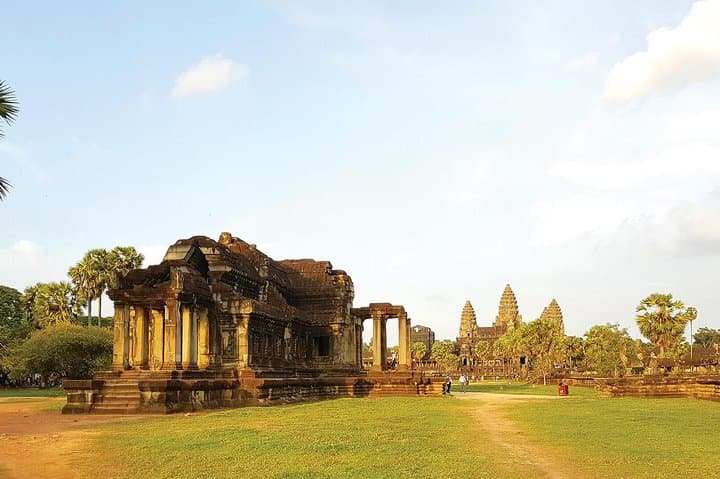
Dawn breaks over the outer moat and you feel the scale of Angkor before you see it: towers of stone rising from a carpet of mist, birds punctuating the silence. The second day unspools in temples—Angkor Thom’s South Gate, the many-faced Bayon, Ta Prohm’s roots leaning like hands on masonry—while evenings end on Phnom Bakheng or a quiet hotel terrace as the sun drops behind the jungled horizon.
Dawn breaks over the outer moat and you feel the scale of Angkor before you see it: towers of stone rising from a carpet of mist, birds punctuating the silence. The second day unspools in temples—Angkor Thom’s South Gate, the many-faced Bayon, Ta Prohm’s roots leaning like hands on masonry—while evenings end on Phnom Bakheng or a quiet hotel terrace as the sun drops behind the jungled horizon.
This route threads two cities and two eras. Angkor’s sandstone and laterite were shaped by Khmer engineering and monsoon-fed reservoirs; the Tonle Sap lives on seasonal pulse, pushing water into flooded forests and stilt villages. Phnom Penh offers a different ledger: French colonial boulevards beside the Royal Palace and the Silver Pagoda, and the sobering history at Toul Sleng and the Killing Fields that explain modern Cambodia’s resilience.
Practically, the tour mixes walking-intensive temple visits with air‑conditioned transfers and a boat trip on Tonle Sap. Expect uneven stone steps, dusty paths, and midday heat—water, sun protection, and chaperoned pacing matter. Entrance tickets, accommodation for four nights, breakfasts, guiding, and local transport are included; the overland transfer to Phnom Penh uses a private vehicle or public bus (flight upgrade optional). Dress respectfully at religious sites—shoulders and knees covered—or you risk denied entry.
Plan for early starts to avoid crowds and heat, pack lightweight layers for cooler mornings, and bring insect repellent for lakeside villages. With moderate fitness you’ll cover long temple circuits and short boat excursions; the trip balances history, landscape, and the daily life of the Mekong basin.