THE ADVENTURE COLLECTIVE® · Independent discovery and booking for outdoor travel

Cross the High Atlas, stand under the vast dunes of Erg Chebbi and sleep in a Berber desert camp on this private 5‑day circuit from Marrakech. Expect dramatic gorges, UNESCO earthen kasbahs and sunrise camel rides that frame the Sahara in gold.
Cross the High Atlas, stand under the vast dunes of Erg Chebbi and sleep in a Berber desert camp on this private 5‑day circuit from Marrakech. Expect dramatic gorges, UNESCO earthen kasbahs and sunrise camel rides that frame the Sahara in gold.
You leave the ochre alleys of Marrakech before dawn, the city’s calls to prayer shrinking behind you as the minivan climbs the Tizi n'Tichka pass. Wind strips and sunlight alternate on the High Atlas slopes; switchbacks reveal villages clinging to terraces and the first distant silhouette of Aït Benhaddou. By late afternoon the road drops into palm-lined valleys and kasbahs that still bear the grooves of old caravan traffic.
Verified experiences and guided adventures in the surrounding area.
Operated by Marrakech First Trip · Marrakech, Marrakech-Safi
You leave the ochre alleys of Marrakech before dawn, the city’s calls to prayer shrinking behind you as the minivan climbs the Tizi n'Tichka pass. Wind strips and sunlight alternate on the High Atlas slopes; switchbacks reveal villages clinging to terraces and the first distant silhouette of Aït Benhaddou. By late afternoon the road drops into palm-lined valleys and kasbahs that still bear the grooves of old caravan traffic.
This route traces a living trade corridor: clay ighrem (ksour) like Aït Benhaddou embody traditional earthen architecture while the Dades and Todra gorges carve limestone canyons that tell a quieter geologic story. The dunes of Erg Chebbi are recent in geological terms but enormous in presence—ridges that can reach 100–150 meters, alive with shifting sand, where local Berber communities maintain palm groves and tent-camp hospitality.
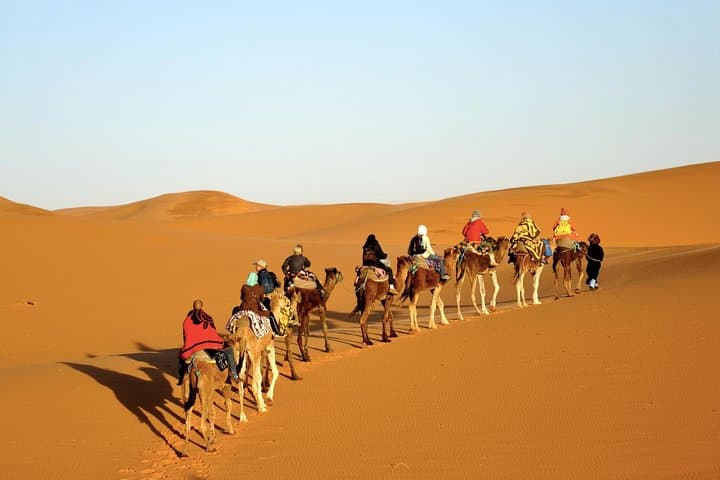
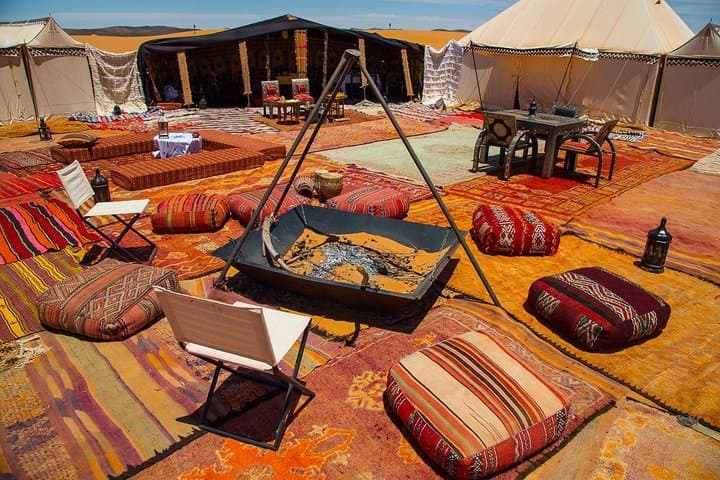
Expect a rhythm of drives and short walks—daily road time varies, generally 3–6 hours—interspersed with photo stops, brief hikes in gorges, and a two-hour camel ride timed for sunset and again at sunrise. Nights are spent in guesthouses and a desert camp where simple Berber tents replace city lights with a broad star canopy. Practical notes: carry ample water, sun protection and layered clothing for large diurnal temperature swings; wear shoes suitable for sand and rocky trails. Plan for long but scenic drives, modest walking, and cultural exchanges with local guides and artisans. The trip balances landscape immersion with accessible logistics—an efficient way to experience Morocco’s southern spine without backcountry self-sufficiency.
moderate.
5 days.
Suitable for travelers with basic fitness—able to handle multi-hour drives, short hikes in gorges, and a 2‑hour camel ride over dunes
Daily driving typically ranges from 3–6 hours with stops; the tour spaces travel time across 5 days to allow explorations at Aït Benhaddou, Dades, Todra and Merzouga.
You’ll spend one night in a desert camp in Berber-style tents—comfortable, communal facilities are common; bring a warm layer for night temperatures.
Camel rides are low-skill but can be uncomfortable on first mount; rides are about two hours and paced for sunset and sunrise photo opportunities.
Visa requirements depend on your nationality—check Moroccan entry rules in advance; standard travel vaccinations are recommended and consult your doctor for updates.
This corridor follows historic caravan roads linking sub‑Saharan trade routes to Marrakech; earthen ksour and kasbahs preserve centuries of mud‑brick construction and local governance history.
The Sahara’s dunes and oases are fragile—limit campfires, pack out waste, and conserve water; support local guides who practice sustainable tourism.
Marrakech First Trip operates guided outdoor trips and adventures with an emphasis on safety, stewardship, and memorable experiences.


You leave the ochre alleys of Marrakech before dawn, the city’s calls to prayer shrinking behind you as the minivan climbs the Tizi n'Tichka pass. Wind strips and sunlight alternate on the High Atlas slopes; switchbacks reveal villages clinging to terraces and the first distant silhouette of Aït Benhaddou. By late afternoon the road drops into palm-lined valleys and kasbahs that still bear the grooves of old caravan traffic.
You leave the ochre alleys of Marrakech before dawn, the city’s calls to prayer shrinking behind you as the minivan climbs the Tizi n'Tichka pass. Wind strips and sunlight alternate on the High Atlas slopes; switchbacks reveal villages clinging to terraces and the first distant silhouette of Aït Benhaddou. By late afternoon the road drops into palm-lined valleys and kasbahs that still bear the grooves of old caravan traffic.
This route traces a living trade corridor: clay ighrem (ksour) like Aït Benhaddou embody traditional earthen architecture while the Dades and Todra gorges carve limestone canyons that tell a quieter geologic story. The dunes of Erg Chebbi are recent in geological terms but enormous in presence—ridges that can reach 100–150 meters, alive with shifting sand, where local Berber communities maintain palm groves and tent-camp hospitality.
Expect a rhythm of drives and short walks—daily road time varies, generally 3–6 hours—interspersed with photo stops, brief hikes in gorges, and a two-hour camel ride timed for sunset and again at sunrise. Nights are spent in guesthouses and a desert camp where simple Berber tents replace city lights with a broad star canopy. Practical notes: carry ample water, sun protection and layered clothing for large diurnal temperature swings; wear shoes suitable for sand and rocky trails. Plan for long but scenic drives, modest walking, and cultural exchanges with local guides and artisans. The trip balances landscape immersion with accessible logistics—an efficient way to experience Morocco’s southern spine without backcountry self-sufficiency.