THE ADVENTURE COLLECTIVE® · Independent discovery and booking for outdoor travel

Traverse the High Atlas, film-country kasbahs and the towering Erg Chebbi dunes on a private five-day drive from Marrakech to Merzouga. Expect long scenic drives, camel rides into nomad camps, and desert sunrises that repay the miles.
Traverse the High Atlas, film-country kasbahs and the towering Erg Chebbi dunes on a private five-day drive from Marrakech to Merzouga. Expect long scenic drives, camel rides into nomad camps, and desert sunrises that repay the miles.
You step out of the air-conditioned vehicle at the lip of Erg Chebbi as wind-sculpted ridges cut the horizon; the dunes gleam the color of warm metal beneath a wide Saharan sky.
Verified experiences and guided adventures in the surrounding area.
Operated by Agharass Tours · Merzouga, Drâa-Tafilalet
You step out of the air-conditioned vehicle at the lip of Erg Chebbi as wind-sculpted ridges cut the horizon; the dunes gleam the color of warm metal beneath a wide Saharan sky.
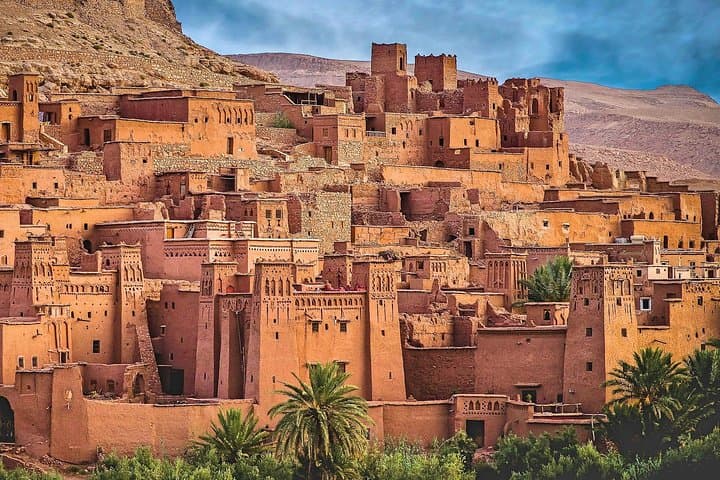
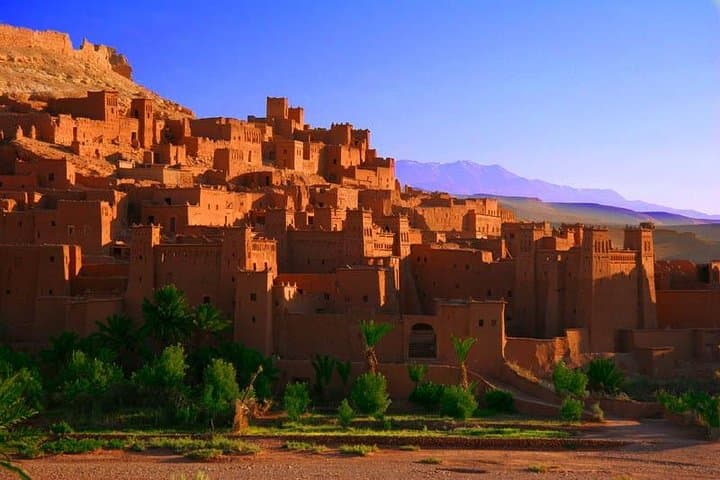
The route from Marrakech slides over Tizi n'Tichka (about 2,260 m), past red-earth Berber villages and the earthen towers of Ait Ben Haddou — a UNESCO ksar used as a backdrop in international films. Geologically the journey travels Morocco’s faulted Atlas range down to the vast Quaternary sand seas where wind builds dunes that can crest 100–150 m high. Culturally, southeastern Morocco is a crossroads: caravan towns like Rissani were historic trading hubs and today still host lively souks and semi-nomadic communities.
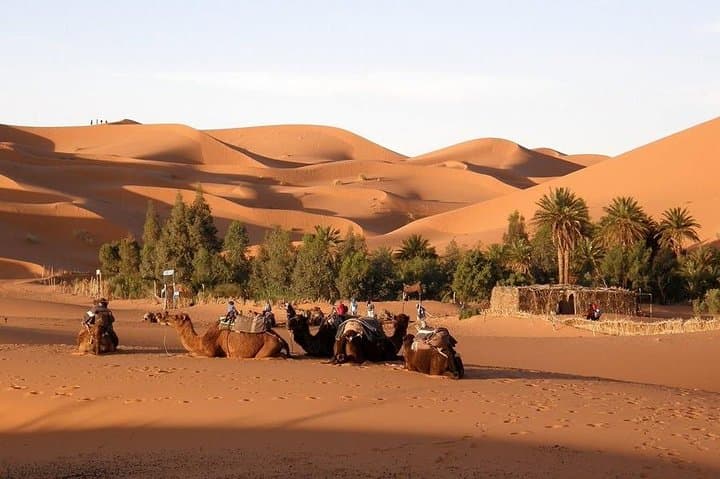
Over five days you’ll trade long, scenic road legs (roughly 560–600 km round trip) for close-up desert time: river-cut gorges at Todra, fossil-rich plateaus near Alnif, and the slow rhythm of camel travel into a Berber tent for an evening of mint tea and local music beneath strict, brilliant stars. Expect mixed terrain — paved highways, gravel desert tracks and soft sand where a 4x4 is necessary.
Practical guidance: plan for large temperature swings (hot days, cool nights), carry 3–4 liters of water per person on desert legs, wear closed, broken-in shoes for walking on gravel and dune slopes, and schedule sunrise or sunset in the dunes for the best light. The trip is private with multilingual drivers and includes meals and accommodations, making it accessible to travelers who want immersive desert time with logistical support.
easy.
5 days.
Suitable for most fitness levels; must be able to mount a camel and tolerate basic desert walking and stairs in kasbahs.
Yes — the itinerary notes infant seats and stroller accessibility on request; drivers can accommodate families but consider long drive segments for young children.
One night is spent in a traditional Berber nomad tent (camp), typically with basic bedding and communal facilities; other nights are in local hotels or riads.
Daily driving varies: expect several hours (3–7) between stops, broken up by sightseeing and meal breaks.
Yes — breakfasts and most dinners are included and the private tour includes pickup and drop-off in Marrakech as stated in the itinerary.
The route follows historic caravan corridors; Rissani was a key trade town on trans-Saharan routes and Ait Ben Haddou served as a fortified granary and trading post.
Travelers should stick to marked tracks to avoid damaging fragile dune vegetation and respect local water resources; many camps practice low-impact waste and recycling.
Agharass Tours operates guided outdoor trips and adventures with an emphasis on safety, stewardship, and memorable experiences.
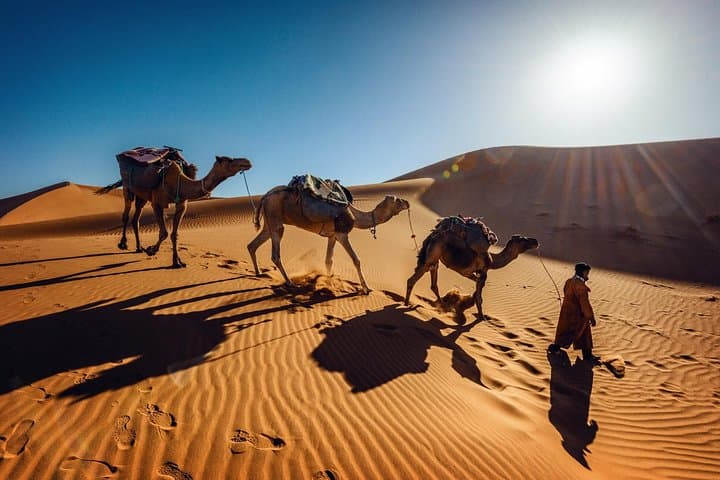
You step out of the air-conditioned vehicle at the lip of Erg Chebbi as wind-sculpted ridges cut the horizon; the dunes gleam the color of warm metal beneath a wide Saharan sky.
You step out of the air-conditioned vehicle at the lip of Erg Chebbi as wind-sculpted ridges cut the horizon; the dunes gleam the color of warm metal beneath a wide Saharan sky.
The route from Marrakech slides over Tizi n'Tichka (about 2,260 m), past red-earth Berber villages and the earthen towers of Ait Ben Haddou — a UNESCO ksar used as a backdrop in international films. Geologically the journey travels Morocco’s faulted Atlas range down to the vast Quaternary sand seas where wind builds dunes that can crest 100–150 m high. Culturally, southeastern Morocco is a crossroads: caravan towns like Rissani were historic trading hubs and today still host lively souks and semi-nomadic communities.
Over five days you’ll trade long, scenic road legs (roughly 560–600 km round trip) for close-up desert time: river-cut gorges at Todra, fossil-rich plateaus near Alnif, and the slow rhythm of camel travel into a Berber tent for an evening of mint tea and local music beneath strict, brilliant stars. Expect mixed terrain — paved highways, gravel desert tracks and soft sand where a 4x4 is necessary.
Practical guidance: plan for large temperature swings (hot days, cool nights), carry 3–4 liters of water per person on desert legs, wear closed, broken-in shoes for walking on gravel and dune slopes, and schedule sunrise or sunset in the dunes for the best light. The trip is private with multilingual drivers and includes meals and accommodations, making it accessible to travelers who want immersive desert time with logistical support.