THE ADVENTURE COLLECTIVE® · Independent discovery and booking for outdoor travel

A five-day trek from Pokhara that pairs the popular Poon Hill sunrise with the quieter Mulde Viewpoint, passing Gurung villages, rhododendron forests and sweeping views of Annapurna and Dhaulagiri. Practical for hikers with moderate fitness and a taste for early-morning summits.
A five-day trek from Pokhara that pairs the popular Poon Hill sunrise with the quieter Mulde Viewpoint, passing Gurung villages, rhododendron forests and sweeping views of Annapurna and Dhaulagiri. Practical for hikers with moderate fitness and a taste for early-morning summits.
You step out before dawn and the air bites with a Himalayan clarity; the trail ahead is a ribbon of stone and packed earth that climbs through rhododendron trunks glowing faintly in your headlamp. By the time the sky lightens, the peaks themselves begin to speak — Annapurna, Dhaulagiri and the iconic Machapuchare push upward like weathered giants, the sunrise painting their faces gold.
Verified experiences and guided adventures in the surrounding area.
Operated by AM Travels and Tours · Pokhara, Gandaki Province
You step out before dawn and the air bites with a Himalayan clarity; the trail ahead is a ribbon of stone and packed earth that climbs through rhododendron trunks glowing faintly in your headlamp. By the time the sky lightens, the peaks themselves begin to speak — Annapurna, Dhaulagiri and the iconic Machapuchare push upward like weathered giants, the sunrise painting their faces gold.
This five-day route links classic viewpoints with quieter corridors: terraced farmland, Gurung villages such as Ghandruk, and a lesser-known high ridge called Mulde Viewpoint that offers panoramic vistas without Poon Hill’s crowds. Geologically the trail skirts the southern flanks of the Annapurna massif; granite and metamorphosed schists tilt beneath your boots and steep valleys channel brisk winds that sharpen the morning. Culturally, the Gurung communities here have farmed these slopes for generations — stop at the Gurung Museum in Ghandruk to hear local stories and see traditional dress and artifacts.
Expect 3–6 hours of hiking per day, with the highest viewpoint at roughly 3,210 m (Poon Hill). Guesthouses provide simple rooms and warm meals, but bring cash and a mind for early starts to catch the sun. Permits (Annapurna Conservation Area permit and TIMS) are required and usually handled by guides.
Practical tips: pace your ascent to avoid altitude strain, wear sturdy waterproof boots for wet sections, carry 2–3 liters of water and a warm layer for pre-dawn watches. Aim for spring or fall for the clearest mountain views, and treat trails and villages respectfully — the landscape is resilient, and your care keeps it that way.
moderate.
5 days.
Moderate: able to hike 3–6 hours (up to 900–1,200 m cumulative ascent on busier days); comfortable on narrow, stepped trails.
The route is rated moderate: hikers should be comfortable walking several hours per day on steep, stepped trails with occasional loose stone; basic fitness and a steady pace are enough.
Yes — an Annapurna Conservation Area Permit (ACAP) and a TIMS card are required; these are commonly arranged by guides or trekking companies in Pokhara.
Fall (Sept–Nov) and spring (Mar–May) offer the clearest mountain views and flowering rhododendrons; monsoon season (Jun–Aug) is wet and winter can bring cold and snow at higher viewpoints.
Guesthouses offer basic private or shared rooms and hearty Nepali meals; breakfasts and dinners are usually included by operators, but carry snacks and cash for extras.
The Gurung people have lived and farmed these slopes for centuries; villages like Ghandruk preserve traditional architecture and a living culture tied to trans-Himalayan trade routes.
Trails pass through the Annapurna Conservation Area; visitors are asked to minimize waste, use established paths and support local guesthouses to keep revenue in the valley.
AM Travels and Tours operates guided outdoor trips and adventures with an emphasis on safety, stewardship, and memorable experiences.
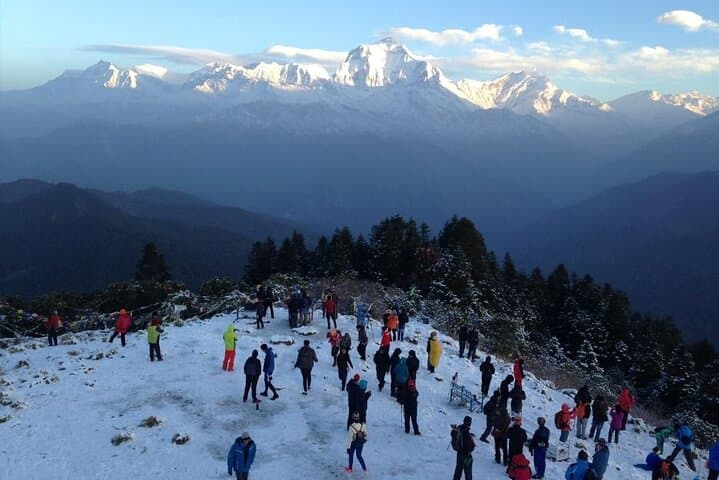
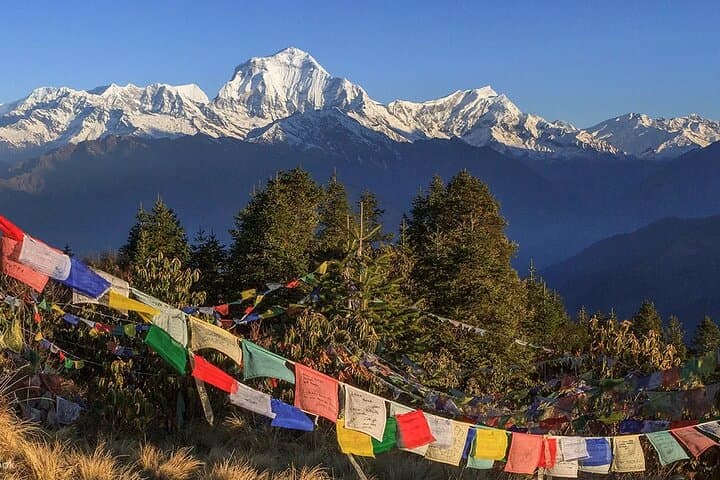
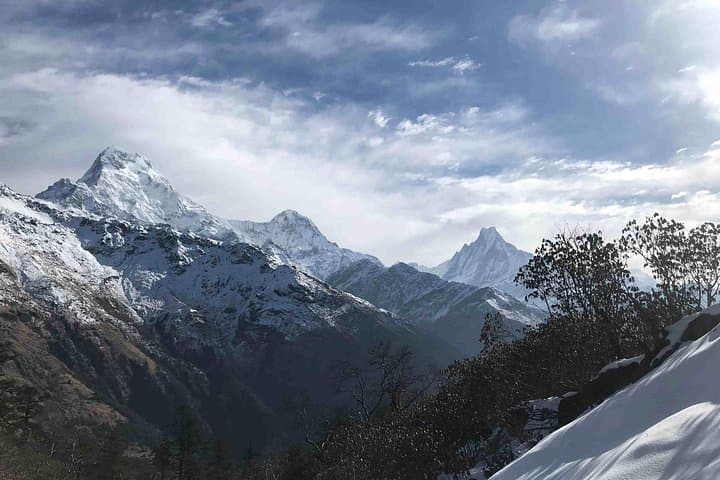
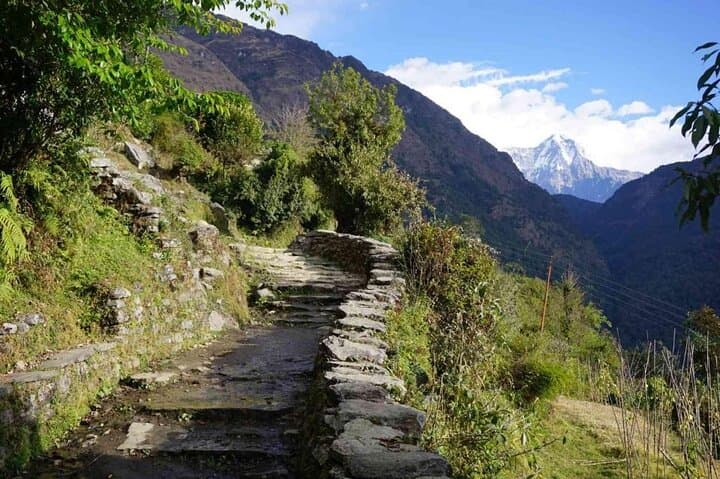
You step out before dawn and the air bites with a Himalayan clarity; the trail ahead is a ribbon of stone and packed earth that climbs through rhododendron trunks glowing faintly in your headlamp. By the time the sky lightens, the peaks themselves begin to speak — Annapurna, Dhaulagiri and the iconic Machapuchare push upward like weathered giants, the sunrise painting their faces gold.
You step out before dawn and the air bites with a Himalayan clarity; the trail ahead is a ribbon of stone and packed earth that climbs through rhododendron trunks glowing faintly in your headlamp. By the time the sky lightens, the peaks themselves begin to speak — Annapurna, Dhaulagiri and the iconic Machapuchare push upward like weathered giants, the sunrise painting their faces gold.
This five-day route links classic viewpoints with quieter corridors: terraced farmland, Gurung villages such as Ghandruk, and a lesser-known high ridge called Mulde Viewpoint that offers panoramic vistas without Poon Hill’s crowds. Geologically the trail skirts the southern flanks of the Annapurna massif; granite and metamorphosed schists tilt beneath your boots and steep valleys channel brisk winds that sharpen the morning. Culturally, the Gurung communities here have farmed these slopes for generations — stop at the Gurung Museum in Ghandruk to hear local stories and see traditional dress and artifacts.
Expect 3–6 hours of hiking per day, with the highest viewpoint at roughly 3,210 m (Poon Hill). Guesthouses provide simple rooms and warm meals, but bring cash and a mind for early starts to catch the sun. Permits (Annapurna Conservation Area permit and TIMS) are required and usually handled by guides.
Practical tips: pace your ascent to avoid altitude strain, wear sturdy waterproof boots for wet sections, carry 2–3 liters of water and a warm layer for pre-dawn watches. Aim for spring or fall for the clearest mountain views, and treat trails and villages respectfully — the landscape is resilient, and your care keeps it that way.