THE ADVENTURE COLLECTIVE® · Independent discovery and booking for outdoor travel

Spend five days exploring Palawan’s two big draws: the UNESCO-listed Puerto Princesa Underground River and El Nido’s iconic island-hopping lagoons. This packaged itinerary folds domestic flights, transfers, shared tours, and budget accommodations into a straightforward coastal escape.
Spend five days exploring Palawan’s two big draws: the UNESCO-listed Puerto Princesa Underground River and El Nido’s iconic island-hopping lagoons. This packaged itinerary folds domestic flights, transfers, shared tours, and budget accommodations into a straightforward coastal escape.
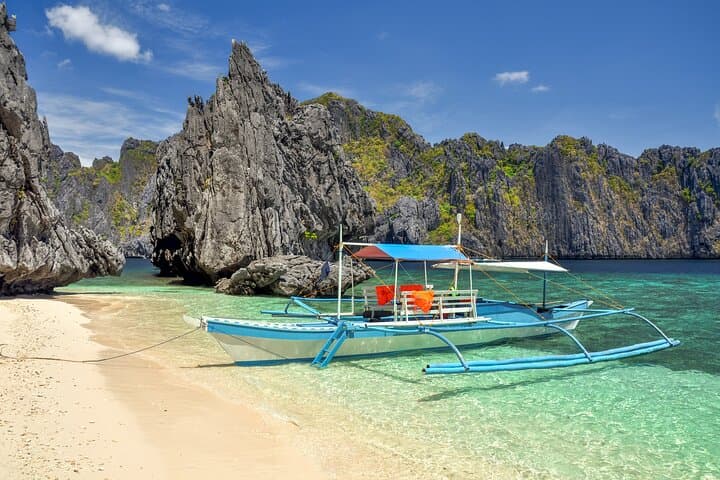
You step off the island hopper, air heavy with salt and earth, and Palawan announces itself without ceremony: sheer limestone cliffs rising like weathered cathedrals from the sea, mangrove fringes rustling with birds, and a turquoise horizon that seems to redraw the idea of blue.
Verified experiences and guided adventures in the surrounding area.
Operated by Guide to the Philippines · Puerto Princesa City, Palawan
You step off the island hopper, air heavy with salt and earth, and Palawan announces itself without ceremony: sheer limestone cliffs rising like weathered cathedrals from the sea, mangrove fringes rustling with birds, and a turquoise horizon that seems to redraw the idea of blue.
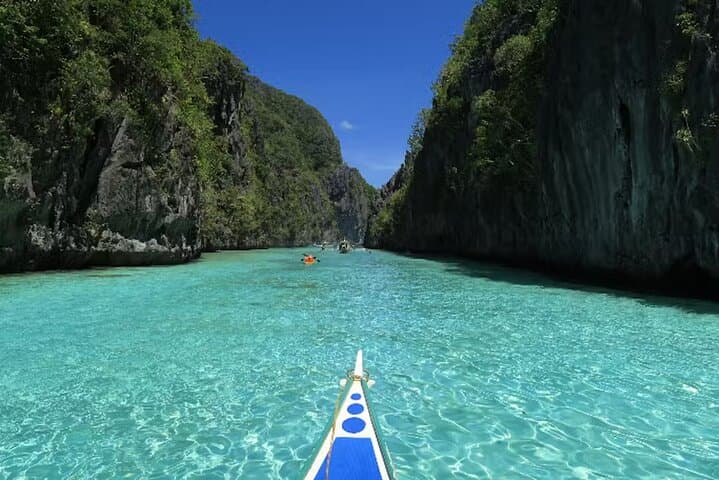
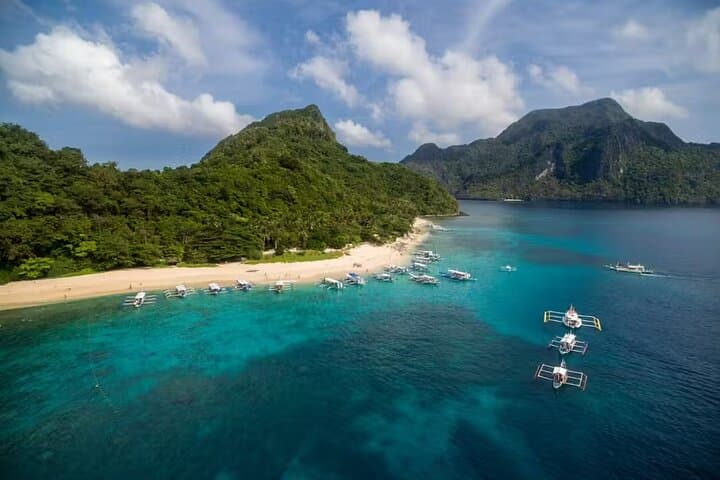
This five-day package threads two of Palawan’s headline acts—Puerto Princesa and El Nido—into a single, easy itinerary. Day one is arrival and acclimation in Puerto Princesa City; day two is the slow, reverent glide through the Puerto Princesa Underground River, a UNESCO-listed cave where stalactites lean low and a guide’s lamp carves silhouettes on ancient limestone. Mid-trip a road transfer unspools across the island’s green interior to El Nido, where day four is classic Bacuit archipelago island hopping: Big Lagoon’s mirrored water, Shimizu’s coral gardens, Seven Commandos’ white-sand reset.
Geology explains the theatrics. Palawan’s karst limestone was sculpted over millions of years by rain and tide—etching caves, tunnels and the vertical cliffs that define the coastline. Human history is layered too: indigenous Tagbanua communities have lived with these seas for generations; Spanish and American eras left administrative footprints in Puerto Princesa’s grid and wharves. Today, a tourism economy balances small-scale fishing, guesthouses, and boat operations that thread between villages and private bays.
Culturally, the rhythm is relaxed but practical: early mornings for boat departures, late afternoons for market fish grilled with calamansi, and a steady stream of local hospitality that’s informal and efficient. Guides will point out endemic plants, explain tidal dynamics that make lagoon paddling possible, and recommend local eateries for kinilaw (vinegared raw fish) and grilled seafood.
Practically, this is an accessible package: domestic flights from Manila are included (20 kg baggage), accommodations are budget-level but centrally located, and most activities are shared-group tours. Note the operator requires a 14-day lead time for bookings and enforces an all-sales-final cancellation policy. Physical demands are low—expect short hikes at the river entrance, boat transfers, and light swimming or snorkeling. Bring reef-safe sunscreen, a quick-dry towel, and shoes that grip wet boatsides.
Time your visit for the dry season (roughly November–May) when lagoons are glassy and visibility is best. Expect group sizes to vary and prepare for ferry schedules when moving between Puerto Princesa and El Nido. For travelers after ease over extremes, this package is a compact primer on Palawan: dramatic karst, cave hush, and island afternoons that ask only that you slow down and listen to the tide.
easy.
5 days.
Low to moderate—suitable for travelers who can manage short walks, boat transfers, and basic swimming or snorkeling.
Yes—round-trip domestic flights are included in the package and come with a 20 kg baggage allowance.
No—the cave boat tour is low-impact, but there are short walks and boat boarding; it’s not recommended for people with mobility difficulties.
The operator notes they cannot accommodate special dietary needs—important if you have allergies or strict requirements.
All sales are final; the tour has a strict no-refund policy for cancellations.
The Underground River and El Nido island-hopping days are shared-group tours with other guests.
The El Nido island-hopping tour is approximately 7 hours on day four, including multiple stops for swimming and snorkeling.
Puerto Princesa’s bay and cave networks formed over millions of years; the Underground River area is home to indigenous Tagbanua communities and is protected as a UNESCO World Heritage site.
Visitors are encouraged to use reef-safe products and avoid touching coral; local operators follow regulated access to sensitive lagoons and caves to limit impact.
Guide to the Philippines operates guided outdoor trips and adventures with an emphasis on safety, stewardship, and memorable experiences.
You step off the island hopper, air heavy with salt and earth, and Palawan announces itself without ceremony: sheer limestone cliffs rising like weathered cathedrals from the sea, mangrove fringes rustling with birds, and a turquoise horizon that seems to redraw the idea of blue.
You step off the island hopper, air heavy with salt and earth, and Palawan announces itself without ceremony: sheer limestone cliffs rising like weathered cathedrals from the sea, mangrove fringes rustling with birds, and a turquoise horizon that seems to redraw the idea of blue.
This five-day package threads two of Palawan’s headline acts—Puerto Princesa and El Nido—into a single, easy itinerary. Day one is arrival and acclimation in Puerto Princesa City; day two is the slow, reverent glide through the Puerto Princesa Underground River, a UNESCO-listed cave where stalactites lean low and a guide’s lamp carves silhouettes on ancient limestone. Mid-trip a road transfer unspools across the island’s green interior to El Nido, where day four is classic Bacuit archipelago island hopping: Big Lagoon’s mirrored water, Shimizu’s coral gardens, Seven Commandos’ white-sand reset.
Geology explains the theatrics. Palawan’s karst limestone was sculpted over millions of years by rain and tide—etching caves, tunnels and the vertical cliffs that define the coastline. Human history is layered too: indigenous Tagbanua communities have lived with these seas for generations; Spanish and American eras left administrative footprints in Puerto Princesa’s grid and wharves. Today, a tourism economy balances small-scale fishing, guesthouses, and boat operations that thread between villages and private bays.
Culturally, the rhythm is relaxed but practical: early mornings for boat departures, late afternoons for market fish grilled with calamansi, and a steady stream of local hospitality that’s informal and efficient. Guides will point out endemic plants, explain tidal dynamics that make lagoon paddling possible, and recommend local eateries for kinilaw (vinegared raw fish) and grilled seafood.
Practically, this is an accessible package: domestic flights from Manila are included (20 kg baggage), accommodations are budget-level but centrally located, and most activities are shared-group tours. Note the operator requires a 14-day lead time for bookings and enforces an all-sales-final cancellation policy. Physical demands are low—expect short hikes at the river entrance, boat transfers, and light swimming or snorkeling. Bring reef-safe sunscreen, a quick-dry towel, and shoes that grip wet boatsides.
Time your visit for the dry season (roughly November–May) when lagoons are glassy and visibility is best. Expect group sizes to vary and prepare for ferry schedules when moving between Puerto Princesa and El Nido. For travelers after ease over extremes, this package is a compact primer on Palawan: dramatic karst, cave hush, and island afternoons that ask only that you slow down and listen to the tide.