THE ADVENTURE COLLECTIVE® · Independent discovery and booking for outdoor travel

A five-day circuit from Nosy Be that pairs Ankarana’s limestone Tsingy and underground caves with the eerie red spires of Tsingy Rouge and wind-bent bays ideal for kitesurfers. Expect forest hikes, coastal beaches, lemur encounters and local cocoa plantations.
A five-day circuit from Nosy Be that pairs Ankarana’s limestone Tsingy and underground caves with the eerie red spires of Tsingy Rouge and wind-bent bays ideal for kitesurfers. Expect forest hikes, coastal beaches, lemur encounters and local cocoa plantations.
You step off the boat and the sea immediately reads like a map—bands of turquoise, emerald and deep blue stacked between strips of white sand and jagged red rock. The wind teases the palms; somewhere in the scrub a lemur calls and answers itself. This five-day circuit from Nosy Be threads volcanic rainforest, limestone Tsingy and the eroded red cliffs known as Tsingy Rouge, finishing on wide, windy bays where surf and sky trade patterns.
Verified experiences and guided adventures in the surrounding area.
Operated by Julien gasy guy · Hell-Ville (Nosy Be), Diana
You step off the boat and the sea immediately reads like a map—bands of turquoise, emerald and deep blue stacked between strips of white sand and jagged red rock. The wind teases the palms; somewhere in the scrub a lemur calls and answers itself. This five-day circuit from Nosy Be threads volcanic rainforest, limestone Tsingy and the eroded red cliffs known as Tsingy Rouge, finishing on wide, windy bays where surf and sky trade patterns.
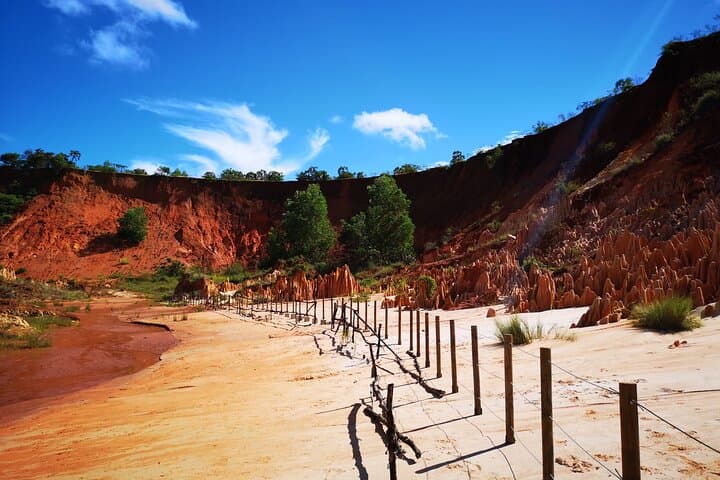
Northern Madagascar’s landscape is geological theatre: Ankarana’s karst plateau rose from an ancient seabed and was carved into blade-like tsingy and deep caves, while the Irodo River rapidly sculpts the laterite into the Tsingy Rouge you can view from three vantage points. Culturally, the Antakarana and Sakalava peoples have long shaped coastal villages and sacred cave practices; cocoa farms around Ambanja add a layer of human geography and flavor to the route.
Expect a mix of easy forest walks, short steep scrambles on limestone formations, and beachside hours for swimming or kitesurfing where winds can reach 25–30 knots. Guides handle park access and local transport; accommodations are simple bungalows with private bathrooms.
Practical notes: travel light but bring sturdy shoes for uneven karst, reef-safe sunscreen for long shore days, and a reliable insect repellent for rainforest hikes. Carry local Ariary for small fees and markets, and time visits for the dry season (May–October) if you want firmer trails and calmer seas. The trip balances wildlife viewing with active coastline days—pack patience, a sense of curiosity, and a camera for dramatic geology and close-up wildlife.
moderate.
5 days.
Suitable for travelers in good general health who can manage uneven trails, short scrambles and full days of activity.
The dry season (May–October) offers firmer trails and generally calmer seas; the peak wind months (June–September) are best for kitesurfing while the rainy season (Nov–Mar) brings heavier showers and occasional cyclones.
The itinerary is rated easy-to-moderate and accommodates a wide range of fitness levels, but cave passages and some uneven karst require agility—check with the operator about specific mobility needs.
The published itinerary includes park access fees and most meals listed (breakfasts, lunches and dinners as specified), but bring cash for optional extras, tips and market purchases.
Consult a travel clinic before departure—routine vaccinations should be up to date and malaria prophylaxis is commonly recommended for northern Madagascar; also carry mosquito repellent and water purification options.
The north is traditionally inhabited by the Antakarana and Sakalava groups; caves and some sites retain cultural and sacred significance tied to these communities.
Many coastal bays enforce seasonal access to protect nesting turtles and fragile reef systems; stay on marked trails in Tsingy and avoid single-use plastics.
Julien gasy guy operates guided outdoor trips and adventures with an emphasis on safety, stewardship, and memorable experiences.



You step off the boat and the sea immediately reads like a map—bands of turquoise, emerald and deep blue stacked between strips of white sand and jagged red rock. The wind teases the palms; somewhere in the scrub a lemur calls and answers itself. This five-day circuit from Nosy Be threads volcanic rainforest, limestone Tsingy and the eroded red cliffs known as Tsingy Rouge, finishing on wide, windy bays where surf and sky trade patterns.
You step off the boat and the sea immediately reads like a map—bands of turquoise, emerald and deep blue stacked between strips of white sand and jagged red rock. The wind teases the palms; somewhere in the scrub a lemur calls and answers itself. This five-day circuit from Nosy Be threads volcanic rainforest, limestone Tsingy and the eroded red cliffs known as Tsingy Rouge, finishing on wide, windy bays where surf and sky trade patterns.
Northern Madagascar’s landscape is geological theatre: Ankarana’s karst plateau rose from an ancient seabed and was carved into blade-like tsingy and deep caves, while the Irodo River rapidly sculpts the laterite into the Tsingy Rouge you can view from three vantage points. Culturally, the Antakarana and Sakalava peoples have long shaped coastal villages and sacred cave practices; cocoa farms around Ambanja add a layer of human geography and flavor to the route.
Expect a mix of easy forest walks, short steep scrambles on limestone formations, and beachside hours for swimming or kitesurfing where winds can reach 25–30 knots. Guides handle park access and local transport; accommodations are simple bungalows with private bathrooms.
Practical notes: travel light but bring sturdy shoes for uneven karst, reef-safe sunscreen for long shore days, and a reliable insect repellent for rainforest hikes. Carry local Ariary for small fees and markets, and time visits for the dry season (May–October) if you want firmer trails and calmer seas. The trip balances wildlife viewing with active coastline days—pack patience, a sense of curiosity, and a camera for dramatic geology and close-up wildlife.