THE ADVENTURE COLLECTIVE® · Independent discovery and booking for outdoor travel

A compact five-day circuit linking Hanoi’s city energy with Sapa’s highland treks and an overnight Halong Bay cruise. Expect terraced rice walks, ethnic village visits and a karst-dotted seascape—perfect for travelers who want varied landscapes in one short trip.
A compact five-day circuit linking Hanoi’s city energy with Sapa’s highland treks and an overnight Halong Bay cruise. Expect terraced rice walks, ethnic village visits and a karst-dotted seascape—perfect for travelers who want varied landscapes in one short trip.
You step from the early-morning bustle of Hanoi into a van that hums north toward the highland air—by afternoon you’re tracing a stream through rice terraces, by night you’re anchored among limestone towers in Halong Bay.
Verified experiences and guided adventures in the surrounding area.
Operated by Vietnam Blue Tours · Hanoi, Hanoi
You step from the early-morning bustle of Hanoi into a van that hums north toward the highland air—by afternoon you’re tracing a stream through rice terraces, by night you’re anchored among limestone towers in Halong Bay.
This five-day loop stitches three distinct landscapes: Hanoi’s colonial streets and street-food stalls; Sapa’s carved terraces and ethnic villages—home to H’mong, Dzao and Tay communities—and the karst labyrinth of Halong Bay, a UNESCO World Heritage Site whose islands rose over 500 million years through tectonic uplift and erosion. In Sapa the trail to Y Linh Ho and Lao Chai follows Muong Hoa stream for about 9 km (3–3.5 hours of trekking), mostly gradual ascents and stone paths; Cat Cat’s short walk drops into a valley to a French-era hydraulic station and waterfall.
Expect hands-on culture—markets, woven textiles and homestay hospitality—and simple geology lessons from limestone cliffs and terraced basalt soils. Cruise cabins are typically twin/double; mornings on deck bring glassy water and active seabirds, while evenings can be humid and mellow.
Practical guidance: wear broken-in hiking shoes, carry a daypack with water and rain layers, and budget time for road transfers (Hanoi–Sapa by bus, and ~3.5-hour drive to Halong). Bring seasickness tablets if you’re prone to motion, and local currency for small purchases in villages. Pace yourself on downhill stone steps and respect local customs—polite curiosity goes a long way with village hosts.
moderate.
5 days.
Moderate fitness required—able to walk 3–4 hours over uneven terrain and manage short uphill sections.
Expect one short 2.5 km walk at Cat Cat (≈2 hours) and a longer 9 km trek through Y Linh Ho–Lao Chai–Ta Van (≈3–3.5 hours) on well-marked trails with some elevation change.
Accommodation is typically twin/double shared; single travelers should confirm single-room availability or expect a shared room option during booking.
Take an over-the-counter or prescribed antiemetic before boarding, stay on deck for fresh air, and choose a stable midship cabin when possible.
Visa requirements depend on nationality—check Vietnam’s official immigration website well before travel and carry passport copies for local permits and cruise check-in.
Cat Cat village retains a French-built hydraulic station from colonial days; Halong Bay’s karst towers formed over hundreds of millions of years and are now protected as a UNESCO site.
Halong Bay faces overtourism and water pollution pressures—choose responsible operators, avoid single-use plastics, and follow local guidelines to minimize impact.
Vietnam Blue Tours operates guided outdoor trips and adventures with an emphasis on safety, stewardship, and memorable experiences.


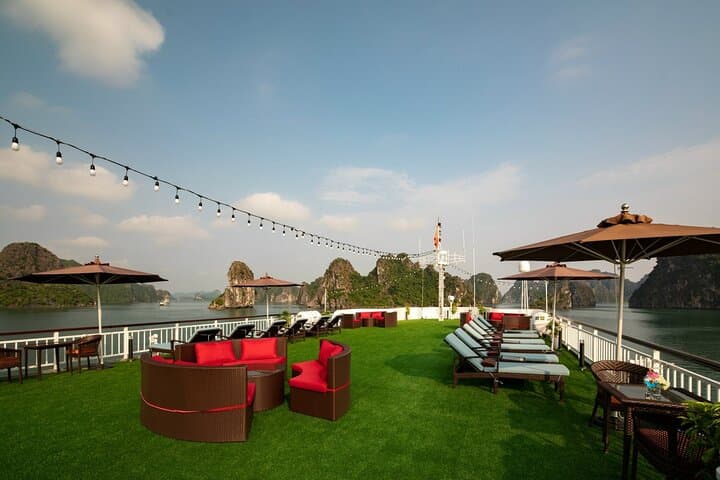

You step from the early-morning bustle of Hanoi into a van that hums north toward the highland air—by afternoon you’re tracing a stream through rice terraces, by night you’re anchored among limestone towers in Halong Bay.
You step from the early-morning bustle of Hanoi into a van that hums north toward the highland air—by afternoon you’re tracing a stream through rice terraces, by night you’re anchored among limestone towers in Halong Bay.
This five-day loop stitches three distinct landscapes: Hanoi’s colonial streets and street-food stalls; Sapa’s carved terraces and ethnic villages—home to H’mong, Dzao and Tay communities—and the karst labyrinth of Halong Bay, a UNESCO World Heritage Site whose islands rose over 500 million years through tectonic uplift and erosion. In Sapa the trail to Y Linh Ho and Lao Chai follows Muong Hoa stream for about 9 km (3–3.5 hours of trekking), mostly gradual ascents and stone paths; Cat Cat’s short walk drops into a valley to a French-era hydraulic station and waterfall.
Expect hands-on culture—markets, woven textiles and homestay hospitality—and simple geology lessons from limestone cliffs and terraced basalt soils. Cruise cabins are typically twin/double; mornings on deck bring glassy water and active seabirds, while evenings can be humid and mellow.
Practical guidance: wear broken-in hiking shoes, carry a daypack with water and rain layers, and budget time for road transfers (Hanoi–Sapa by bus, and ~3.5-hour drive to Halong). Bring seasickness tablets if you’re prone to motion, and local currency for small purchases in villages. Pace yourself on downhill stone steps and respect local customs—polite curiosity goes a long way with village hosts.