THE ADVENTURE COLLECTIVE® · Independent discovery and booking for outdoor travel

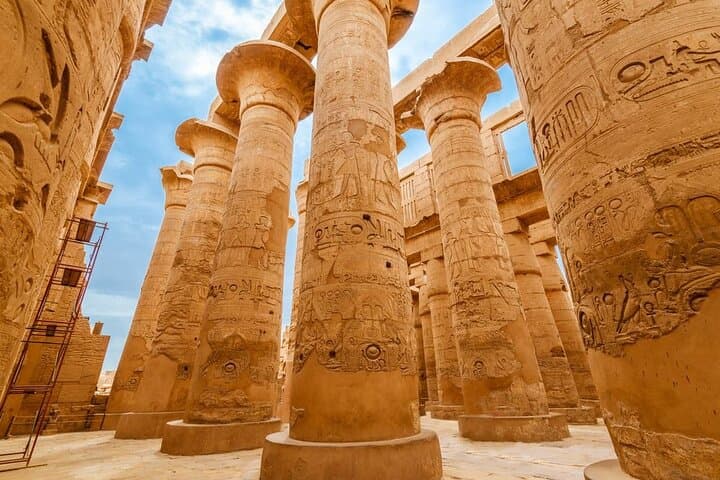
Float south on a five-day Nile cruise from Luxor to Aswan, pairing riverside relaxation with guided visits to Karnak, the Valley of the Kings, Abu Simbel and an early-morning hot-air balloon over Luxor. Expect cathedral-like columns, temple courtyards, and easy-paced days with early starts.
Float south on a five-day Nile cruise from Luxor to Aswan, pairing riverside relaxation with guided visits to Karnak, the Valley of the Kings, Abu Simbel and an early-morning hot-air balloon over Luxor. Expect cathedral-like columns, temple courtyards, and easy-paced days with early starts.
Dawn lifts a thin gold ribbon off the Nile as the cruise slips away from Luxor’s quay—the river pushing the boat gently south while temple silhouettes recede into heat-hazed distance.
Verified experiences and guided adventures in the surrounding area.
Operated by Nile Prince Travel · Luxor, Luxor Governorate
Dawn lifts a thin gold ribbon off the Nile as the cruise slips away from Luxor’s quay—the river pushing the boat gently south while temple silhouettes recede into heat-hazed distance.
This five-day itinerary threads classical Egypt: the rock-cut tombs of the Valley of the Kings, Hatshepsut’s terraced mortuary temple, the columned majesty of Karnak, and the twin colossi that guard Amenhotep’s memory. Geologically the Nile valley is a narrow fertile corridor carved between desert escarpments; its banks hold millennia of settled layers and stone worked by pharaohs and later restorers. Culturally the trip moves through Thebes and Nubia, places where ritual, river commerce, and seasonal flooding shaped daily life.
Travelers will disembark for guided walks at Edfu and Kom Ombo, take an early-morning hot-air balloon over Luxor’s east bank, and make a long morning excursion to the monumental Abu Simbel temples—relocated and preserved during the mid-20th-century Aswan dam project. The final day typically includes Philae and a view of the Aswan High Dam.
Practical realities: expect early starts for excursions and variable walking surfaces—sand, paved temple courtyards, and river docks. Sun protection and steady footwear make visits markedly more comfortable. Guides handle most logistics, but bring original travel documents for site entries and keep a small daypack for water, camera, and a light layer for cooler mornings and evenings. Timing your cruise between October and April will avoid peak summer heat and make balloon flights and shore tours more pleasant.
easy.
5 days.
Suitable for most travelers; some mobility needed for boarding boats and walking unpaved temple approaches; able to handle several short walks per day.
Yes—the itinerary lists hot-air balloon entrance as included; confirm the scheduled flight time with your local coordinator as slots can be weather-dependent.
Most guided visits are included, but some specific site fees or optional extras may require on-site payment—carry small local currency for unexpected charges.
Excursions are low-impact: short to moderate walks across temple courtyards and stairs; mobility assistance is often available but some areas have steps and uneven surfaces.
An Egyptologist guide accompanies the trip—English is standard on this tour; ask at booking for other language options if needed.
The Nile corridor here is ancient Thebes—royal cemeteries and temples built between the 18th and 20th Dynasties that anchored pharaonic religion and administration.
Tourism and cruise traffic are managed to reduce wear on fragile monuments; visitors should avoid touching reliefs, use marked paths and support local conservation fees when offered.
Nile Prince Travel operates guided outdoor trips and adventures with an emphasis on safety, stewardship, and memorable experiences.


Dawn lifts a thin gold ribbon off the Nile as the cruise slips away from Luxor’s quay—the river pushing the boat gently south while temple silhouettes recede into heat-hazed distance.
Dawn lifts a thin gold ribbon off the Nile as the cruise slips away from Luxor’s quay—the river pushing the boat gently south while temple silhouettes recede into heat-hazed distance.
This five-day itinerary threads classical Egypt: the rock-cut tombs of the Valley of the Kings, Hatshepsut’s terraced mortuary temple, the columned majesty of Karnak, and the twin colossi that guard Amenhotep’s memory. Geologically the Nile valley is a narrow fertile corridor carved between desert escarpments; its banks hold millennia of settled layers and stone worked by pharaohs and later restorers. Culturally the trip moves through Thebes and Nubia, places where ritual, river commerce, and seasonal flooding shaped daily life.
Travelers will disembark for guided walks at Edfu and Kom Ombo, take an early-morning hot-air balloon over Luxor’s east bank, and make a long morning excursion to the monumental Abu Simbel temples—relocated and preserved during the mid-20th-century Aswan dam project. The final day typically includes Philae and a view of the Aswan High Dam.
Practical realities: expect early starts for excursions and variable walking surfaces—sand, paved temple courtyards, and river docks. Sun protection and steady footwear make visits markedly more comfortable. Guides handle most logistics, but bring original travel documents for site entries and keep a small daypack for water, camera, and a light layer for cooler mornings and evenings. Timing your cruise between October and April will avoid peak summer heat and make balloon flights and shore tours more pleasant.