THE ADVENTURE COLLECTIVE® · Independent discovery and booking for outdoor travel

Float between Luxor and Aswan on a five‑day Nile cruise that pairs unhurried river travel with guided visits to Karnak, the Valley of the Kings, Edfu and Kom Ombo. Perfect for travelers who want archaeological depth without constant packing and moving.
Float between Luxor and Aswan on a five‑day Nile cruise that pairs unhurried river travel with guided visits to Karnak, the Valley of the Kings, Edfu and Kom Ombo. Perfect for travelers who want archaeological depth without constant packing and moving.
Dawn lifts the mist off the Nile and the cruise's low silhouette slips like a slow promise through ochre light. On deck, sugar-brown banks slide past — fisherman casting lines, cattle grazing, and the first columns of Karnak outlined against a pink sky. The river’s current seems to nudge the boat south, carrying you through eight centuries of pharaonic ambition and millennia of human passage.
Verified experiences and guided adventures in the surrounding area.
Operated by Booking2Egypt · Luxor, Luxor Governorate
Dawn lifts the mist off the Nile and the cruise's low silhouette slips like a slow promise through ochre light. On deck, sugar-brown banks slide past — fisherman casting lines, cattle grazing, and the first columns of Karnak outlined against a pink sky. The river’s current seems to nudge the boat south, carrying you through eight centuries of pharaonic ambition and millennia of human passage.
This itinerary threads Luxor’s East and West Banks, the Valley of the Kings and Hatshepsut’s mortuary terrace, then eases downstream to Edfu and Kom Ombo — Ptolemaic stone-work punctuated by Greco-Roman inscriptions — finishing in Aswan with the High Dam and Philae’s island temple. Geologically the Nile corridor is a ribbon of alluvial silt and limestone cliffs; culturally it remains a living trade route where Nubian traditions meet modern Egyptian life.
Practically: expect structured mornings ashore for guided archaeology tours and afternoons of slow travel and onboard meals. Temples have steep steps and sandy approaches; wear sturdy shoes and a hat. Sun is intense from late spring through early fall; early starts and late afternoons are the most comfortable times to tour. Bring local currency for small purchases, a refillable water bottle, and a lightweight daypack for excursions. Wi‑Fi is often patchy; plan logistics (flights, transfers) with the two-hour buffer the operator recommends.
This cruise is balanced travel: relaxed river time that punctuates active exploration of Egypt’s most iconic ruins — practical, immersive, and paced to let the Nile keep you moving.
moderate.
5 days.
Moderate fitness: able to walk on uneven ground and climb stairs for a few hours during daily shore excursions.
The advertised itinerary begins in Luxor and travels south toward Aswan, with disembarkation and optional tours in Aswan on day five.
The itinerary lists admissions included for major sites like Karnak, Luxor Temple, Edfu and Kom Ombo, but confirm specifics with the operator for any optional sites.
Excursions involve walking on uneven, sandy and stepped terrain; participants should be able to walk for 1–3 hours at a moderate pace.
Yes — tipping guides, drivers and crew is customary in Egypt; budget for local tips in cash to distribute personally.
The itinerary runs through the heart of ancient Thebes and Ptolemaic Nile towns; many temples combine pharaonic foundations with later Hellenistic additions.
Rising tourism and Nile water projects put pressure on fragile sites; follow marked paths, avoid touching reliefs, and support local conservation-friendly vendors.
Booking2Egypt operates guided outdoor trips and adventures with an emphasis on safety, stewardship, and memorable experiences.
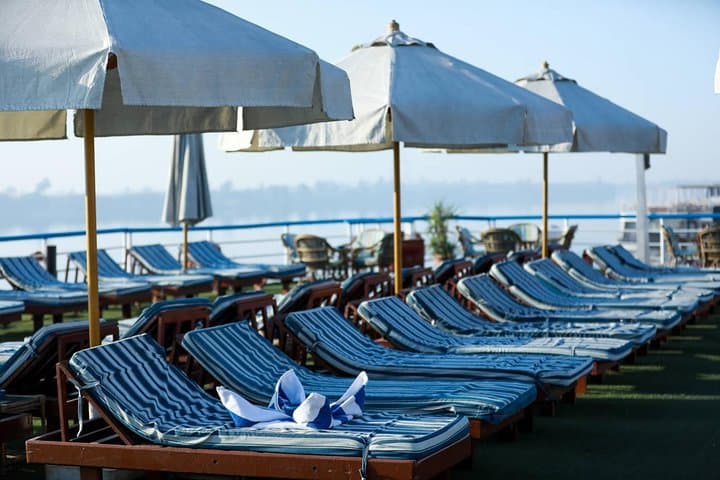
Dawn lifts the mist off the Nile and the cruise's low silhouette slips like a slow promise through ochre light. On deck, sugar-brown banks slide past — fisherman casting lines, cattle grazing, and the first columns of Karnak outlined against a pink sky. The river’s current seems to nudge the boat south, carrying you through eight centuries of pharaonic ambition and millennia of human passage.
Dawn lifts the mist off the Nile and the cruise's low silhouette slips like a slow promise through ochre light. On deck, sugar-brown banks slide past — fisherman casting lines, cattle grazing, and the first columns of Karnak outlined against a pink sky. The river’s current seems to nudge the boat south, carrying you through eight centuries of pharaonic ambition and millennia of human passage.
This itinerary threads Luxor’s East and West Banks, the Valley of the Kings and Hatshepsut’s mortuary terrace, then eases downstream to Edfu and Kom Ombo — Ptolemaic stone-work punctuated by Greco-Roman inscriptions — finishing in Aswan with the High Dam and Philae’s island temple. Geologically the Nile corridor is a ribbon of alluvial silt and limestone cliffs; culturally it remains a living trade route where Nubian traditions meet modern Egyptian life.
Practically: expect structured mornings ashore for guided archaeology tours and afternoons of slow travel and onboard meals. Temples have steep steps and sandy approaches; wear sturdy shoes and a hat. Sun is intense from late spring through early fall; early starts and late afternoons are the most comfortable times to tour. Bring local currency for small purchases, a refillable water bottle, and a lightweight daypack for excursions. Wi‑Fi is often patchy; plan logistics (flights, transfers) with the two-hour buffer the operator recommends.
This cruise is balanced travel: relaxed river time that punctuates active exploration of Egypt’s most iconic ruins — practical, immersive, and paced to let the Nile keep you moving.