THE ADVENTURE COLLECTIVE® · Independent discovery and booking for outdoor travel

Five days from Nanyuki to Point Lenana, this Sirimon–Chogoria traverse covers montane forest, Mackinders Valley and an alpine summit push for sunrise. Expect steep gains, hut nights and dramatic eastern gorges on descent.
Five days from Nanyuki to Point Lenana, this Sirimon–Chogoria traverse covers montane forest, Mackinders Valley and an alpine summit push for sunrise. Expect steep gains, hut nights and dramatic eastern gorges on descent.
You leave Nairobi before dawn, wheels humming toward the cool, high air around Nanyuki. The forest closes in as the road climbs; by late morning you’re walking under tall colonizing pines and giant heather, the mountain’s western flank drying into rocky ridgelines. The trail alternates between hard-packed stone, talus fields and the sudden green of bamboo gullies on the Chogoria side.
Verified experiences and guided adventures in the surrounding area.
Operated by Bencia Africa Adventure & Safaris · Nanyuki, Laikipia County
You leave Nairobi before dawn, wheels humming toward the cool, high air around Nanyuki. The forest closes in as the road climbs; by late morning you’re walking under tall colonizing pines and giant heather, the mountain’s western flank drying into rocky ridgelines. The trail alternates between hard-packed stone, talus fields and the sudden green of bamboo gullies on the Chogoria side.
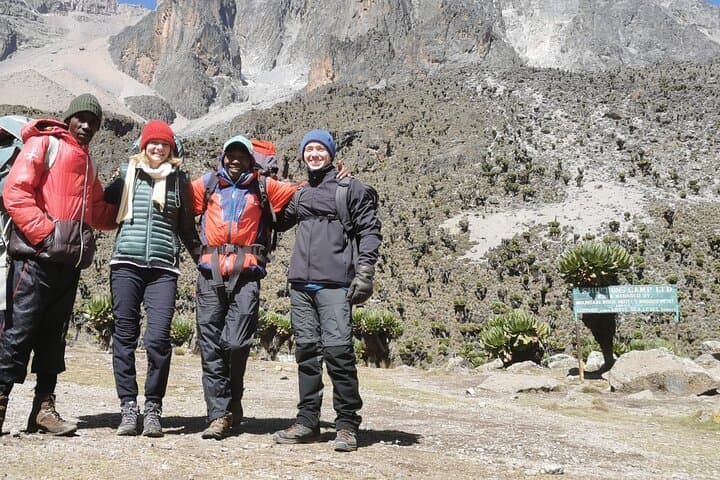
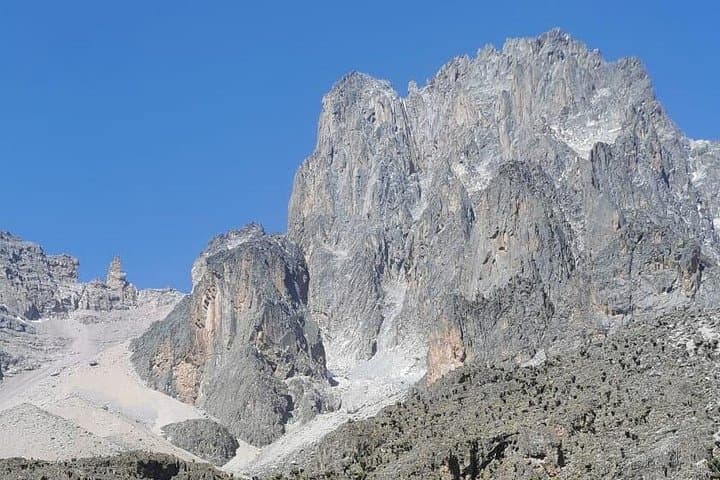
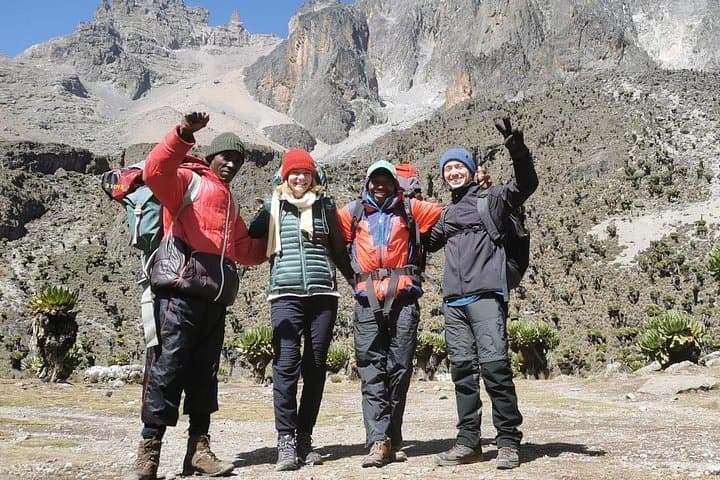
Mount Kenya is an extinct stratovolcano whose three main peaks—Batian, Nelion and Point Lenana—rise above an alpine band of moorland and glaciated rock. The Sirimon route climbs the drier western slopes through montane forest to Old Moses Hut (≈3,330 m), then the route drops into Mackinders Valley and up to Shipton Hut (≈4,200 m). The Chogoria descent is rich with waterfalls, tarns and the dramatic Gorges Valley carved into ancient volcanic rock. The mountain also carries cultural weight: local Kikuyu communities revere its slopes, and nearby Mau Mau caves speak to 20th-century resistance history.
Practical guidance: expect sustained elevation gain—roughly 1,300–1,500 m on day two from the gate to Old Moses, then another 800–900 m to Shipton; summit day adds ~780 m from Shipton to Point Lenana. Trails are rocky, sometimes steep scree; early summit-starts (around 02:30) are standard for sunrise and safer footing. Acclimatize in Nanyuki, bring layered insulation for alpine nights, a warm headlamp for predawn travel, and plan for sudden mountain weather. Park permits, hut bookings and a qualified guide are required; pack out waste and follow your guide’s briefing on altitude and pacing.
difficult.
5 days (guided itinerary).
High level of cardiovascular fitness and experience with multi-day high-elevation hiking; ability to carry a daypack and walk 5–7 hours on steep terrain.
No technical rock-climbing skills are required for Point Lenana; this is a high-altitude trek. Good fitness and experience with long days at elevation are essential.
Moderate to high—altitude gain is rapid across days. Use acclimatization days, hydrate, eat well, and descend immediately if symptoms worsen; guides will monitor groups.
Permits and hut bookings are required; confirm with the operator which fees and hut accommodations are included in your package before travel.
Summit weather is cold and can be windy; clear early-morning views are possible in dry seasons, but storms and sudden temperature drops occur year-round.
Mount Kenya has cultural significance for local Kikuyu communities and nearby caves were used during colonial-era resistance movements.
Glacial retreat on Mount Kenya is visible; stick to marked trails, minimize waste, and use local guides who follow park regulations to reduce impact.
Bencia Africa Adventure & Safaris operates guided outdoor trips and adventures with an emphasis on safety, stewardship, and memorable experiences.
You leave Nairobi before dawn, wheels humming toward the cool, high air around Nanyuki. The forest closes in as the road climbs; by late morning you’re walking under tall colonizing pines and giant heather, the mountain’s western flank drying into rocky ridgelines. The trail alternates between hard-packed stone, talus fields and the sudden green of bamboo gullies on the Chogoria side.
You leave Nairobi before dawn, wheels humming toward the cool, high air around Nanyuki. The forest closes in as the road climbs; by late morning you’re walking under tall colonizing pines and giant heather, the mountain’s western flank drying into rocky ridgelines. The trail alternates between hard-packed stone, talus fields and the sudden green of bamboo gullies on the Chogoria side.
Mount Kenya is an extinct stratovolcano whose three main peaks—Batian, Nelion and Point Lenana—rise above an alpine band of moorland and glaciated rock. The Sirimon route climbs the drier western slopes through montane forest to Old Moses Hut (≈3,330 m), then the route drops into Mackinders Valley and up to Shipton Hut (≈4,200 m). The Chogoria descent is rich with waterfalls, tarns and the dramatic Gorges Valley carved into ancient volcanic rock. The mountain also carries cultural weight: local Kikuyu communities revere its slopes, and nearby Mau Mau caves speak to 20th-century resistance history.
Practical guidance: expect sustained elevation gain—roughly 1,300–1,500 m on day two from the gate to Old Moses, then another 800–900 m to Shipton; summit day adds ~780 m from Shipton to Point Lenana. Trails are rocky, sometimes steep scree; early summit-starts (around 02:30) are standard for sunrise and safer footing. Acclimatize in Nanyuki, bring layered insulation for alpine nights, a warm headlamp for predawn travel, and plan for sudden mountain weather. Park permits, hut bookings and a qualified guide are required; pack out waste and follow your guide’s briefing on altitude and pacing.