THE ADVENTURE COLLECTIVE® · Independent discovery and booking for outdoor travel

Traverse the High Atlas to Erg Chebbi on a five-day journey through kasbahs, palm oases and dramatic gorges. Expect long drives, cultural encounters with Berber communities, and an overnight bivouac beneath desert stars.
Traverse the High Atlas to Erg Chebbi on a five-day journey through kasbahs, palm oases and dramatic gorges. Expect long drives, cultural encounters with Berber communities, and an overnight bivouac beneath desert stars.
A wind-sanded ridge of ochre dunes rises as the sun drops behind Erg Chebbi; the camels' slow rhythm punctuates a silence that feels deliberately old. This five-day circuit links Marrakech’s bustling medina with high mountain passes, fortified kasbahs, river-carved gorges and the wide-open desert, moving from tarmac to tracks and finally to sand.
Verified experiences and guided adventures in the surrounding area.
Operated by Sun Moon Travel · Merzouga, Drâa-Tafilalet
A wind-sanded ridge of ochre dunes rises as the sun drops behind Erg Chebbi; the camels' slow rhythm punctuates a silence that feels deliberately old. This five-day circuit links Marrakech’s bustling medina with high mountain passes, fortified kasbahs, river-carved gorges and the wide-open desert, moving from tarmac to tracks and finally to sand.
The route climbs the Tizi n’Tichka pass (about 2,260 m) into the High Atlas, drops into the valley of the Ounila toward Aït Ben Haddou — a UNESCO ksar where mud-brick architecture recalls trans-Saharan trade routes and frequent film shoots — then threads palm-lined Draa oases, the sculpted Dades and Todra gorges, and out to Merzouga’s dunes where a bivouac and a Berber campfire await.
Geology here shifts quickly: folded, metamorphosed ranges give way to Hamada plateaus and wind-swept regs before the towering dunes of Erg Chebbi (dunes commonly reach 100–150 m). Culture is equally tangible — Berber kasbahs, the Gnaoua musicians of Khamlia, and villages still irrigated by traditional khettaras.
Practical guidance: expect long driving days (several 100 km segments), sudden temperature swings between day and night, and short walks in gravel or sand with occasional river crossings in the gorges. Hydrate early, layer for cold desert nights, wear sturdy boots for narrow gorge scrambling, and bring a small daypack for camera and water. Local guides facilitate camel transfers and camp logistics; tipping and supporting village artisans help direct economic benefit back into these fragile communities.
moderate.
5 days.
Suitable for travelers in average fitness; comfortable with several hours of walking and long vehicle transfers.
Camel transfers are short (typically 30–60 minutes) and led by experienced handlers; the bivouac requires minimal physical effort but expect sandy footing and cooler night temperatures.
The tour uses a 4WD for sections over rough tracks; passengers don’t need driving skills but should be prepared for bumpy, unpaved stretches.
The operator notes the itinerary is suitable for most fitness levels but not recommended for travelers with serious heart problems; long drives and desert heat can be demanding.
The tour includes dinners and overnight stays outlined in the itinerary (hotels, kasbahs, and desert bivouacs); confirm pick-up, drop-off and any special dietary needs when booking.
The route follows historic trade and caravan corridors that connected the High Atlas to Saharan routes; Aït Ben Haddou grew as a fortified caravan stop and later drew filmmakers to its dramatic architecture.
The dunes and oases are fragile — minimize water use, pack out waste, and prioritize locally run camps and guides to support sustainable livelihoods.
Sun Moon Travel operates guided outdoor trips and adventures with an emphasis on safety, stewardship, and memorable experiences.
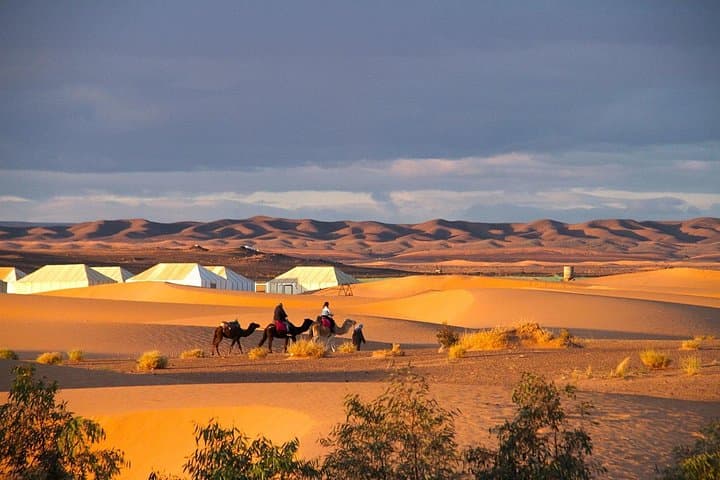
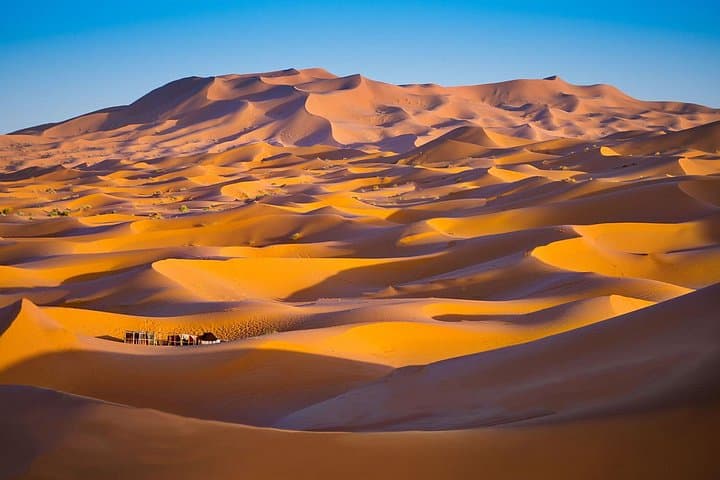
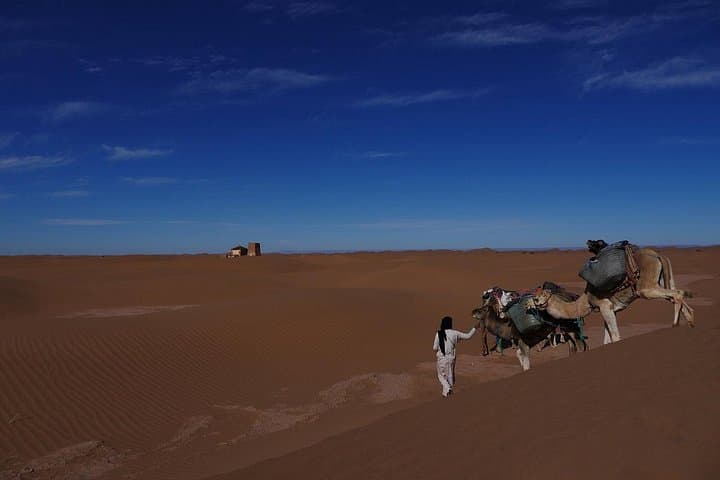
A wind-sanded ridge of ochre dunes rises as the sun drops behind Erg Chebbi; the camels' slow rhythm punctuates a silence that feels deliberately old. This five-day circuit links Marrakech’s bustling medina with high mountain passes, fortified kasbahs, river-carved gorges and the wide-open desert, moving from tarmac to tracks and finally to sand.
A wind-sanded ridge of ochre dunes rises as the sun drops behind Erg Chebbi; the camels' slow rhythm punctuates a silence that feels deliberately old. This five-day circuit links Marrakech’s bustling medina with high mountain passes, fortified kasbahs, river-carved gorges and the wide-open desert, moving from tarmac to tracks and finally to sand.
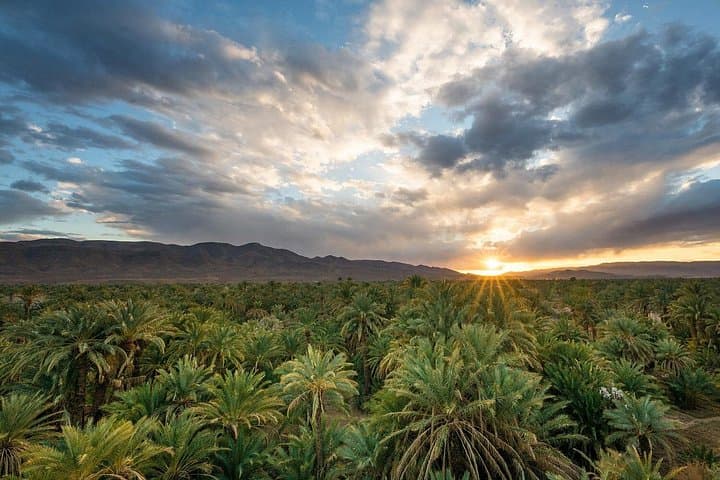
The route climbs the Tizi n’Tichka pass (about 2,260 m) into the High Atlas, drops into the valley of the Ounila toward Aït Ben Haddou — a UNESCO ksar where mud-brick architecture recalls trans-Saharan trade routes and frequent film shoots — then threads palm-lined Draa oases, the sculpted Dades and Todra gorges, and out to Merzouga’s dunes where a bivouac and a Berber campfire await.
Geology here shifts quickly: folded, metamorphosed ranges give way to Hamada plateaus and wind-swept regs before the towering dunes of Erg Chebbi (dunes commonly reach 100–150 m). Culture is equally tangible — Berber kasbahs, the Gnaoua musicians of Khamlia, and villages still irrigated by traditional khettaras.
Practical guidance: expect long driving days (several 100 km segments), sudden temperature swings between day and night, and short walks in gravel or sand with occasional river crossings in the gorges. Hydrate early, layer for cold desert nights, wear sturdy boots for narrow gorge scrambling, and bring a small daypack for camera and water. Local guides facilitate camel transfers and camp logistics; tipping and supporting village artisans help direct economic benefit back into these fragile communities.