THE ADVENTURE COLLECTIVE® · Independent discovery and booking for outdoor travel

Follow mountain passes, kasbah-lined oases and the towering Erg Chebbi dunes on this five‑day private loop from Marrakech. Expect camel treks, ancient sites, and nights in riads and a Berber camp.
Follow mountain passes, kasbah-lined oases and the towering Erg Chebbi dunes on this five‑day private loop from Marrakech. Expect camel treks, ancient sites, and nights in riads and a Berber camp.
You step out of a riad into Jemaa el-Fna’s clamor, then the road carries you up through the High Atlas where hairpin turns open on stony ridgelines and the air thins around Tizi n’Tichka (≈2,260 m). The landscape flips from terraced fields and kasbah villages to ochre gorges and, finally, the soft, rolling silhouette of Erg Chebbi at Merzouga.
Verified experiences and guided adventures in the surrounding area.
Operated by Morocco Top Tour · Merzouga, Drâa-Tafilalet
You step out of a riad into Jemaa el-Fna’s clamor, then the road carries you up through the High Atlas where hairpin turns open on stony ridgelines and the air thins around Tizi n’Tichka (≈2,260 m). The landscape flips from terraced fields and kasbah villages to ochre gorges and, finally, the soft, rolling silhouette of Erg Chebbi at Merzouga.
The route threads Morocco’s layered history: 17th‑century kasbahs in Telouet, the earthen bastions of Ait Ben Haddou (UNESCO), and the Roman mosaics of Volubilis. Geology is on display too — the High Atlas is a young, uplifted range, while the Sahara’s dunes are wind‑sorted sand sheets that form crescent and star dunes up to roughly 100–150 m high. Culturally, the trip centers on Berber hospitality: pooled mint tea, tented camps, and campfire songs under clear desert skies.
Practically, the tour is paced for travelers who want culture plus light adventure. Expect long driving stretches broken by guided visits; a camel trek (≈1.5 hours) into the camp; sunrise and sunset on the dunes; and overnight stays in riads, hotels and a desert camp. Bring layered clothing for big diurnal shifts, sturdy shoes for rocky passes and short walks, sun protection, and enough cash for small markets and tips. Note health advisories: not recommended for those with serious spinal, heart, or pregnancy concerns. Time activities for golden hours in the dunes, and allow extra time for road photography stops. The experience marries Morocco’s imperial cities with hands‑on desert time — accessible, sensory, and rooted in landscape and local life.
moderate.
5 days.
Suitable for travelers with average fitness; able to handle short walks, camel rides and several hours in vehicles per day.
The included camel trek is about 1.5 hours from the hotel to the Berber camp; experienced local camel handlers guide each camel.
Yes — 4 nights’ accommodations (hotels, riads and a desert camp) and most breakfasts and dinners are included as listed in the itinerary.
The tour is family-friendly but not recommended for people with spinal, heart conditions, or pregnant travelers; camel mounts and uneven terrain can be challenging.
Visa and health requirements depend on your nationality; check Moroccan government guidance and consult a travel clinic for routine vaccinations well before departure.
The itinerary links imperial centers founded by successive dynasties with trans-Saharan trade routes; kasbahs reflect centuries of fortified adobe architecture.
Travel in the region can stress fragile desert ecosystems and water supplies; minimize campfire impact, avoid off-track driving on dunes, and support local guides and community-run accommodations.
Morocco Top Tour operates guided outdoor trips and adventures with an emphasis on safety, stewardship, and memorable experiences.
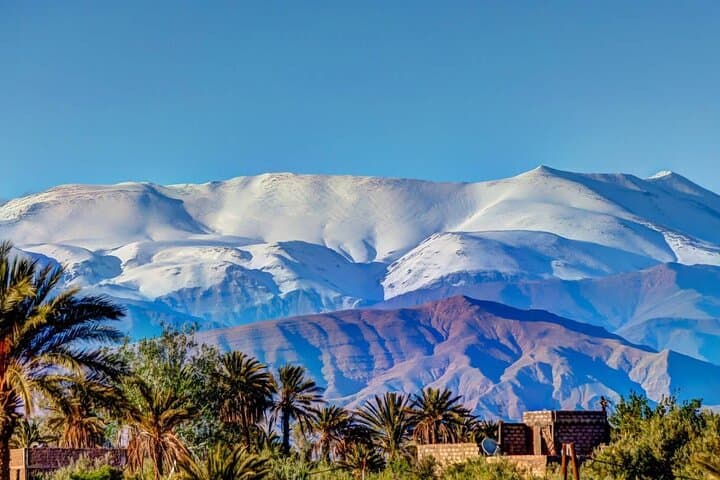
You step out of a riad into Jemaa el-Fna’s clamor, then the road carries you up through the High Atlas where hairpin turns open on stony ridgelines and the air thins around Tizi n’Tichka (≈2,260 m). The landscape flips from terraced fields and kasbah villages to ochre gorges and, finally, the soft, rolling silhouette of Erg Chebbi at Merzouga.
You step out of a riad into Jemaa el-Fna’s clamor, then the road carries you up through the High Atlas where hairpin turns open on stony ridgelines and the air thins around Tizi n’Tichka (≈2,260 m). The landscape flips from terraced fields and kasbah villages to ochre gorges and, finally, the soft, rolling silhouette of Erg Chebbi at Merzouga.
The route threads Morocco’s layered history: 17th‑century kasbahs in Telouet, the earthen bastions of Ait Ben Haddou (UNESCO), and the Roman mosaics of Volubilis. Geology is on display too — the High Atlas is a young, uplifted range, while the Sahara’s dunes are wind‑sorted sand sheets that form crescent and star dunes up to roughly 100–150 m high. Culturally, the trip centers on Berber hospitality: pooled mint tea, tented camps, and campfire songs under clear desert skies.
Practically, the tour is paced for travelers who want culture plus light adventure. Expect long driving stretches broken by guided visits; a camel trek (≈1.5 hours) into the camp; sunrise and sunset on the dunes; and overnight stays in riads, hotels and a desert camp. Bring layered clothing for big diurnal shifts, sturdy shoes for rocky passes and short walks, sun protection, and enough cash for small markets and tips. Note health advisories: not recommended for those with serious spinal, heart, or pregnancy concerns. Time activities for golden hours in the dunes, and allow extra time for road photography stops. The experience marries Morocco’s imperial cities with hands‑on desert time — accessible, sensory, and rooted in landscape and local life.