THE ADVENTURE COLLECTIVE® · Independent discovery and booking for outdoor travel

Leave Marrakech for five days of High Atlas passes, UNESCO ksars, and nights under Saharan stars. This overland tour combines off-road drives, camel rides, and desert camps from Zagora to Merzouga.
Leave Marrakech for five days of High Atlas passes, UNESCO ksars, and nights under Saharan stars. This overland tour combines off-road drives, camel rides, and desert camps from Zagora to Merzouga.
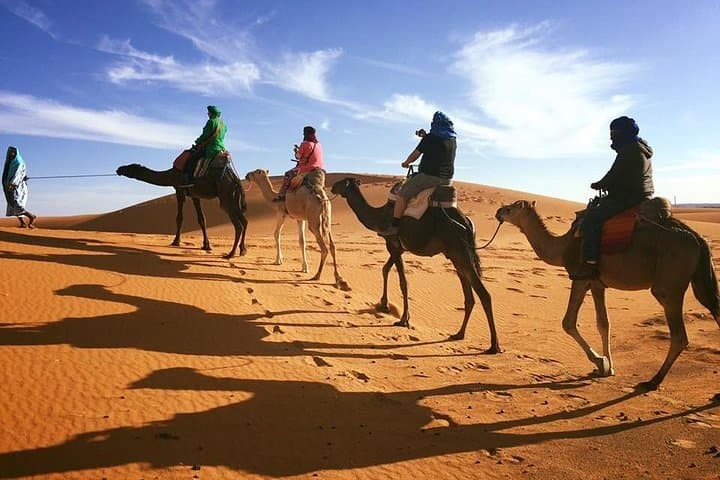
Dust lifts off the road as the convoy leaves Marrakech; the High Atlas mountains fold back into arid plains and palms begin to edge the horizon. Travelers watch kasbah walls turn from ochre to gold while a guide points out the shapes of Berber villages clinging to hillsides. By sunset the caravan reaches Erg Chegaga or Merzouga where dune crests silhouette the sky and camels pause as if to listen to the wind.
Verified experiences and guided adventures in the surrounding area.
Operated by Tours Excursions Journeys · Marrakech, Marrakech-Safi
Dust lifts off the road as the convoy leaves Marrakech; the High Atlas mountains fold back into arid plains and palms begin to edge the horizon. Travelers watch kasbah walls turn from ochre to gold while a guide points out the shapes of Berber villages clinging to hillsides. By sunset the caravan reaches Erg Chegaga or Merzouga where dune crests silhouette the sky and camels pause as if to listen to the wind.
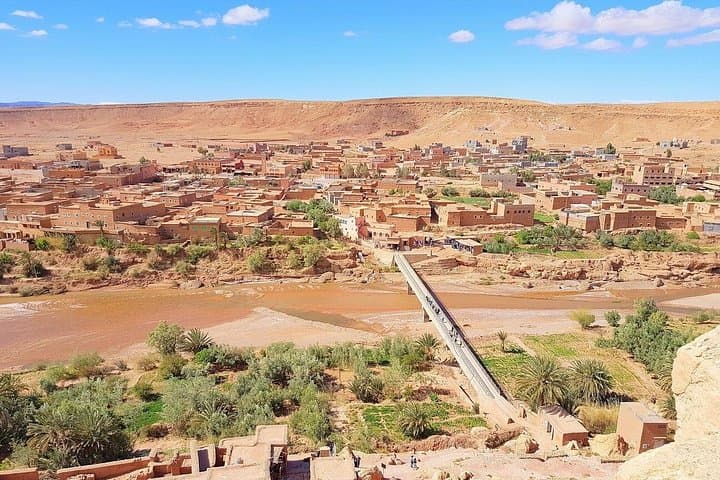
This route threads history and geology: ancient caravan tracks that once moved salt and dates, the earthen architecture of Ait Ben Haddou (a UNESCO ksar), and the clay-rich pottery tradition of Tamegroute. Geologically the Sahara here is defined by wind-shaped sand seas and rocky plateaus — landscapes formed by millennia of erosion and seasonal flash floods.
Culturally the trip introduces rural life: souks in Rissani, nomadic camp hospitality, and stories told over mint tea beneath towering dunes. Guides explain how water is sourced, tents are pitched, and how the desert’s scale shapes daily life.
Practical guidance: expect long drives with off-road sections; pack layers for cold desert nights and a sun-protective outer layer for midday. Plan for early starts to photograph sunrise over the dunes and to avoid peak heat. Bring cash for small purchases in villages and tip guides and camel handlers for specialized local services. Hydrate consistently — the desert doesn’t signal dehydration politely — and follow your guide’s route choices on sand to avoid sensitive habitats.
moderate.
5 days.
Suitable for travelers in average fitness; includes short camel rides and walking on soft sand which is more strenuous than packed trails.
Camel rides are gentle and suitable for most travelers; mounts and dismounts can be awkward—ask for assistance and avoid sudden movements while on the animal.
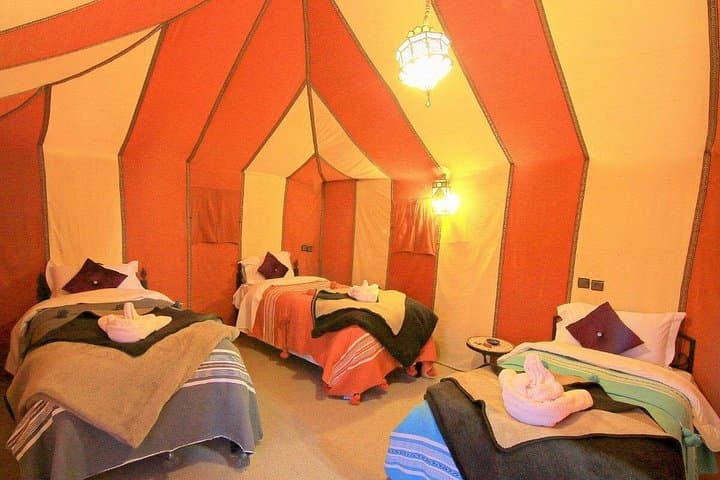
Camps typically offer mattresses, blankets, and shared facilities; standards vary from basic nomadic tents to more comfortable private camps—check your booking for specifics.
Passes reach higher elevations than Marrakech but rarely cause altitude sickness; those sensitive to elevation should move slowly and stay hydrated.
Local guides and operators generally accommodate common dietary needs if informed at booking—bring snacks for special requirements on long drives.
This corridor follows historic trans-Saharan routes; Ait Ben Haddou grew wealthy as a fortified trading stop between Marrakech and the desert.
The Sahara’s fragile soils and limited water require low-impact travel—stick to tracks, pack out waste, and conserve water during drives and camp stays.
Tours Excursions Journeys operates guided outdoor trips and adventures with an emphasis on safety, stewardship, and memorable experiences.
Dust lifts off the road as the convoy leaves Marrakech; the High Atlas mountains fold back into arid plains and palms begin to edge the horizon. Travelers watch kasbah walls turn from ochre to gold while a guide points out the shapes of Berber villages clinging to hillsides. By sunset the caravan reaches Erg Chegaga or Merzouga where dune crests silhouette the sky and camels pause as if to listen to the wind.
Dust lifts off the road as the convoy leaves Marrakech; the High Atlas mountains fold back into arid plains and palms begin to edge the horizon. Travelers watch kasbah walls turn from ochre to gold while a guide points out the shapes of Berber villages clinging to hillsides. By sunset the caravan reaches Erg Chegaga or Merzouga where dune crests silhouette the sky and camels pause as if to listen to the wind.
This route threads history and geology: ancient caravan tracks that once moved salt and dates, the earthen architecture of Ait Ben Haddou (a UNESCO ksar), and the clay-rich pottery tradition of Tamegroute. Geologically the Sahara here is defined by wind-shaped sand seas and rocky plateaus — landscapes formed by millennia of erosion and seasonal flash floods.
Culturally the trip introduces rural life: souks in Rissani, nomadic camp hospitality, and stories told over mint tea beneath towering dunes. Guides explain how water is sourced, tents are pitched, and how the desert’s scale shapes daily life.
Practical guidance: expect long drives with off-road sections; pack layers for cold desert nights and a sun-protective outer layer for midday. Plan for early starts to photograph sunrise over the dunes and to avoid peak heat. Bring cash for small purchases in villages and tip guides and camel handlers for specialized local services. Hydrate consistently — the desert doesn’t signal dehydration politely — and follow your guide’s route choices on sand to avoid sensitive habitats.