THE ADVENTURE COLLECTIVE® · Independent discovery and booking for outdoor travel

A five-day climb on Kilimanjaro’s Marangu ("Coca-Cola") route takes you from rainforest to Arctic-like summit huts. This guide covers terrain, pacing, local logistics and practical prep for a successful ascent.
A five-day climb on Kilimanjaro’s Marangu ("Coca-Cola") route takes you from rainforest to Arctic-like summit huts. This guide covers terrain, pacing, local logistics and practical prep for a successful ascent.
You step out at Marangu Gate around 1,860 m and the forest closes in: tropical humidity, strangler figs, and a trail that quickly climbs into moss and dripping lichen. The Marangu route moves like a story through zones — dense rainforest to heather and moorland, then the sparse alpine desert below Kibo’s black volcanic slopes — ending at Uhuru Peak (5,895 m) where glacier fragments rim the crater.
Verified experiences and guided adventures in the surrounding area.
Operated by Great Image Expedition Ltd · Moshi, Kilimanjaro Region
You step out at Marangu Gate around 1,860 m and the forest closes in: tropical humidity, strangler figs, and a trail that quickly climbs into moss and dripping lichen. The Marangu route moves like a story through zones — dense rainforest to heather and moorland, then the sparse alpine desert below Kibo’s black volcanic slopes — ending at Uhuru Peak (5,895 m) where glacier fragments rim the crater.
The route earned the nickname “Coca-Cola” for its relative comforts: government huts at Mandara, Horombo and Kibo offer dormitory shelter rather than tents, and the path is one of the oldest trodden by colonial-era explorers. Geologically Kilimanjaro is a dormant stratovolcano with three cones (Kibo is the highest) and a summit shaped by past glaciation and ongoing erosion.
Expect steady climbs, roughly 4,000 m of net elevation gain and 60–70 km round trip depending on approach. Typical pacing uses an extra acclimatization day at Horombo; the summit push often starts around midnight, with 6–8 hours up on loose scree and icy patches. Guides and porters from local Chagga communities manage camps and logistics and paid park fees support conservation.
Practical guidance: train with long day hikes, break in waterproof boots, and practice layered sleep systems for freezing summit nights. Hydrate, eat calorie-dense meals, and discuss altitude strategies (slow pace, acetazolamide if advised). Book permits and hut space early in dry-season windows (Jan–Mar, Jun–Oct). The Marangu route is classic, direct and demanding: plan for long days, respect altitude, and carry patience as the best tool for the summit.
challenging.
5 days.
Should be in good cardiovascular shape; able to hike 6–10 hours on consecutive days and tolerate steep ascents at altitude
Most parties start around midnight from Kibo Hut; expect 6–8 hours to Uhuru Peak and 3–5 hours to descend to Horombo or Marangu depending on pace.
No technical climbing skills are required on the Marangu route, but previous long-day trekking and acclimatization experience improves success odds.
Dry-season windows (Jan–Mar and Jun–Oct) offer more stable weather; avoid the long rains (Apr–May) and short rains (Nov) for better summit chances.
Marangu huts are dormitory-style with shared bunks and basic facilities; book early to secure space and bring a quality sleeping bag.
The Marangu route is one of the oldest access trails used by local porters and early European climbers; the hut system was developed mid-20th century to standardize ascents.
Kilimanjaro National Park fees fund conservation and community programs; stick to marked trails, pack out waste, and use licensed guides to reduce environmental impact.
Great Image Expedition Ltd operates guided outdoor trips and adventures with an emphasis on safety, stewardship, and memorable experiences.
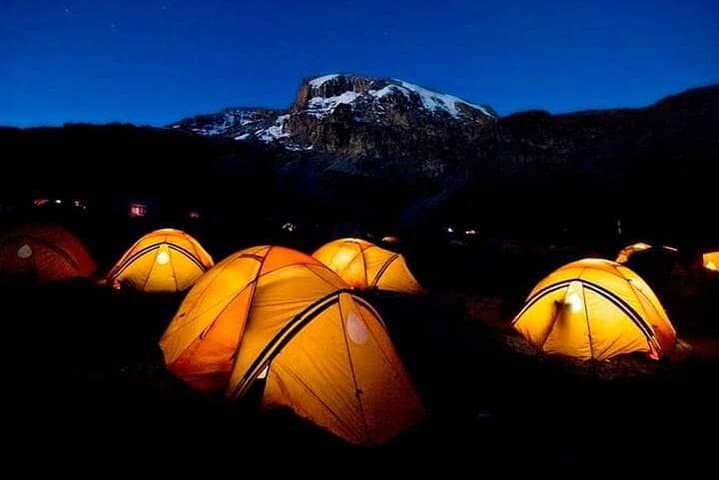


You step out at Marangu Gate around 1,860 m and the forest closes in: tropical humidity, strangler figs, and a trail that quickly climbs into moss and dripping lichen. The Marangu route moves like a story through zones — dense rainforest to heather and moorland, then the sparse alpine desert below Kibo’s black volcanic slopes — ending at Uhuru Peak (5,895 m) where glacier fragments rim the crater.
You step out at Marangu Gate around 1,860 m and the forest closes in: tropical humidity, strangler figs, and a trail that quickly climbs into moss and dripping lichen. The Marangu route moves like a story through zones — dense rainforest to heather and moorland, then the sparse alpine desert below Kibo’s black volcanic slopes — ending at Uhuru Peak (5,895 m) where glacier fragments rim the crater.
The route earned the nickname “Coca-Cola” for its relative comforts: government huts at Mandara, Horombo and Kibo offer dormitory shelter rather than tents, and the path is one of the oldest trodden by colonial-era explorers. Geologically Kilimanjaro is a dormant stratovolcano with three cones (Kibo is the highest) and a summit shaped by past glaciation and ongoing erosion.
Expect steady climbs, roughly 4,000 m of net elevation gain and 60–70 km round trip depending on approach. Typical pacing uses an extra acclimatization day at Horombo; the summit push often starts around midnight, with 6–8 hours up on loose scree and icy patches. Guides and porters from local Chagga communities manage camps and logistics and paid park fees support conservation.
Practical guidance: train with long day hikes, break in waterproof boots, and practice layered sleep systems for freezing summit nights. Hydrate, eat calorie-dense meals, and discuss altitude strategies (slow pace, acetazolamide if advised). Book permits and hut space early in dry-season windows (Jan–Mar, Jun–Oct). The Marangu route is classic, direct and demanding: plan for long days, respect altitude, and carry patience as the best tool for the summit.