THE ADVENTURE COLLECTIVE® · Independent discovery and booking for outdoor travel

Sail from Luxor to Aswan over five days, pairing a sunrise hot air balloon over the West Bank with guided visits to Karnak, the Valley of the Kings, Edfu, Kom Ombo, Philae and the monumental Abu Simbel temples. This cruise mixes onboard comfort with intensive archaeological exploration.
Sail from Luxor to Aswan over five days, pairing a sunrise hot air balloon over the West Bank with guided visits to Karnak, the Valley of the Kings, Edfu, Kom Ombo, Philae and the monumental Abu Simbel temples. This cruise mixes onboard comfort with intensive archaeological exploration.
Morning light loosens over the Nile and the cruise ship slips away from Luxor's quay—date palms skim past the deck and papyrus channels wink in the sun. From the vantage of the sundeck the river feels like a slow-moving guidebook: temples, villages, and sand-streaked cliffs slide by while the ship threads the same waterways that linked Upper and Lower Egypt for millennia.
Verified experiences and guided adventures in the surrounding area.
Operated by Bastet Travel · Luxor, Luxor Governorate
Morning light loosens over the Nile and the cruise ship slips away from Luxor's quay—date palms skim past the deck and papyrus channels wink in the sun. From the vantage of the sundeck the river feels like a slow-moving guidebook: temples, villages, and sand-streaked cliffs slide by while the ship threads the same waterways that linked Upper and Lower Egypt for millennia.
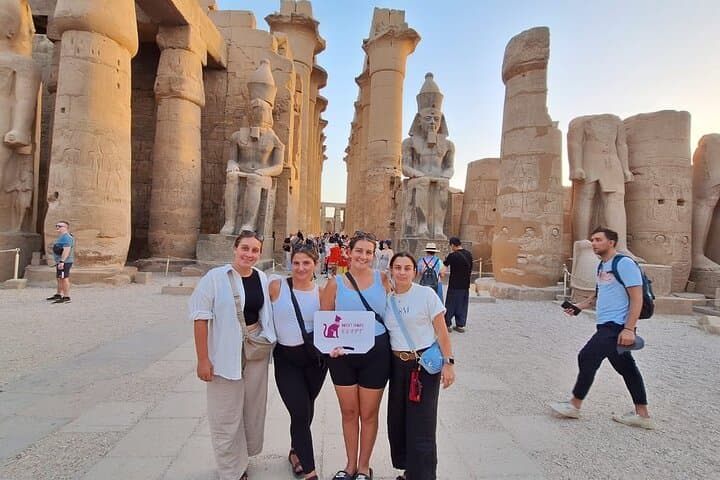
This five-day voyage pairs classical archaeology with modern engineering. On the East Bank, Karnak's monumental pylons and Luxor Temple's colonnades speak to New Kingdom pharaonic power; the West Bank holds Hatshepsut’s terraced mortuary and the painted chambers of the Valley of the Kings. Ptolemaic-era craftsmanship appears at Edfu and Kom Ombo, while Philae—relocated stone by stone after the High Dam—recalls 20th-century conservation work. Abu Simbel's colossal façades, hewn into living rock by Ramses II, cap the itinerary with a spectacle of scale and astronomy.
Geology is plain: the Nile's floodplain threads a corridor of alluvial soil between limestone escarpments, and the river's steady push shaped settlement patterns and temple siting across millennia. Culturally, expect guided Egyptological interpretation, a rhythm of early starts, and local markets near small port towns.
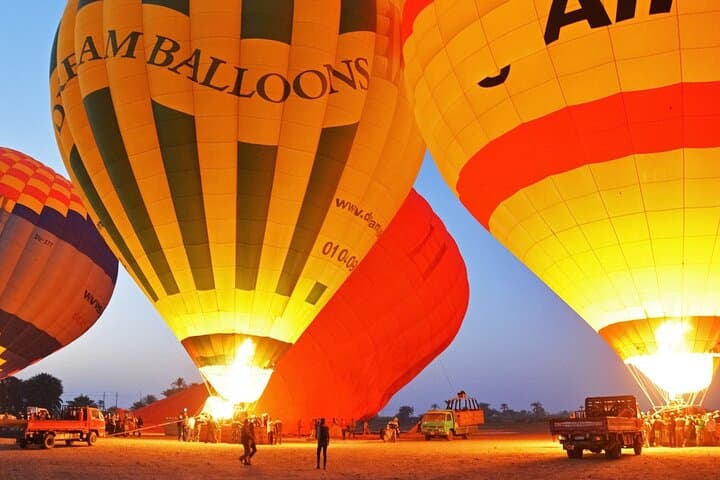
Practical pointers: this is a low-impact cruise in terms of daily exertion, but bring sturdy shoes for uneven temple steps, strong sun protection, and a reusable water bottle. Hot air balloon flights run at sunrise (≈40–55 minutes) and are weather dependent. Plan for early mornings, some bumpy roads to Abu Simbel, and modest dress in religious sites. With a mix of onboard comfort and extensive shore visits, the trip balances leisure with a concentrated dose of ancient history.
moderate.
5 days (approx. 4 nights).
Suitable for travelers in average fitness; involves repeated short walks, stair climbs, and early mornings.
The hot air balloon is offered as part of the itinerary; flights are weather-dependent—if canceled for safety you’ll typically receive a partial refund or alternative arrangement per operator policy.
Abu Simbel requires an early road transfer from the cruise’s Aswan stop; the visit is included as a full-day excursion on day five.
Yes—entry fees and a professional Egyptologist guide for shore excursions are included in the package.
The cruise and some transfer vehicles are wheelchair accessible, but many temple sites have steps and uneven ground; check specific access for each site before booking.
This river corridor supported ancient Egyptian state formation; many temples were sited for ritual access to the Nile and to align with solar and stellar events.
Several temples (notably Philae and Abu Simbel) were relocated or restored in the 20th century to mitigate the High Dam's reservoir; visitors are encouraged to minimize waste and follow site signage to protect fragile reliefs.
Bastet Travel operates guided outdoor trips and adventures with an emphasis on safety, stewardship, and memorable experiences.
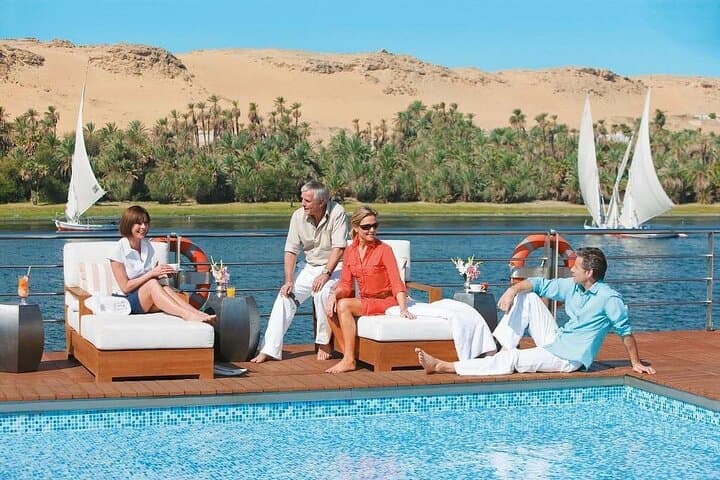
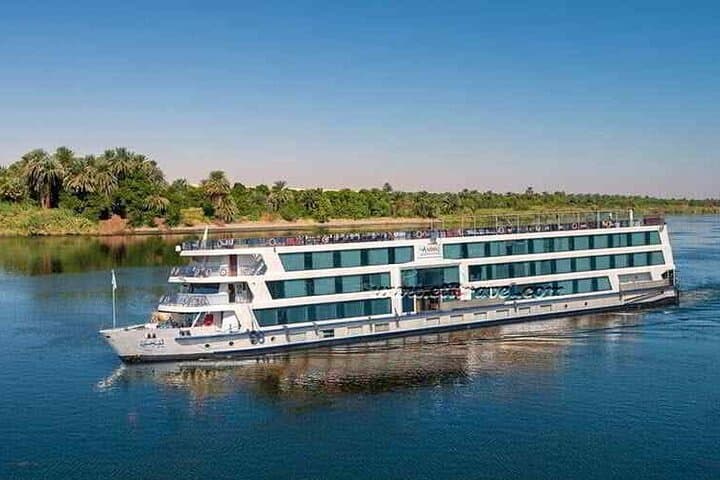
Morning light loosens over the Nile and the cruise ship slips away from Luxor's quay—date palms skim past the deck and papyrus channels wink in the sun. From the vantage of the sundeck the river feels like a slow-moving guidebook: temples, villages, and sand-streaked cliffs slide by while the ship threads the same waterways that linked Upper and Lower Egypt for millennia.
Morning light loosens over the Nile and the cruise ship slips away from Luxor's quay—date palms skim past the deck and papyrus channels wink in the sun. From the vantage of the sundeck the river feels like a slow-moving guidebook: temples, villages, and sand-streaked cliffs slide by while the ship threads the same waterways that linked Upper and Lower Egypt for millennia.
This five-day voyage pairs classical archaeology with modern engineering. On the East Bank, Karnak's monumental pylons and Luxor Temple's colonnades speak to New Kingdom pharaonic power; the West Bank holds Hatshepsut’s terraced mortuary and the painted chambers of the Valley of the Kings. Ptolemaic-era craftsmanship appears at Edfu and Kom Ombo, while Philae—relocated stone by stone after the High Dam—recalls 20th-century conservation work. Abu Simbel's colossal façades, hewn into living rock by Ramses II, cap the itinerary with a spectacle of scale and astronomy.
Geology is plain: the Nile's floodplain threads a corridor of alluvial soil between limestone escarpments, and the river's steady push shaped settlement patterns and temple siting across millennia. Culturally, expect guided Egyptological interpretation, a rhythm of early starts, and local markets near small port towns.
Practical pointers: this is a low-impact cruise in terms of daily exertion, but bring sturdy shoes for uneven temple steps, strong sun protection, and a reusable water bottle. Hot air balloon flights run at sunrise (≈40–55 minutes) and are weather dependent. Plan for early mornings, some bumpy roads to Abu Simbel, and modest dress in religious sites. With a mix of onboard comfort and extensive shore visits, the trip balances leisure with a concentrated dose of ancient history.