THE ADVENTURE COLLECTIVE® · Independent discovery and booking for outdoor travel

Explore Lhasa’s spiritual landmarks over five days: Potala Palace, Jokhang Temple, Barkhor Street and the three major Gelug monasteries, finishing with a day at Ganden. This small-group tour includes permits, transfers and local Tibetan guides to help you navigate altitude and culture.
Explore Lhasa’s spiritual landmarks over five days: Potala Palace, Jokhang Temple, Barkhor Street and the three major Gelug monasteries, finishing with a day at Ganden. This small-group tour includes permits, transfers and local Tibetan guides to help you navigate altitude and culture.
Dawn in Lhasa feels like the plateau exhaling — thin air, clear light and the Potala Palace rising like a carved fortress above the valley. On this five-day small-group circuit, travelers move through the city’s spiritual core: the stepped courtyards of Potala, the incense-scented inner halls of Jokhang, the clockwise crowd on Barkhor, and the scholarly courtyards of Drepung, Sera and distant Ganden Monastery.
Verified experiences and guided adventures in the surrounding area.
Operated by Samtour of Chengdu OTC Travel · Lhasa, Tibet Autonomous Region
Dawn in Lhasa feels like the plateau exhaling — thin air, clear light and the Potala Palace rising like a carved fortress above the valley. On this five-day small-group circuit, travelers move through the city’s spiritual core: the stepped courtyards of Potala, the incense-scented inner halls of Jokhang, the clockwise crowd on Barkhor, and the scholarly courtyards of Drepung, Sera and distant Ganden Monastery.
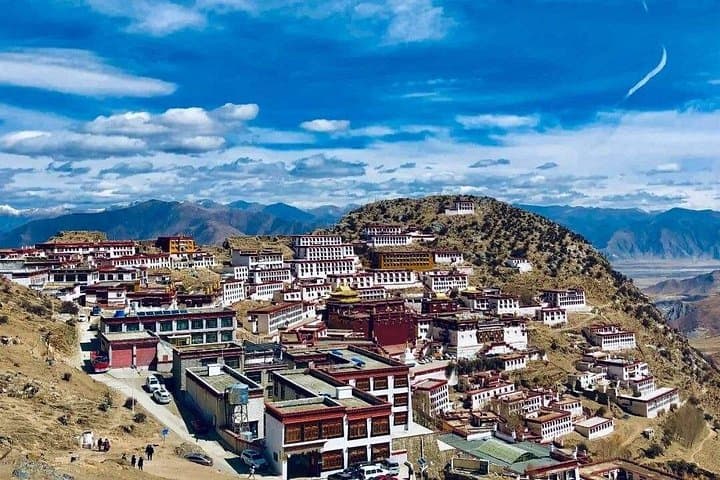
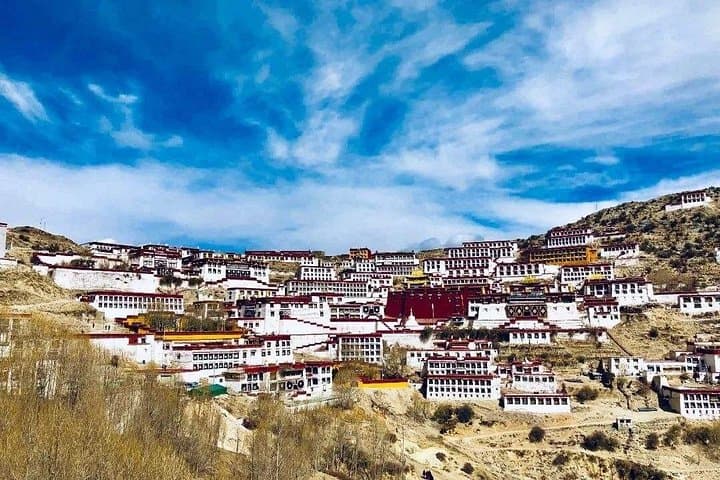
The route traces centuries of Tibetan Buddhist history. Potala’s layered white and red palaces date back to the 7th century with major 17th-century additions; Jokhang holds the venerated Jowo Sakyamuni statue and remains the living heart of pilgrim life. Drepung and Sera were once university monasteries where debate and monastic study defined community life; Ganden, perched east of Lhasa, was founded by the Gelug order’s progenitor and offers broad views over the Lhasa basin.
Geology shows itself in the high-altitude plateau: wind-polished stone, sparse juniper, and sky that seems lower and nearer. Local guides help decode rituals, prayer flags and the practicalities of Tibetan permits and etiquette.
Practical guidance: acclimatize on arrival, move slowly up stairs inside monasteries, bring cash for small offerings and local crafts, and expect full-day drives to Ganden. The operator includes airport/train pickup, permits, oxygen tanks on outings beyond city limits and basic 3-star lodging with breakfast. Travel light, layer for cold mornings and sunny afternoons, and allow extra time for the group to meet minimum numbers—this itinerary balances cultural depth with manageable daily walks, making it suitable for travelers prepared for high-altitude conditions.
moderate.
5 days.
Moderate fitness: able to walk 2–4 hours a day at elevations of 3,700–4,300 m and manage stairs inside monasteries
Yes — the tour operator arranges the Tibet Travel Permit and includes it in the package; independent travel without a permit is not permitted.
Lhasa sits around 3,700–3,800 m so mild symptoms are common; the itinerary allows rest, and oxygen tanks are provided for outings beyond the city.
Moderate fitness is sufficient—expect short to medium walks and some stair climbs inside palaces and monasteries, but no technical hiking.
The tour includes four breakfasts and some dinners, plus four nights in 3-star hotels; specific meal exemptions are stated in the itinerary.
Lhasa has been the political and religious center of Tibet for centuries; Potala Palace was expanded in the 17th century as the Dalai Lama’s winter residence.
Tourists are encouraged to avoid single-use plastics, respect monastery grounds and stick to marked paths; local operators increasingly support community tourism and cultural preservation.
Samtour of Chengdu OTC Travel operates guided outdoor trips and adventures with an emphasis on safety, stewardship, and memorable experiences.
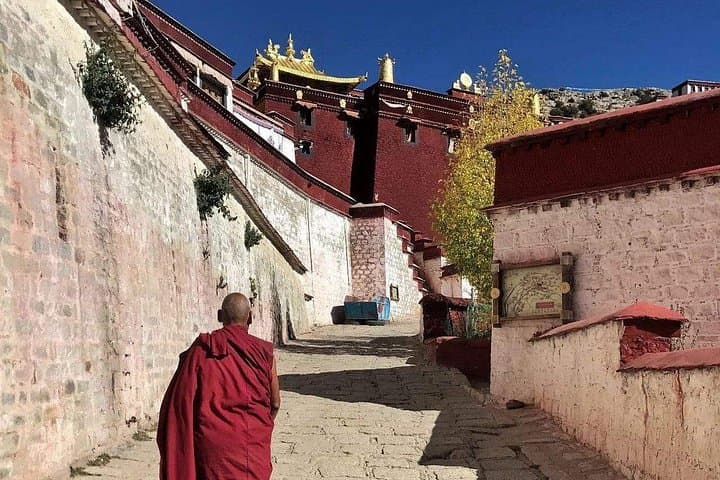
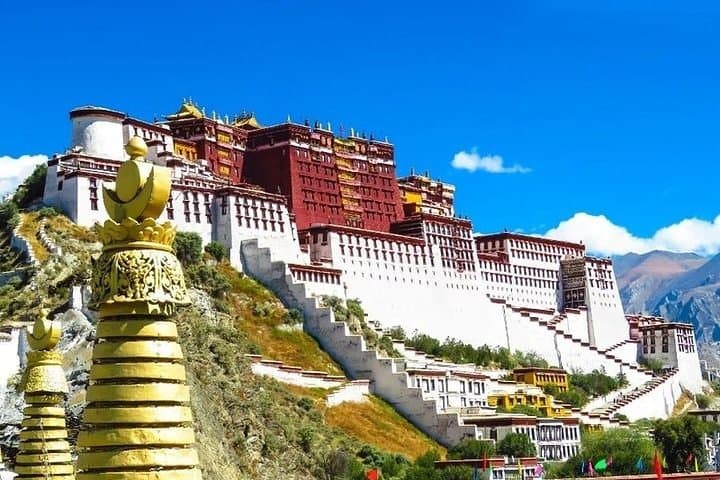
Dawn in Lhasa feels like the plateau exhaling — thin air, clear light and the Potala Palace rising like a carved fortress above the valley. On this five-day small-group circuit, travelers move through the city’s spiritual core: the stepped courtyards of Potala, the incense-scented inner halls of Jokhang, the clockwise crowd on Barkhor, and the scholarly courtyards of Drepung, Sera and distant Ganden Monastery.
Dawn in Lhasa feels like the plateau exhaling — thin air, clear light and the Potala Palace rising like a carved fortress above the valley. On this five-day small-group circuit, travelers move through the city’s spiritual core: the stepped courtyards of Potala, the incense-scented inner halls of Jokhang, the clockwise crowd on Barkhor, and the scholarly courtyards of Drepung, Sera and distant Ganden Monastery.
The route traces centuries of Tibetan Buddhist history. Potala’s layered white and red palaces date back to the 7th century with major 17th-century additions; Jokhang holds the venerated Jowo Sakyamuni statue and remains the living heart of pilgrim life. Drepung and Sera were once university monasteries where debate and monastic study defined community life; Ganden, perched east of Lhasa, was founded by the Gelug order’s progenitor and offers broad views over the Lhasa basin.
Geology shows itself in the high-altitude plateau: wind-polished stone, sparse juniper, and sky that seems lower and nearer. Local guides help decode rituals, prayer flags and the practicalities of Tibetan permits and etiquette.
Practical guidance: acclimatize on arrival, move slowly up stairs inside monasteries, bring cash for small offerings and local crafts, and expect full-day drives to Ganden. The operator includes airport/train pickup, permits, oxygen tanks on outings beyond city limits and basic 3-star lodging with breakfast. Travel light, layer for cold mornings and sunny afternoons, and allow extra time for the group to meet minimum numbers—this itinerary balances cultural depth with manageable daily walks, making it suitable for travelers prepared for high-altitude conditions.