THE ADVENTURE COLLECTIVE® · Independent discovery and booking for outdoor travel

Five days across Kenya's Rift Valley—Samburu's river plains, Lake Nakuru's flamingo shores, Hells Gate's cycling trails and a hippo-populated boat ride on Naivasha. This practical guide shows what to expect, when to go, and how to prepare.
Five days across Kenya's Rift Valley—Samburu's river plains, Lake Nakuru's flamingo shores, Hells Gate's cycling trails and a hippo-populated boat ride on Naivasha. This practical guide shows what to expect, when to go, and how to prepare.
Dawn in Samburu arrives as a wash of ochre light across the river plain. A family of elephants silhouettes against fever trees while the Ewaso Ng'iro murmurs in the background, daring you to come closer. By midweek you'll trade that riverbank for a pink, wind-scoured lakeshore at Nakuru, then swap jagged gorge walls for the bicycle paths of Hells Gate and the close, wet world of hippos on Lake Naivasha.
Verified experiences and guided adventures in the surrounding area.
Operated by PONGEZI AFRICA SAFARIS · Nairobi, Nairobi County
Dawn in Samburu arrives as a wash of ochre light across the river plain. A family of elephants silhouettes against fever trees while the Ewaso Ng'iro murmurs in the background, daring you to come closer. By midweek you'll trade that riverbank for a pink, wind-scoured lakeshore at Nakuru, then swap jagged gorge walls for the bicycle paths of Hells Gate and the close, wet world of hippos on Lake Naivasha.
This five-day loop threads together the Rift Valley's dramatic geology and Kenya's layered conservation history. The Great Rift Valley, a scar left by diverging tectonic plates, creates alkaline lakes like Nakuru and Naivasha where flamingos gather in shallow shoals. Samburu to the north sits at lower elevation (around 800 m) and captures a different wild—reticulated giraffes, Grevy's zebra and oryx adapted to thorn scrub. Colonial-era naturalists and later Kenyan conservationists helped create the protected pockets you visit; Lake Nakuru was one of the nation's earliest rhino sanctuaries.
Culturally the route crosses pastoral Samburu country—semi-nomadic herders whose herds shape the landscape—and agricultural belts nearer Nairobi where coffee, tea and horticulture feed export markets. Thompson's Falls and the Buffalo Springs area are local markers of both human and geological stories: waterfalls cut into basalt, springs fed by Rift fractures.
Practically, expect long drives between points: Nairobi to Samburu is a full morning’s journey with a high pass up Mount Kenya to about 3,000 m before descending to 800 m; plan 5–7 hours on day one including stops. Game drives are early-morning and late-afternoon affairs—animals move when it’s cool—while the Hells Gate section invites high-energy cycling and a short gorge hike on mostly even trails.
Bring layered clothing for sharp temperature swings, strong sun protection, and a decent telephoto for wildlife. Vehicles are high-clearance 4x4s; note that unpaved roads can be dusty or muddy depending on the season. Respect local guidelines: keep distance from wildlife, avoid night drives where not permitted, and follow your guide’s instructions near hippos and large mammals.
This itinerary balances concentrated wildlife viewing—searching for black and white rhinos, elephants and big cats—with active options (cycling and hiking) and a calm boat ride on Naivasha. Whether you’re there for birds, big game or geology, the trip moves at a steady rhythm: early starts, long vistas, and close encounters governed by patience and attentive guiding. Plan for moderate fitness, bring binoculars, and leave room in your schedule for the small, unplanned moments: a fish eagle’s cry above a silvered lake, stirred up by an urgent, unseen current.
moderate.
5 days.
Good general fitness for multiple game drives, a short gorge hike and cycling segments; must handle long vehicle transfers.
Routine vaccinations are advised; consult a travel clinic for yellow fever, typhoid and malaria prophylaxis. Carry insect repellent and a personal first-aid kit.
This itinerary typically includes accommodations, most meals as listed, park fees, guided game drives, and transfers; check the booking link for exact inclusions and exclusions.
Families and seniors often do well on this private tour, but all travelers should have moderate fitness and be able to handle bumpy roads and early starts.
Expect several multi-hour drives between parks—day one may take 5–7 hours with stops; other transfer days vary but include full-morning or afternoon drives.
Carry some Kenyan shillings (KES) for tips, small purchases and local markets; major hotels accept cards but remote areas may be cash-only.
Some sites and vehicles offer accessible options, but wildlife viewing often involves uneven ground; check with the operator ahead for specific accessibility arrangements.
The route follows the Great Rift Valley, shaped by tectonic rifts; Nakuru was an early focus of Kenyan rhino conservation and Samburu retains strong pastoral traditions.
Lake Nakuru and regional conservancies protect threatened species like rhinos and encourage community-based tourism; follow park rules to minimize impact and support local guides.
PONGEZI AFRICA SAFARIS operates guided outdoor trips and adventures with an emphasis on safety, stewardship, and memorable experiences.
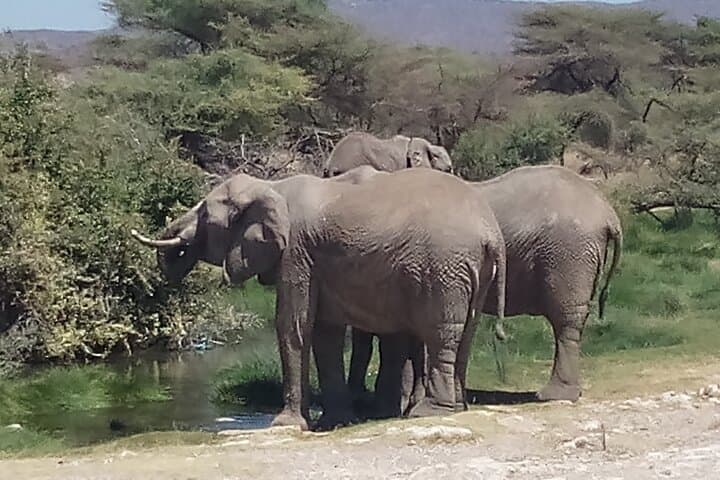
Dawn in Samburu arrives as a wash of ochre light across the river plain. A family of elephants silhouettes against fever trees while the Ewaso Ng'iro murmurs in the background, daring you to come closer. By midweek you'll trade that riverbank for a pink, wind-scoured lakeshore at Nakuru, then swap jagged gorge walls for the bicycle paths of Hells Gate and the close, wet world of hippos on Lake Naivasha.
Dawn in Samburu arrives as a wash of ochre light across the river plain. A family of elephants silhouettes against fever trees while the Ewaso Ng'iro murmurs in the background, daring you to come closer. By midweek you'll trade that riverbank for a pink, wind-scoured lakeshore at Nakuru, then swap jagged gorge walls for the bicycle paths of Hells Gate and the close, wet world of hippos on Lake Naivasha.
This five-day loop threads together the Rift Valley's dramatic geology and Kenya's layered conservation history. The Great Rift Valley, a scar left by diverging tectonic plates, creates alkaline lakes like Nakuru and Naivasha where flamingos gather in shallow shoals. Samburu to the north sits at lower elevation (around 800 m) and captures a different wild—reticulated giraffes, Grevy's zebra and oryx adapted to thorn scrub. Colonial-era naturalists and later Kenyan conservationists helped create the protected pockets you visit; Lake Nakuru was one of the nation's earliest rhino sanctuaries.
Culturally the route crosses pastoral Samburu country—semi-nomadic herders whose herds shape the landscape—and agricultural belts nearer Nairobi where coffee, tea and horticulture feed export markets. Thompson's Falls and the Buffalo Springs area are local markers of both human and geological stories: waterfalls cut into basalt, springs fed by Rift fractures.
Practically, expect long drives between points: Nairobi to Samburu is a full morning’s journey with a high pass up Mount Kenya to about 3,000 m before descending to 800 m; plan 5–7 hours on day one including stops. Game drives are early-morning and late-afternoon affairs—animals move when it’s cool—while the Hells Gate section invites high-energy cycling and a short gorge hike on mostly even trails.
Bring layered clothing for sharp temperature swings, strong sun protection, and a decent telephoto for wildlife. Vehicles are high-clearance 4x4s; note that unpaved roads can be dusty or muddy depending on the season. Respect local guidelines: keep distance from wildlife, avoid night drives where not permitted, and follow your guide’s instructions near hippos and large mammals.
This itinerary balances concentrated wildlife viewing—searching for black and white rhinos, elephants and big cats—with active options (cycling and hiking) and a calm boat ride on Naivasha. Whether you’re there for birds, big game or geology, the trip moves at a steady rhythm: early starts, long vistas, and close encounters governed by patience and attentive guiding. Plan for moderate fitness, bring binoculars, and leave room in your schedule for the small, unplanned moments: a fish eagle’s cry above a silvered lake, stirred up by an urgent, unseen current.