THE ADVENTURE COLLECTIVE® · Independent discovery and booking for outdoor travel

Cross a border and a millennium in five days: float on the Dead Sea, trace Byzantine mosaics in Madaba, climb Petra’s carved facades, and ride a Jeep through Wadi Rum’s red dunes. This private tour pairs efficient logistics with deep encounters across Jordan’s most iconic landscapes.
Cross a border and a millennium in five days: float on the Dead Sea, trace Byzantine mosaics in Madaba, climb Petra’s carved facades, and ride a Jeep through Wadi Rum’s red dunes. This private tour pairs efficient logistics with deep encounters across Jordan’s most iconic landscapes.
You step into the Jordan morning from Jerusalem with luggage still damp from last night’s Mediterranean air, and the road seems to open like an invitation. The driver navigates the quiet King Hussein Bridge; on the other side the Dead Sea waits — a glassy plane of liquid salt that resists you and makes the world feel lighter. Over five days this private route pulls you across tectonic history and human epochs: Byzantine mosaics in Madaba, the Bible’s outlook from Mount Nebo, the ruined stones of Jerash, and finally the rose-red corridors of Petra and the vast, wind-carved theater of Wadi Rum.
Verified experiences and guided adventures in the surrounding area.
Operated by VIP Jordan Limo · Wadi Musa, Ma'an Governorate
You step into the Jordan morning from Jerusalem with luggage still damp from last night’s Mediterranean air, and the road seems to open like an invitation. The driver navigates the quiet King Hussein Bridge; on the other side the Dead Sea waits — a glassy plane of liquid salt that resists you and makes the world feel lighter. Over five days this private route pulls you across tectonic history and human epochs: Byzantine mosaics in Madaba, the Bible’s outlook from Mount Nebo, the ruined stones of Jerash, and finally the rose-red corridors of Petra and the vast, wind-carved theater of Wadi Rum.
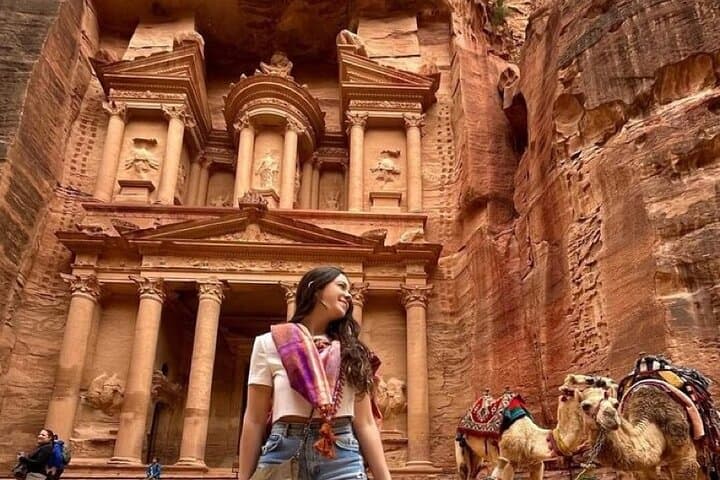
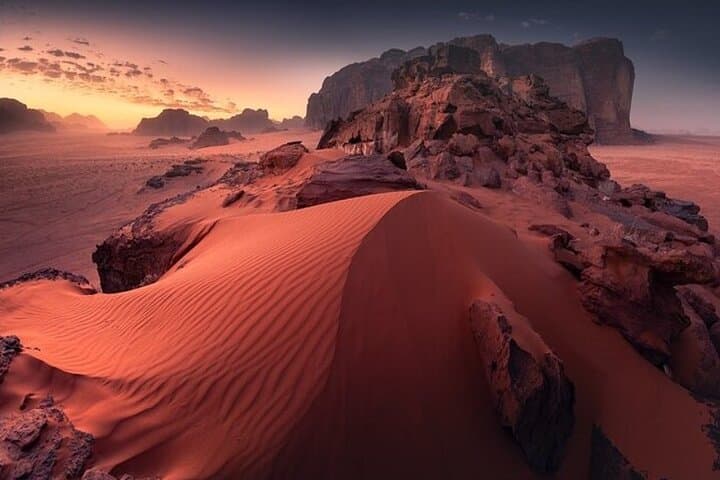
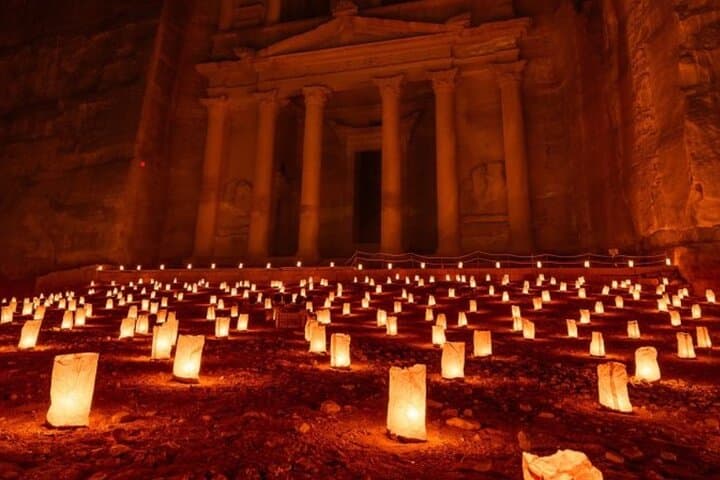
Petra is geological theater. The Siq funnels you through a canyon of uplifted sandstone whose layers look like the pages of the earth’s ledger; at the end, Al-Khazneh opens like a carved secret. Centuries of trade and empire echo through the Royal Tombs and the Roman theater, while a steeper squeeze takes you up to the Monastery for plates-of-desert panorama. Wadi Rum, by contrast, is an openbook of wind: sandstone and granite towers that have been shaved and hollowed into arches and resonant caverns, the desert refusing to be still as dunes shift and the light changes.
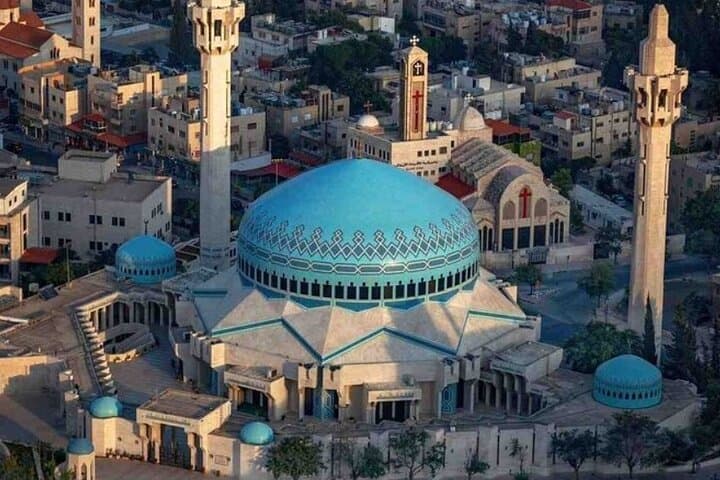
Culturally, the trip stitches modern Amman and its citadel with rural Bedouin hospitality. In Madaba the Byzantine map in Saint George Church grounds the journey in the region’s layered history; in villages and camps you’ll meet people who move between ancient practice and contemporary tourism — camel handlers who also run solar panels at camp, hoteliers who curate traditional Jordanian mezze alongside international breakfasts.
Practical edge: this is a private, chauffeur-driven itinerary designed to minimize friction at border crossings; you’ll need a Jordan Pass before travel. Days vary from relaxed float-time at Dead Sea resorts to full walking days in Petra that can include 700–900 steps up to the Monastery. Wadi Rum offers low-impact jeep safaris and optional short hikes. Pack sturdy walking shoes, sun protection, and a reusable water bottle. Expect desert days to be hot and dry, evenings cool in spring and fall, and winter nights crisp.
Timing matters: start early in Petra to avoid crowds and midday heat; schedule the Wadi Rum jeep for late afternoon into night to watch the desert turn copper then indigo. With private pickup and local guides available, this five-day arc is designed for travelers who want history and landscape served efficiently — and with room to linger where the place asks you to stay a little longer.
moderate.
5 days.
Suitable for travelers who can manage multiple 2–6 hour walking days, including stair climbs in Petra and short desert hikes.
Most visitors should obtain the Jordan Pass which covers visa-on-arrival fees and site admissions; check jordanpass.jo and your nationality requirements in advance.
Petra involves long walks and many steps—up to 800 steps for the Monastery route—while Wadi Rum is low-impact unless you opt for longer hikes; overall the tour is rated moderate.
The itinerary includes guidance; allow extra time for passport control and customs, and have all documents and the Jordan Pass ready to speed the process.
Yes—hotels and camps generally accommodate dietary needs if you notify the operator in advance; indicate preferences when booking.
Yes—transport is private and flexible; however Petra’s terrain may be challenging for very young children or guests with limited mobility, and some walking is unavoidable.
They are optional extras available at additional cost—book these activities early as they fill quickly, especially balloon flights in Wadi Rum or nearby.
This route crosses ancient trade and pilgrimage corridors: Jerash preserves Roman urban planning, Madaba carries Byzantine mosaic heritage, and Petra was a Nabataean trade hub controlling incense routes.
Tour operators work with local Bedouin camps to support community income; visitors should stick to marked paths in Petra and avoid removing geological or archaeological material.
VIP Jordan Limo operates guided outdoor trips and adventures with an emphasis on safety, stewardship, and memorable experiences.
You step into the Jordan morning from Jerusalem with luggage still damp from last night’s Mediterranean air, and the road seems to open like an invitation. The driver navigates the quiet King Hussein Bridge; on the other side the Dead Sea waits — a glassy plane of liquid salt that resists you and makes the world feel lighter. Over five days this private route pulls you across tectonic history and human epochs: Byzantine mosaics in Madaba, the Bible’s outlook from Mount Nebo, the ruined stones of Jerash, and finally the rose-red corridors of Petra and the vast, wind-carved theater of Wadi Rum.
You step into the Jordan morning from Jerusalem with luggage still damp from last night’s Mediterranean air, and the road seems to open like an invitation. The driver navigates the quiet King Hussein Bridge; on the other side the Dead Sea waits — a glassy plane of liquid salt that resists you and makes the world feel lighter. Over five days this private route pulls you across tectonic history and human epochs: Byzantine mosaics in Madaba, the Bible’s outlook from Mount Nebo, the ruined stones of Jerash, and finally the rose-red corridors of Petra and the vast, wind-carved theater of Wadi Rum.
Petra is geological theater. The Siq funnels you through a canyon of uplifted sandstone whose layers look like the pages of the earth’s ledger; at the end, Al-Khazneh opens like a carved secret. Centuries of trade and empire echo through the Royal Tombs and the Roman theater, while a steeper squeeze takes you up to the Monastery for plates-of-desert panorama. Wadi Rum, by contrast, is an openbook of wind: sandstone and granite towers that have been shaved and hollowed into arches and resonant caverns, the desert refusing to be still as dunes shift and the light changes.
Culturally, the trip stitches modern Amman and its citadel with rural Bedouin hospitality. In Madaba the Byzantine map in Saint George Church grounds the journey in the region’s layered history; in villages and camps you’ll meet people who move between ancient practice and contemporary tourism — camel handlers who also run solar panels at camp, hoteliers who curate traditional Jordanian mezze alongside international breakfasts.
Practical edge: this is a private, chauffeur-driven itinerary designed to minimize friction at border crossings; you’ll need a Jordan Pass before travel. Days vary from relaxed float-time at Dead Sea resorts to full walking days in Petra that can include 700–900 steps up to the Monastery. Wadi Rum offers low-impact jeep safaris and optional short hikes. Pack sturdy walking shoes, sun protection, and a reusable water bottle. Expect desert days to be hot and dry, evenings cool in spring and fall, and winter nights crisp.
Timing matters: start early in Petra to avoid crowds and midday heat; schedule the Wadi Rum jeep for late afternoon into night to watch the desert turn copper then indigo. With private pickup and local guides available, this five-day arc is designed for travelers who want history and landscape served efficiently — and with room to linger where the place asks you to stay a little longer.