THE ADVENTURE COLLECTIVE® · Independent discovery and booking for outdoor travel

A brisk five-day circuit through Jordan that stitches Amman, Jerash, Mount Nebo, Petra, Wadi Rum and the Dead Sea into one compact itinerary. Expect long days of walking, dramatic desert drives, a Bedouin camp night and the unique buoyancy of the Dead Sea.
A brisk five-day circuit through Jordan that stitches Amman, Jerash, Mount Nebo, Petra, Wadi Rum and the Dead Sea into one compact itinerary. Expect long days of walking, dramatic desert drives, a Bedouin camp night and the unique buoyancy of the Dead Sea.
The minivan slips out of Amman before sunrise, the city’s concrete ribs losing their heat as the road climbs into a quieter limestone landscape. By midmorning you’re standing where Romans once staged chariot races in Jerash; the columns still hold the wind like language. On day two a mosaic map in Madaba points to a country of stone and salt, and Mount Nebo offers a wind-scoured vantage where, according to tradition, Moses first saw the plains below.
Verified experiences and guided adventures in the surrounding area.
Operated by Jordan Private Tours and Travel · Amman, Amman Governorate
The minivan slips out of Amman before sunrise, the city’s concrete ribs losing their heat as the road climbs into a quieter limestone landscape. By midmorning you’re standing where Romans once staged chariot races in Jerash; the columns still hold the wind like language. On day two a mosaic map in Madaba points to a country of stone and salt, and Mount Nebo offers a wind-scoured vantage where, according to tradition, Moses first saw the plains below.
Jordan here is an argument between geology and history. The basalt and sandstone folded over eons into red canyons and amphitheaters; the Siq that funnels you into Petra was cleaved by water and time, a narrow slot that opens abruptly onto the carved façade of the Treasury. Petra itself is best walked: plan for 4–6 hours and expect several miles of uneven stone, stairs carved into cliffs and altitudes that vary across the site.
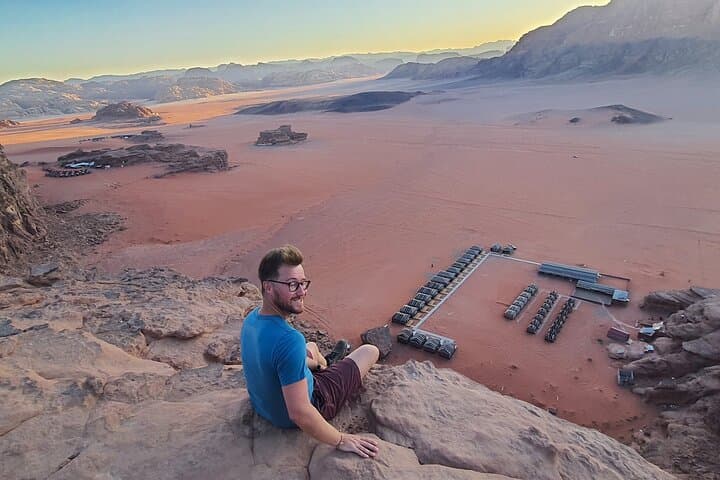
Then the desert asserts itself. Wadi Rum is not a barren void but a sculpted room of towering sandstone and granite; a two-hour jeep safari threads tracks between arches and rock bridges while Bedouin hosts share tea beneath a vast sky. The tour ends in contrast at the Dead Sea — the basin so low the water presses against the horizon — where buoyancy and mineral crusts offer a strange, restorative quiet.
Culturally the route traces millennia: Roman columns, Byzantine mosaics, Nabatean tombs and nomadic desert life. Practical details matter here: the itinerary moves fast (five days, multi-site) and includes three nights in Amman, a night in a Bedouin tent, hotel transfers and a Wadi Rum jeep ride; entrance fees and local site guides are typically extra. Aqaba on the Red Sea is an optional summer stop and is skipped in winter due to limited daylight.
For travelers: carry layered clothing for big diurnal swings, a sun hat and plenty of water for desert drives, and shoes with grip for Petra’s carved stairways. Buy the Jordan Pass before arrival to simplify entry fees and access to major sites. Physically, the trip is moderate — expect several hours of walking on uneven surfaces and short drives that can be dusty.
Timing is everything: early starts beat the heat in summer and the crowds at Petra; winter shortens daylight, affecting whether the group detours to Aqaba. Respect local customs: modest dress at religious sites and ask before photographing people. With a little planning, this five-day circuit delivers an efficient run through Jordan’s geological drama, its layered history and the warm, pragmatic hospitality of its people.
moderate.
5 days.
Good general fitness — able to walk several hours over uneven terrain and climb stairs; some desert driving and short hikes.
Entrance fees and local guide services are not included; buying the Jordan Pass before arrival covers many major attractions and waives the visa fee.
You’ll have three nights in 3-star hotels in Amman and one night in a basic Bedouin tent at Wadi Rum (single supplements may apply).
Aqaba on the Red Sea is only included in summer; from November to the end of March it’s typically skipped due to limited daylight hours.
Plan for 4–6 hours to see the main highlights (Treasury, Theater, Monastery) — the terrain includes uneven stone, narrow passages and carved stairs.
Breakfast in Amman and dinner/breakfast at the Bedouin camp are included; other meals are generally at your expense unless specified.
The trip involves moderate walking and some uneven terrain; it is not recommended for travelers with significant mobility restrictions or spinal injuries.
The route maps centuries of human movement: Roman ruins at Jerash, Byzantine mosaics in Madaba and Nabatean engineering in Petra reflect layered civilizations.
Wadi Rum is a protected reserve; stick to marked jeep tracks and follow local guidance to reduce erosion and disturbance to archaeological sites.
Jordan Private Tours and Travel operates guided outdoor trips and adventures with an emphasis on safety, stewardship, and memorable experiences.



The minivan slips out of Amman before sunrise, the city’s concrete ribs losing their heat as the road climbs into a quieter limestone landscape. By midmorning you’re standing where Romans once staged chariot races in Jerash; the columns still hold the wind like language. On day two a mosaic map in Madaba points to a country of stone and salt, and Mount Nebo offers a wind-scoured vantage where, according to tradition, Moses first saw the plains below.
The minivan slips out of Amman before sunrise, the city’s concrete ribs losing their heat as the road climbs into a quieter limestone landscape. By midmorning you’re standing where Romans once staged chariot races in Jerash; the columns still hold the wind like language. On day two a mosaic map in Madaba points to a country of stone and salt, and Mount Nebo offers a wind-scoured vantage where, according to tradition, Moses first saw the plains below.
Jordan here is an argument between geology and history. The basalt and sandstone folded over eons into red canyons and amphitheaters; the Siq that funnels you into Petra was cleaved by water and time, a narrow slot that opens abruptly onto the carved façade of the Treasury. Petra itself is best walked: plan for 4–6 hours and expect several miles of uneven stone, stairs carved into cliffs and altitudes that vary across the site.
Then the desert asserts itself. Wadi Rum is not a barren void but a sculpted room of towering sandstone and granite; a two-hour jeep safari threads tracks between arches and rock bridges while Bedouin hosts share tea beneath a vast sky. The tour ends in contrast at the Dead Sea — the basin so low the water presses against the horizon — where buoyancy and mineral crusts offer a strange, restorative quiet.
Culturally the route traces millennia: Roman columns, Byzantine mosaics, Nabatean tombs and nomadic desert life. Practical details matter here: the itinerary moves fast (five days, multi-site) and includes three nights in Amman, a night in a Bedouin tent, hotel transfers and a Wadi Rum jeep ride; entrance fees and local site guides are typically extra. Aqaba on the Red Sea is an optional summer stop and is skipped in winter due to limited daylight.
For travelers: carry layered clothing for big diurnal swings, a sun hat and plenty of water for desert drives, and shoes with grip for Petra’s carved stairways. Buy the Jordan Pass before arrival to simplify entry fees and access to major sites. Physically, the trip is moderate — expect several hours of walking on uneven surfaces and short drives that can be dusty.
Timing is everything: early starts beat the heat in summer and the crowds at Petra; winter shortens daylight, affecting whether the group detours to Aqaba. Respect local customs: modest dress at religious sites and ask before photographing people. With a little planning, this five-day circuit delivers an efficient run through Jordan’s geological drama, its layered history and the warm, pragmatic hospitality of its people.