THE ADVENTURE COLLECTIVE® · Independent discovery and booking for outdoor travel

A compact five-day private tour that pairs Yogyakarta’s royal culture with volcanic highlands — Borobudur at dawn, steam vents on Dieng Plateau, Merapi’s sunrise, and coastal sunsets at Parangtritis. Practical routing and short hikes make this an accessible adventure for culturally curious travelers.
A compact five-day private tour that pairs Yogyakarta’s royal culture with volcanic highlands — Borobudur at dawn, steam vents on Dieng Plateau, Merapi’s sunrise, and coastal sunsets at Parangtritis. Practical routing and short hikes make this an accessible adventure for culturally curious travelers.
You step out of the air-conditioned vehicle into a humid morning that smells of tobacco fields and frying street food — Yogyakarta’s city edge unfolding into rice paddies and volcanic ridgelines.
Verified experiences and guided adventures in the surrounding area.
Operated by TRIPEDIA · Yogyakarta, Special Region of Yogyakarta
You step out of the air-conditioned vehicle into a humid morning that smells of tobacco fields and frying street food — Yogyakarta’s city edge unfolding into rice paddies and volcanic ridgelines.
Over five days this private tour threads through Java’s layered past: Mughal-influenced keratons, UNESCO-listed Borobudur’s carved terraces, and the high, sulfur-scented bowls of the Dieng Plateau. Geology shapes the itinerary — Merapi, a live stratovolcano at about 2,930 m, governs local landscapes; Dieng sits near 2,000 m with steaming fumaroles and multicolored Telaga Warna, its mineral-rich lake shifting from green to blue.
Culture arrives in close view: the Sultan’s Keraton and Tamansari Water Castle explain Javanese court life, while Kotagede and Kasongan reveal centuries-old crafts — silver filigree, leather, and pottery that keep local economies humming.
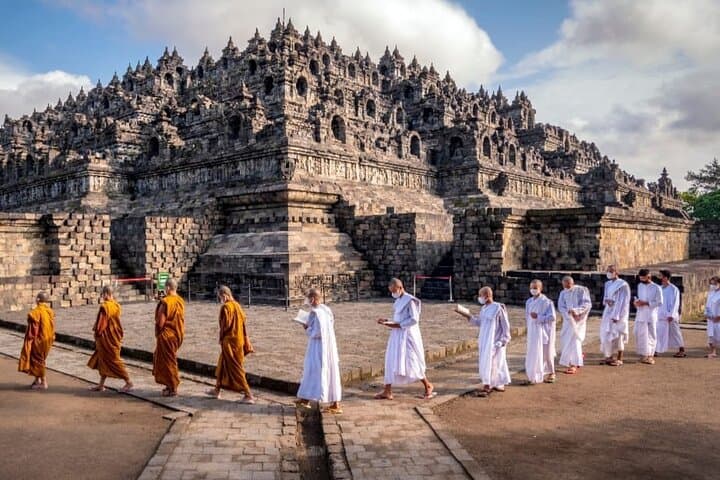
Expect a mix of pavement and rough tracks. Borobudur is a broad, stepped walk; Dieng’s crater rims require short hikes across uneven volcanic rock (one route can be a 5–7 km round trip to larger craters); Parangtritis is 27 km from the city center and better explored by ATV along the beach than by swimming.
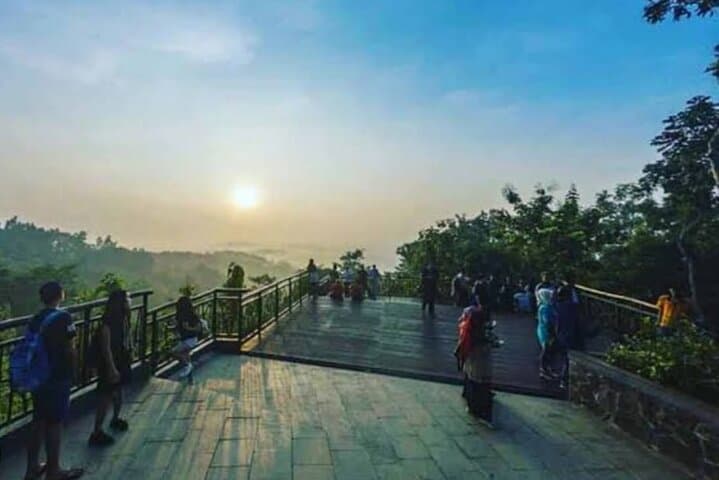
Practical edge: pack layers for cool highlands and light rain protection for tropical showers, bring sturdy shoes for volcanic trails, and budget extra time for traffic between sites. Morning starts beat heat and crowds at temple sites, and choose local guides at Borobudur or Merapi viewpoints to deepen historical context and safety on volatile terrain.
moderate.
5 days.
Moderate — comfortable with several short hikes (up to 5–7 km), stairs, and periods of walking on uneven volcanic terrain.
Yes — the itinerary is listed as suitable for all fitness levels, but plan for early starts and supervise children on temple terraces and near crater edges.
Guides take visitors to permitted viewpoints; avoid unofficial trails and follow local authority closures for safety around fumaroles and unstable ground.
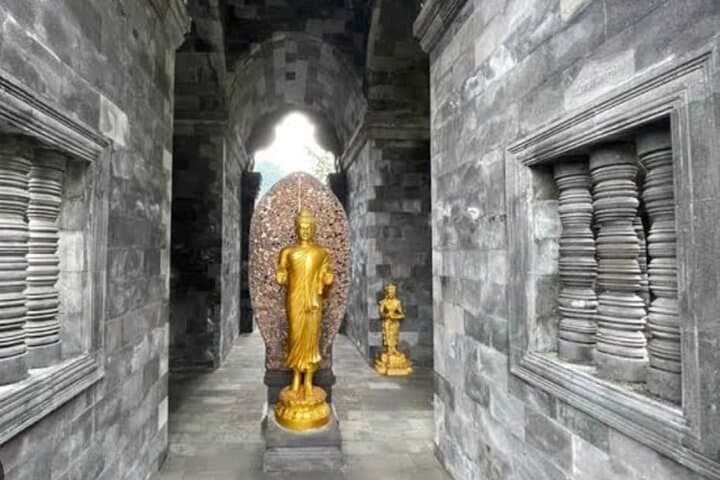
A local guide is recommended to interpret reliefs, cultural context, and to navigate busy periods; guides also help expedite admissions.
An English-speaking driver/guide is provided; for deeper cultural interpretation, ask about guides who speak additional languages if needed.
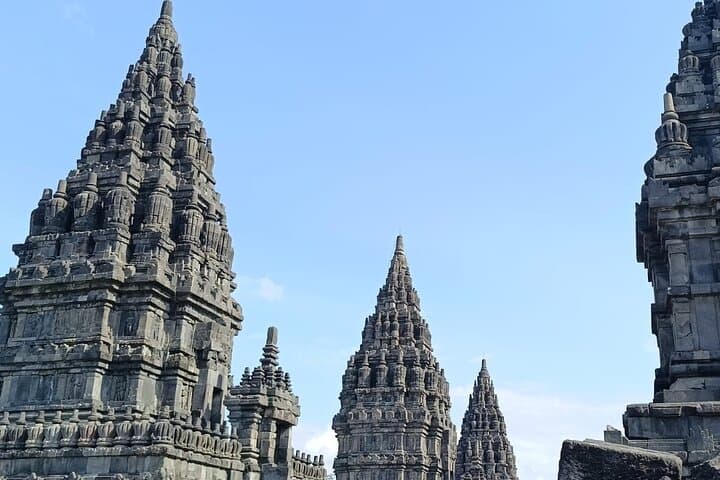
Yogyakarta is the historic seat of the Mataram Sultanate; Borobudur (8th–9th century) is a massive Buddhist monument later surrounded by Hindu temples like Prambanan.
Sites are managed to protect fragile stonework and crater environments — stick to paths, avoid littering, and respect local cultural sites and ceremonies.
TRIPEDIA operates guided outdoor trips and adventures with an emphasis on safety, stewardship, and memorable experiences.
You step out of the air-conditioned vehicle into a humid morning that smells of tobacco fields and frying street food — Yogyakarta’s city edge unfolding into rice paddies and volcanic ridgelines.
You step out of the air-conditioned vehicle into a humid morning that smells of tobacco fields and frying street food — Yogyakarta’s city edge unfolding into rice paddies and volcanic ridgelines.
Over five days this private tour threads through Java’s layered past: Mughal-influenced keratons, UNESCO-listed Borobudur’s carved terraces, and the high, sulfur-scented bowls of the Dieng Plateau. Geology shapes the itinerary — Merapi, a live stratovolcano at about 2,930 m, governs local landscapes; Dieng sits near 2,000 m with steaming fumaroles and multicolored Telaga Warna, its mineral-rich lake shifting from green to blue.
Culture arrives in close view: the Sultan’s Keraton and Tamansari Water Castle explain Javanese court life, while Kotagede and Kasongan reveal centuries-old crafts — silver filigree, leather, and pottery that keep local economies humming.
Expect a mix of pavement and rough tracks. Borobudur is a broad, stepped walk; Dieng’s crater rims require short hikes across uneven volcanic rock (one route can be a 5–7 km round trip to larger craters); Parangtritis is 27 km from the city center and better explored by ATV along the beach than by swimming.
Practical edge: pack layers for cool highlands and light rain protection for tropical showers, bring sturdy shoes for volcanic trails, and budget extra time for traffic between sites. Morning starts beat heat and crowds at temple sites, and choose local guides at Borobudur or Merapi viewpoints to deepen historical context and safety on volatile terrain.