THE ADVENTURE COLLECTIVE® · Independent discovery and booking for outdoor travel

Ride ancient trails across Tusheti’s pine slopes and cross the 3,500 m Atsunta Pass on a five-day horseback circuit that mixes alpine ridges, river fords, and village guesthouses. Expect high passes, one nights’ camping, and deep local culture.
Ride ancient trails across Tusheti’s pine slopes and cross the 3,500 m Atsunta Pass on a five-day horseback circuit that mixes alpine ridges, river fords, and village guesthouses. Expect high passes, one nights’ camping, and deep local culture.
A cold wind off the high ridges pushes at the horses' manes as the column threads a pine-lined slope toward the Sanare Pass. Riders move in rhythm—old Georgian saddles creaking, guides calling directions in a language that feels as physical as the trail beneath the hooves. On clear mornings the peaks around Tusheti cut hard into the sky; by afternoon the valley fills with sound from village life and the smell of wood fires.
Verified experiences and guided adventures in the surrounding area.
Operated by Horsetours.Ge · Shenako, Kakheti
A cold wind off the high ridges pushes at the horses' manes as the column threads a pine-lined slope toward the Sanare Pass. Riders move in rhythm—old Georgian saddles creaking, guides calling directions in a language that feels as physical as the trail beneath the hooves. On clear mornings the peaks around Tusheti cut hard into the sky; by afternoon the valley fills with sound from village life and the smell of wood fires.
This five-day circuit follows paths used for centuries to cross the Greater Caucasus. Geologically, the route runs along folded limestone and schist, with passes rising to 3,500 m at Atsunta—the highest horse-crossable pass in the range. Culturally, the trip threads through Tusheti and Khevsureti territories: stone houses with petroglyphs in Dartlo, communal bonfires, and a living highland pastoral tradition.
Expect varied terrain: forested climbs to Sanare (≈2,500 m), river fordings through Pirikiti gorge, and high alpine ridges approaching Atsunta (≈3,500 m). One night is spent camping at ~2,800 m out of mobile range; other nights are in family guesthouses with home-cooked Tushetian fare. The pace is steady—daily rides of several hours with shorter transfers by vehicle on arrival and departure in Tbilisi.
Practical tips: be ready for rapid weather shifts, bring layered insulation and chaps or riding pants, and carry water and altitude-aware medication if you’re sensitive. Riders with basic horseback experience and moderate fitness will get the most from the route; guides manage horses and river crossings, but uneven ground and high passes demand attention. This is an immersive mountain journey—direct, physical, and steeped in local rhythms.
challenging.
5 days.
Moderate to fit: riders should be comfortable sitting in the saddle for several hours, able to hike short sections and handle long days at altitude.
You should have moderate fitness: able to ride several hours a day, walk short stretches, and tolerate altitude; the horses carry most gear and guides help with difficult sections.
Beginners with basic riding experience can join but should disclose skill level—guides match riders to calmer horses and provide instruction.
The highest pass is about 3,500 m (Atsunta) and there’s a campsite at ~2,800 m; allow time before the tour to acclimatize and monitor for symptoms of altitude sickness.
Nights are a mix of family-run guesthouses serving Tushetian dishes and one high-elevation campsite; meals listed include breakfasts, lunches, and dinners prepared locally.
Tusheti and neighboring Khevsureti were historically strategic highland communities with defensive towers and transhumance routes dating back centuries; Dartlo contains petroglyph-adorned facades and a XVI-century court building.
This region is ecologically fragile—stick to established trails, avoid disturbing grazing patterns, and support local guesthouses that use sustainable grazing and waste practices.
Horsetours.Ge operates guided outdoor trips and adventures with an emphasis on safety, stewardship, and memorable experiences.
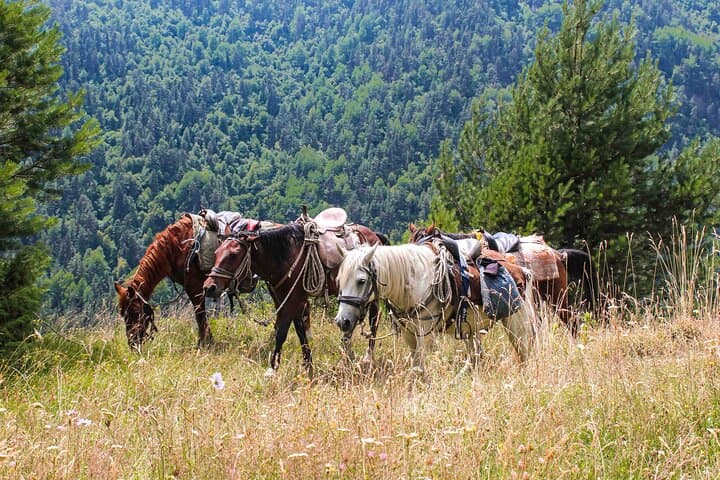
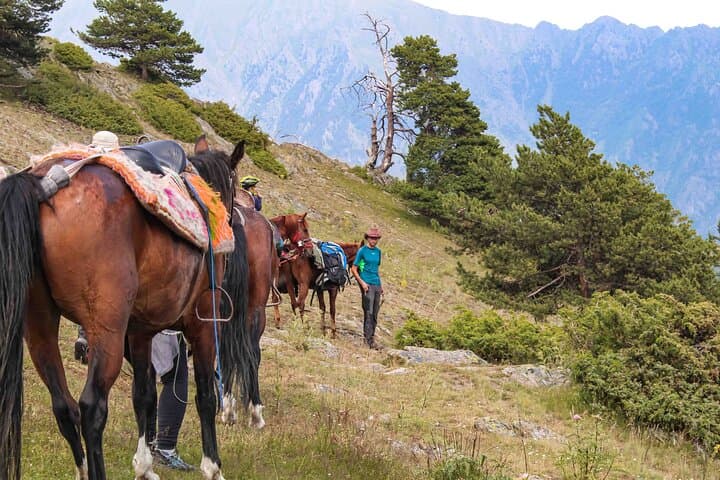
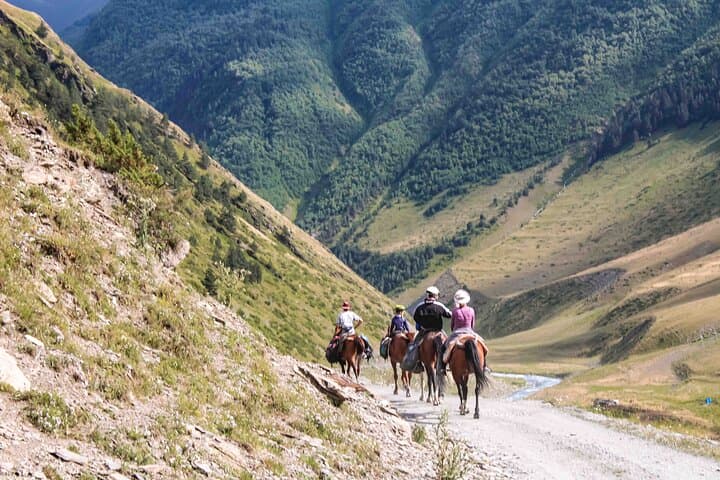
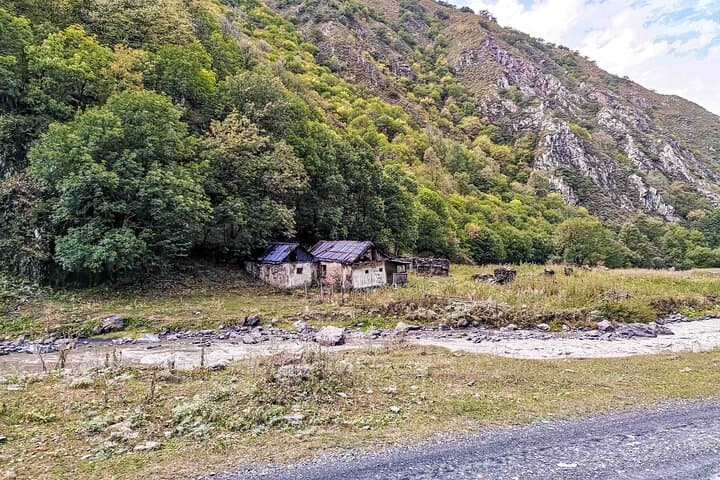
A cold wind off the high ridges pushes at the horses' manes as the column threads a pine-lined slope toward the Sanare Pass. Riders move in rhythm—old Georgian saddles creaking, guides calling directions in a language that feels as physical as the trail beneath the hooves. On clear mornings the peaks around Tusheti cut hard into the sky; by afternoon the valley fills with sound from village life and the smell of wood fires.
A cold wind off the high ridges pushes at the horses' manes as the column threads a pine-lined slope toward the Sanare Pass. Riders move in rhythm—old Georgian saddles creaking, guides calling directions in a language that feels as physical as the trail beneath the hooves. On clear mornings the peaks around Tusheti cut hard into the sky; by afternoon the valley fills with sound from village life and the smell of wood fires.
This five-day circuit follows paths used for centuries to cross the Greater Caucasus. Geologically, the route runs along folded limestone and schist, with passes rising to 3,500 m at Atsunta—the highest horse-crossable pass in the range. Culturally, the trip threads through Tusheti and Khevsureti territories: stone houses with petroglyphs in Dartlo, communal bonfires, and a living highland pastoral tradition.
Expect varied terrain: forested climbs to Sanare (≈2,500 m), river fordings through Pirikiti gorge, and high alpine ridges approaching Atsunta (≈3,500 m). One night is spent camping at ~2,800 m out of mobile range; other nights are in family guesthouses with home-cooked Tushetian fare. The pace is steady—daily rides of several hours with shorter transfers by vehicle on arrival and departure in Tbilisi.
Practical tips: be ready for rapid weather shifts, bring layered insulation and chaps or riding pants, and carry water and altitude-aware medication if you’re sensitive. Riders with basic horseback experience and moderate fitness will get the most from the route; guides manage horses and river crossings, but uneven ground and high passes demand attention. This is an immersive mountain journey—direct, physical, and steeped in local rhythms.