THE ADVENTURE COLLECTIVE® · Independent discovery and booking for outdoor travel

Paddle five days through Sweden’s Saint Anna Archipelago, camping on rocky islets, watching seals and seabirds and learning sea navigation from experienced guides. This guided trip pairs long paddles with wildcamping comforts and expert local knowledge.
Paddle five days through Sweden’s Saint Anna Archipelago, camping on rocky islets, watching seals and seabirds and learning sea navigation from experienced guides. This guided trip pairs long paddles with wildcamping comforts and expert local knowledge.
You launch at first light into a pale Baltic that grips and moves beneath your kayak, the islands peeling away like pages from a very old map.
Verified experiences and guided adventures in the surrounding area.
Operated by Do the North AB · Saint Anna, Östergötland
You launch at first light into a pale Baltic that grips and moves beneath your kayak, the islands peeling away like pages from a very old map.
Over five days you'll cross sheltered bays, thread narrow inlets and push toward wind-buffed outer skerries where the sea dares you to keep going. The Saint Anna Archipelago is part of Sweden's eastern coast in Östergötland—one of the most densely packed skerry zones in Europe—formed by glacial scouring that left low, smooth granite and scattered thin-soiled islets prime for wind-pruned pines.
Culturally the coast mixes old fishing villages and lighthouse stations with contemporary Swedish outdoor traditions: every island shows traces of past livelihoods—fish-drying racks, abandoned copper pits and simple red cottages—alongside modern nature reserves like Uggelholmarna.
Expect a rhythm of paddling, short hikes on open forest, birdwatching and team-cooked meals on flat rocks. Guides teach navigation, local flora and low-impact campcraft; wildlife includes breeding terns, eiders and the occasional grey seal that slips between rocks.
Practical edge: plan for variable wind and quickly changing temperatures. Pack a splash jacket, fleece layers and waterproof your sleeping kit; carry water purification and sea-suitable footwear. Daily paddles can total several hours—routes are flexible and chosen for safety and conditions. Wild camping is permitted; guides supply quality Hilleberg tents and cooks’ gear. By day three you’ll move from cautious paddler to practiced crew, navigating channels and reading the wind from the exposed headlands. Finish wet, tired and exactingly pleased.
moderate.
5 days.
Suitable for someone with basic aerobic fitness who can paddle multiple hours a day and handle short hikes with a small pack.
No advanced experience required; basic paddling skills help, and guides provide instruction and group support throughout the trip.
Yes—Sweden’s Right of Public Access permits wild camping; guides pick sheltered, low-impact sites and provide tents and sleeping equipment.
Expect coastal birds—gulls, terns, eiders—plus occasional grey seals and birds of prey like white-tailed eagles.
Tours run in most conditions but guides may alter routes or delay crossings for safety; cancelation policy allows full refund if canceled 24 hours prior.
The archipelago’s shape is a direct result of glacial scraping and post-glacial rebound; small islands have long supported fishing and light industry, leaving visible ruins and traditional cottages.
The archipelago contains several nature reserves—stay on durable surfaces, avoid nesting islets during breeding season and follow guide instructions to limit disturbance.
Do the North AB operates guided outdoor trips and adventures with an emphasis on safety, stewardship, and memorable experiences.


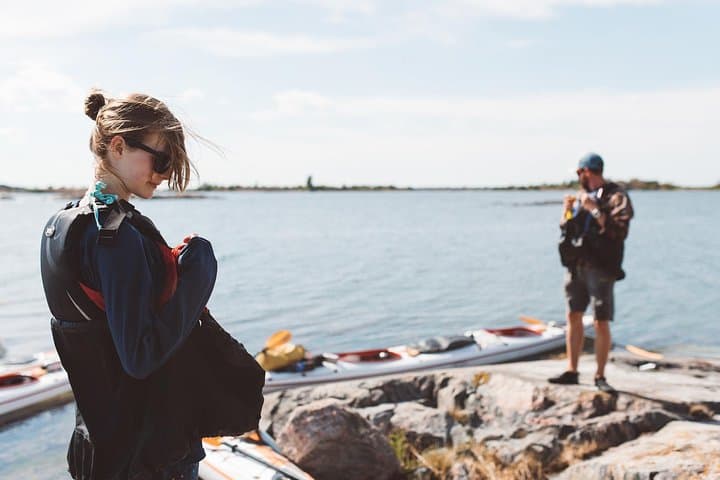

You launch at first light into a pale Baltic that grips and moves beneath your kayak, the islands peeling away like pages from a very old map.
You launch at first light into a pale Baltic that grips and moves beneath your kayak, the islands peeling away like pages from a very old map.
Over five days you'll cross sheltered bays, thread narrow inlets and push toward wind-buffed outer skerries where the sea dares you to keep going. The Saint Anna Archipelago is part of Sweden's eastern coast in Östergötland—one of the most densely packed skerry zones in Europe—formed by glacial scouring that left low, smooth granite and scattered thin-soiled islets prime for wind-pruned pines.
Culturally the coast mixes old fishing villages and lighthouse stations with contemporary Swedish outdoor traditions: every island shows traces of past livelihoods—fish-drying racks, abandoned copper pits and simple red cottages—alongside modern nature reserves like Uggelholmarna.
Expect a rhythm of paddling, short hikes on open forest, birdwatching and team-cooked meals on flat rocks. Guides teach navigation, local flora and low-impact campcraft; wildlife includes breeding terns, eiders and the occasional grey seal that slips between rocks.
Practical edge: plan for variable wind and quickly changing temperatures. Pack a splash jacket, fleece layers and waterproof your sleeping kit; carry water purification and sea-suitable footwear. Daily paddles can total several hours—routes are flexible and chosen for safety and conditions. Wild camping is permitted; guides supply quality Hilleberg tents and cooks’ gear. By day three you’ll move from cautious paddler to practiced crew, navigating channels and reading the wind from the exposed headlands. Finish wet, tired and exactingly pleased.